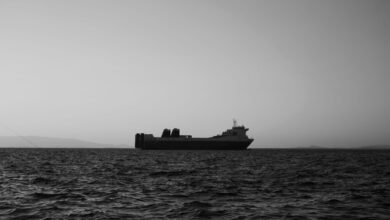

Bulgaria’s response was swift and diplomatic, with Prime Minister Petar Daliyan summoning the Russian envoy to the Ministry of Foreign Affairs. During the meeting, the Prime Minister stated that all available logic pointed to Russia as the culprit behind the strikes. This official attribution, while based on circumstantial evidence and the prevailing pattern of attacks, underscores the diplomatic strain currently testing relations between Sofia and Moscow. The incident is not an isolated event but rather the second spate of drone attacks on merchant ships in the Black Sea within the past week, highlighting a sustained and concerning pattern of targeting civilian cargo vessels in the region.
The operational significance of these strikes extends beyond the immediate human toll. The Black Sea serves as a critical artery for grain exports, energy supplies, and general commercial traffic. By targeting merchant vessels, the attacks disrupt global supply chains and impose a risk premium on insurance and shipping through these waters. The use of drones for such strikes suggests an expansion of the conflict’s tactical scope, moving from direct military engagements to asymmetric attacks on civilian infrastructure and logistics. This shift complicates the defensive posture of coastal states, which must now monitor and protect not only military assets but also civilian maritime traffic against unmanned aerial threats.
Bulgaria, a member of the European Union and the Western Balkans, has historically maintained a cautious balance in its foreign policy. However, the repeated attacks on ships off its coast have forced a more confrontational stance. The condemnation of the attacks as a spillover of Russia’s war in Ukraine signals a broader regional recognition that the conflict is no longer contained within Ukrainian borders. For Eastern Europe, this represents a tangible security threat that could destabilize the entire region if left unchecked. The presence of missing crew members adds a human dimension to the geopolitical fallout, with families and international bodies likely demanding accountability and investigation.
While Russia has been accused of repeatedly targeting civilian cargo ships in the area, specific technical details regarding the types of drones used, their launch sites, or the precise coordinates of the strikes have not been fully detailed in the immediate aftermath. The lack of confirmed intelligence on the origin of the drones leaves room for debate, though the diplomatic response from Sofia leaves little ambiguity about the direction of blame. The incident raises questions about the rules of engagement in international waters and the responsibility of states to ensure the safety of maritime commerce in times of adjacent conflict.
The immediate military objective of such strikes appears to be the disruption of economic lifelines and the projection of power beyond the immediate battlefield. By striking ships in the Black Sea, the aggressor demonstrates the ability to project force into areas previously considered outside the direct conflict zone. This capability imposes logistical and political constraints on neighboring states, forcing them to allocate resources to maritime surveillance and defense. The consequences for deterrence are significant, as it challenges the traditional boundaries of the war and tests the resolve of international institutions to uphold maritime law and protect civilian assets.
As the search for the 11 missing crew members continues, the focus now shifts to diplomatic and military responses. The next confirmed development will likely involve international inquiries, potential sanctions, or increased naval patrols in the Black Sea. For Bulgaria, the incident has moved the war from a distant concern to an immediate domestic security issue. The spillover into Eastern Europe marks a critical turning point, where the regional security architecture must adapt to a new reality of expanded conflict and heightened maritime risks. The central question remains how the international community will respond to ensure that the war does not continue to erode the stability of neighboring states and global trade routes.