The confidence vote represents a standard parliamentary tool wherein the government can call for a formal expression of trust to test its legislative mandate. In the current context, the decision to proceed with this vote reflects a strategy by the governing coalition to consolidate political authority or, conversely, to test the resolve of opposition parties. Prime Minister Robert Fico, once a figure aligned with mainstream Social Democracy, has repositioned his political identity as a left-wing nationalist. His administration has pursued a distinct trajectory characterized by strong nationalistic rhetoric, a critical stance toward the media, and a diplomatic orientation that favors closer ties with Moscow while frequently stalling or opposing European Union sanctions on Russia.
As the government navigates this parliamentary hurdle, the underlying political narrative is framed by a sharp divergence in national sentiment. On one side, supporters of the Fico administration, including young voters from towns such as Trnava, view the prime minister as a necessary counterweight to what they perceive as excessive interference by Brussels. For these citizens, the European Union is often characterized not as a partner, but as a source of domestic problems. They advocate for a sovereign, nationally oriented Slovakia that maintains a clear distance from EU institutions, viewing the government’s nationalist agenda as a defense of national interests rather than a threat to them.
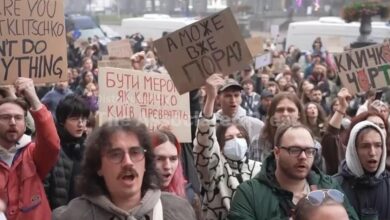
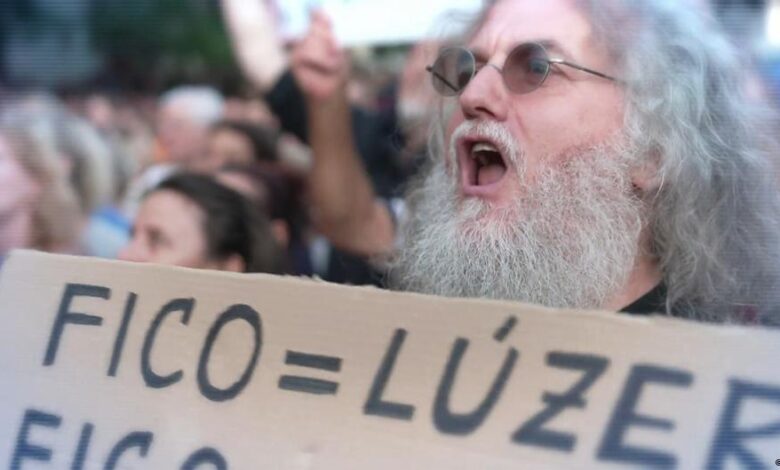
On the opposing side, a significant portion of the population, particularly in the liberal-leaning capital of Bratislava, views the current administration with deep concern. Regular protests have emerged in the capital, driven by objections to what critics describe as sweeping interventions in the judiciary and sustained government pressure on the media. Peter Bárdy, the editor-in-chief of the news portal Aktuality.sk, attributes these developments not to ideological conviction but to business interests, cronyism, and the preservation of power. This faction warns that the erosion of confidence in public institutions and the government is threatening the fundamental tenets of democracy and media freedom in the country.
The tension between these two political camps has tangible consequences for Slovakia’s position within the European Union. The country is increasingly described by observers as the EU’s new “problem child,” a status stemming from its government’s repeated questioning of EU values and expectations. To assess the situation firsthand, a delegation from the European Parliament traveled to Bratislava. Their mission was to evaluate the state of the judiciary, the degree of media freedom, and the effectiveness of anti-corruption measures. This international scrutiny underscores the high stakes involved in the domestic political struggle, as Slovakia’s alignment with Brussels is a central point of contention for both the government and its critics.
The human impact of this political polarization is evident in the social fabric of the nation. While some citizens, such as Terezka Mičianiková, a 22-year-old law student and influencer from Trnava, express confidence in a strong, nationally focused government, others are facing direct repercussions for their dissent. Viktor Beránek, the manager of Chata pod Rysmi, the highest mountain lodge in Slovakia, has lost his lease after nearly five decades of service. Beránek, a vocal critic of the populist prime minister, attributes the loss of his lease to his political positions. His case is cited as an example of how political loyalty is increasingly influencing institutional and economic decisions, contributing to a climate where many young people are choosing to leave the country rather than remain within a system they view as compromised.
The upcoming confidence vote will therefore determine not only the immediate survival of the Fico government but also the trajectory of Slovakia’s democratic institutions and its relationship with the European Union. If the government retains its majority, it may continue to pursue its nationalist agenda and its specific approach to EU integration and external relations. If the vote fails, it could lead to a reshuffling of the coalition or new elections, potentially altering the balance of power between those seeking closer ties with Moscow and those advocating for a strengthened commitment to EU values. Until the parliamentary proceedings conclude, the country remains divided, with the constitutional debt limit serving as the acute financial trigger for a much deeper contest over Slovakia’s future.