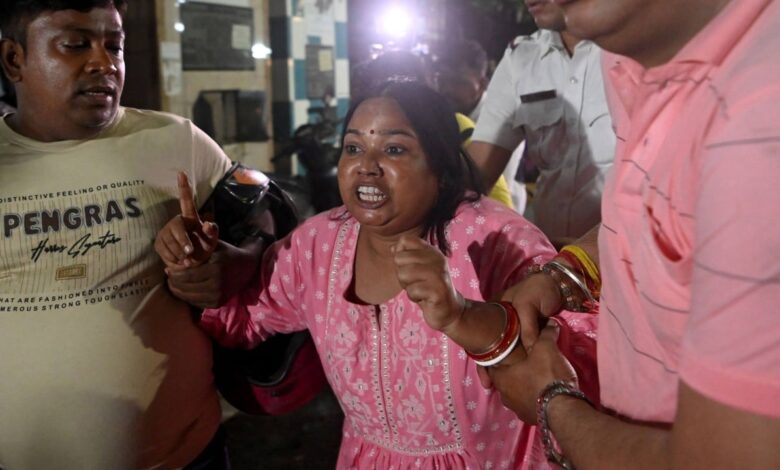
The incident occurred on Saturday, during one of the most significant religious festivals in the Hindu calendar. According to official statements and initial reports from Indian media, the collapse of order was not due to structural failure of the pavilion itself, but rather the human reaction to the sudden change in weather. As rain began to fall, the dense crowd outside the pavilion moved in a panicked manner, resulting in a crush that overwhelmed those nearby. Six bodies had been identified by the time of the initial official brief, while medical services attended to the injured. The specific mechanism of the stampede—crowd surge induced by sudden meteorological disruption—underscores the physical risks associated with high-density public gatherings in areas prone to intense convective weather.
The human cost of the event is captured in the fragmented testimonies emerging from the scene. One husband described finding his wife lying still amidst the turmoil, a personal account that illustrates the immediate and devastating impact of such crowd disasters. While the broader narrative focuses on the statistical toll, these individual accounts serve as a reminder of the fragility of safety in large-scale outdoor events. The location, Kolkata, is a metropolitan center where such festivals draw immense crowds, often spilling onto streets and into open pavilions where weather protection is limited.
From a climate and environmental perspective, the incident highlights the intersection of demographic pressure and meteorological variability. While the specific rainfall event was the immediate trigger, the underlying vulnerability stems from the combination of extreme crowd density and the lack of adequate infrastructure to handle sudden weather shifts. In the context of a changing climate, where meteorological models suggest an increase in the frequency and intensity of extreme precipitation events in parts of South Asia, such risks are not isolated anomalies but potential hazards that may become more common. The inability of the crowd to disperse safely in the face of sudden downpours reflects a gap in adaptive infrastructure and crowd management protocols that account for weather volatility.
Authorities in West Bengal have begun the process of identification and recovery, with Chief Minister Adhikari providing the initial figures for fatalities and injuries. The response to the stampede is currently focused on the immediate humanitarian crisis: treating the injured and identifying the deceased. However, the incident raises questions about the preparedness of large-scale cultural events for sudden environmental disruptions. In many regions, outdoor festivals are planned with an assumption of stable weather, yet the reality of monsoon or pre-monsoon seasons involves unpredictable bursts of rain that can rapidly degrade safety conditions.
The scientific evidence for this specific event is meteorological and sociological rather than purely climatological in the long-term sense. The “sudden rainfall” is a documented local weather phenomenon, but its interaction with a static, high-density crowd created a feedback loop of panic. No single factor—be it the rain, the crowd size, or the layout of the pavilion—caused the tragedy in isolation; rather, it was the convergence of these elements. As climate models project more erratic precipitation patterns, the environmental significance of such events lies in their demonstration of how physical infrastructure and social organization must evolve to withstand increased meteorological volatility.
As the city of Kolkata mourns its losses, the focus remains on the immediate aftermath. The identification of the six confirmed victims and the treatment of the 25 injured are the primary objectives for local authorities. The incident serves as a stark reminder that environmental factors, such as sudden rainfall, are not merely background conditions but active agents that can dramatically alter the safety of human activities. Until crowd management and event planning explicitly integrate climate risk assessments, such gatherings remain vulnerable to the unpredictable nature of the atmosphere.