
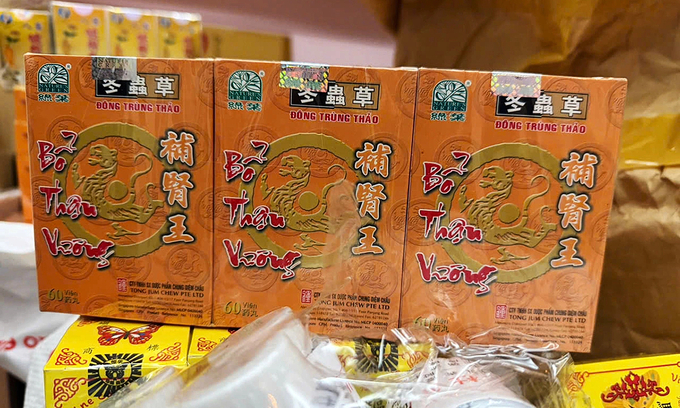
Health Risks of Laced Remedies
In one significant case concluded in January, the Ho Chi Minh City Economic Police Division arrested Nguyen Duy Hien, his wife Ngo My Hoanh, and Vo Van Nghe for manufacturing and trading counterfeit medicines. Investigators allege that the group mixed betamethasone, a prescription corticosteroid, into homemade traditional remedies to create a rapid-onset effect that fostered consumer trust and potential dependence.
Health officials have warned that the unauthorized use of betamethasone in traditional medicine poses serious health risks. Prolonged exposure can lead to adrenal insufficiency, stomach ulcers, fluid retention, and brittle bones. Laboratory tests confirmed the presence of this banned anti-inflammatory and pain-relief drug in the seized products. Police reported seizing nearly 13,100 counterfeit items, along with raw materials, machinery, and packaging labels during raids on production workshops and storage facilities linked to the group.
In a separate incident detailed in April, authorities in Ho Chi Minh City dismantled another ring led by Thai Chanh Kien. This group was accused of mixing paracetamol, a common pain reliever, into herbal products packaged as pills. The operation resulted in the seizure of over 4,000 boxes of finished products and approximately 790 kilograms of pills. Police stated that Kien had operated unregistered production sites since 2021, shifting to counterfeit manufacturing by late 2024 to boost profitability. The suspects used packaging falsely labeled as originating from Malaysia and Hong Kong to mislead consumers about the products’ origin and legitimacy.
Regulatory Landscape and Enforcement Efforts
These arrests occur against a backdrop of broader government efforts to address the availability of substandard and counterfeit medicines. Deputy Minister of Health Do Xuan Tuyen reported to the National Assembly in August that Vietnam’s rate of counterfeit medicines is lower than the global average, although retail outlets and online platforms remain key areas of concern.
According to Ministry of Health data, inspectors tested nearly 34,000 medicine samples between January 2024 and June 2025. Only 0.45 percent of these samples failed to meet quality standards. This figure is significantly lower than the World Health Organization’s 2017 estimate of 10 percent for low- and middle-income countries. During this period, more than 600,000 facilities were inspected, resulting in the identification of nearly 10,000 violations and the imposition of fines totaling over VND 51 billion (approximately US$1.9 million).
Despite these statistics, officials acknowledge that the situation remains complicated. Deputy Minister Tuyen noted that while counterfeit drugs have not recently been found in hospitals or clinics, they continue to circulate in retail and e-commerce channels. The Ministry of Industry and Trade reported handling 11,610 violations involving counterfeit food from January 2024 to June 2025, with fines exceeding VND 76.4 billion. In the pharmaceutical sector, 345 cases were addressed, leading to fines over VND 29 billion and the confiscation of goods valued at more than VND 14 billion.
Legal Gaps and Future Outlook
Health experts and officials have highlighted that current legal frameworks may not provide sufficient deterrence. Deputy Minister Tuyen admitted that despite existing laws on pharmacy and food safety, the prevalence of counterfeit drugs and functional foods indicates gaps in enforcement and legal loopholes. He has requested a comprehensive review of current regulations to propose stricter amendments.
The crackdown extends beyond pharmaceuticals to include dietary supplements and cosmetics. The Drug Administration of Vietnam (DAV) has ordered the withdrawal of various products, including specific cosmetics and functional foods, due to violations such as incorrect ingredient labeling or unauthorized claims regarding disease prevention and treatment. For instance, VB Group was ordered to recall its Hanayuki Sunscreen Body product, while Uyen Phuong Import Export Trading JSC was required to withdraw and destroy products under the Germaine De Capuccini brand that made medicinal claims without proper licensing.
International pressure, including attention from the U.S. Trade Representative, has further intensified Vietnam’s focus on intellectual property reforms and anti-counterfeiting enforcement. As the investigation into the recent arrests continues, authorities are working to identify the sources of pharmaceutical ingredients and the broader distribution networks that brought these counterfeit medicines to consumers. The next phase of enforcement will likely depend on the implementation of proposed legal amendments and the effectiveness of cross-ministry coordination in monitoring both physical retail and digital marketplaces.