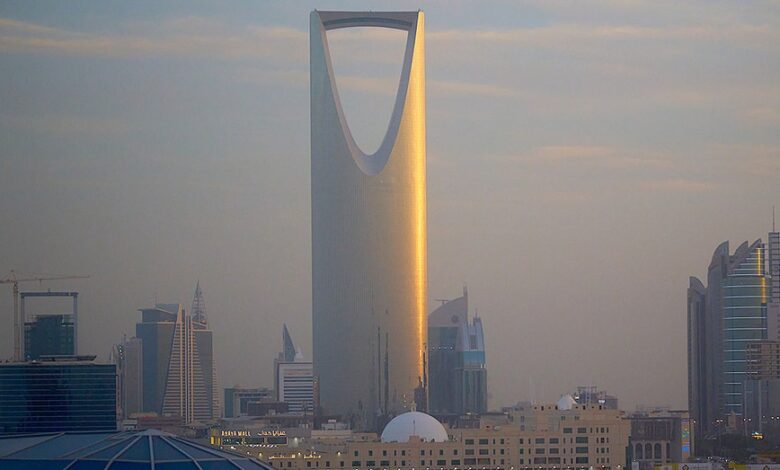
The move followed an announcement by the Saudi-led coalition that it intercepted two drones in the Riyadh area, a third over the Eastern Province, and two ballistic missiles in southern Saudi Arabia overnight. Authorities had earlier issued a threat alert in the capital, which was shared on the social media platform X. This latest wave of attacks by Yemen’s Iran-backed Houthi rebels has rattled the region, with management at the Kingdom Centre citing the disruption to the Saudi capital as the primary driver for the precautionary measure.
The security environment in Riyadh has deteriorated significantly since October 10, when a deadly attack on King Khalid International Airport killed 13 people and wounded more than 300 others. A subsequent strike the following day resulted in one death and 11 injuries. As a result, airport operations remain severely disrupted, and schools in Riyadh have extended remote learning measures. The Houthis, who control Yemen’s capital, Sanaa, and much of the country’s north, have intensified fighting against the Saudi-led coalition, which supports Yemen’s internationally recognized government, amid the broader U.S.-Israeli conflict with Iran.
In the southern border region, the military situation has also produced tragic consequences. Maj. Gen. Turki al-Maliki, spokesperson for the Saudi-led coalition, reported that an AH-6i reconnaissance helicopter crashed in the Najran region on Sunday due to a technical malfunction, killing both crew members. In a separate incident, Saudi civil defense authorities reported that six people were injured when a hostile projectile struck a residential neighborhood in Najran, damaging three homes and three vehicles. These events underscore the geographic constraints and logistical challenges facing Saudi forces as they manage threats across a vast territory, from the southern border to the capital.

As the threat to Saudi Arabia’s security and territorial integrity grows, regional diplomatic and military postures are shifting. Egyptian President Abdel Fattah el-Sisi requested an emergency parliamentary session to authorize defensive military support for Saudi Arabia if requested by Riyadh. The Egyptian presidency stated that Cairo was prepared to provide necessary support to defend Saudi security, stability, and Islamic holy sites. Following a meeting of Egypt’s National Defense Council, Egyptian Foreign Minister Badr Abdelatty spoke with Saudi Foreign Minister Prince Faisal bin Farhan about the importance of de-escalation. The potential involvement of Egypt, which maintains one of the Arab world’s largest militaries, could significantly expand the regional response to the Houthi threat, adding a new dimension to the deterrence landscape in the Gulf.
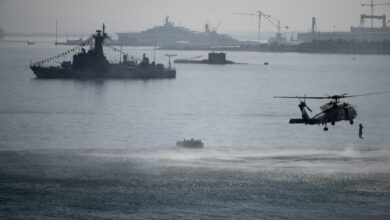
While the Saudi conflict dominates headlines, a parallel crisis is unfolding in the Strait of Hormuz, a critical chokepoint for global oil production. Arsenio Dominguez, Secretary-General of the International Maritime Organization (IMO), warned on Sunday that the situation for international shipping remains “severe and critical.” He noted that approximately 6,000 seafarers remain trapped in the region since the conflict began on February 28, and that 24 ships had been attacked over the preceding two weeks. The IMO has recorded 100 confirmed maritime incidents across the region as of October 9, with 24 seafarers killed.
The maritime crisis is complicated by diplomatic disputes over the conduct of military forces in international waters. On October 9, Iran submitted a letter to the IMO alleging that the U.S. military used VHF Channel 16, the internationally designated maritime distress and safety channel, to intimidate Iranian crews. The letter, submitted by Iranian Ambassador Seyed Ali Mousavi, claimed that U.S. forces occupied the channel for prolonged periods and addressed Iranian seafarers in Persian with “threatening, abusive and provocative language,” urging them to abandon their vessels in certain instances. Iran accused American forces of turning the safety channel into an “instrument of military intimidation and psychological pressure.” However, the letter provided no recordings, transcripts, or specific details of the alleged exchanges, and Fox News Digital could not independently verify the accusations.

U.S. Central Command (CENTCOM) defended its actions, stating that the naval blockade of Iranian ports has been in place for months and is “professionally communicated to all international mariners.” CENTCOM noted that vessels refusing to comply receive multiple warnings with ample opportunity to comply, and that American forces remain “highly vigilant, focused, and professional.” The U.S. military asserted that its enforcement is standard procedure, contrasting with Iran’s characterization of the actions as psychological warfare. The IMO has indicated it may review its regulations and procedures to determine if stronger safeguards are needed for maritime communications, though no formal investigation has been announced.
Dominguez emphasized that his message is not for vessels to transit the Strait of Hormuz or put seafarers at risk “until we have guarantees.” He highlighted the rise of fraudulent ship registrations and false flags, noting that irresponsible shipowners acting as shuttle tankers are contributing to the escalation. “Seafarers are not trained for combat, and they are not guilty of any conflicts that are happening around the world,” Dominguez said. Despite the confrontation, diplomatic channels between the IMO and Iran remain open, with Dominguez confirming he communicates with Iranian authorities through diplomatic channels, though he acknowledged that getting final decisions is difficult due to the ongoing conflict.
As Riyadh’s corporate centers remain in remote mode and the Egyptian parliament debates military aid, the focus remains on the immediate safety of both civilian populations and maritime workers. The next confirmed development will likely hinge on the outcome of the Egyptian parliamentary session and whether the IMO initiates a formal review of maritime communication protocols in contested waters.