
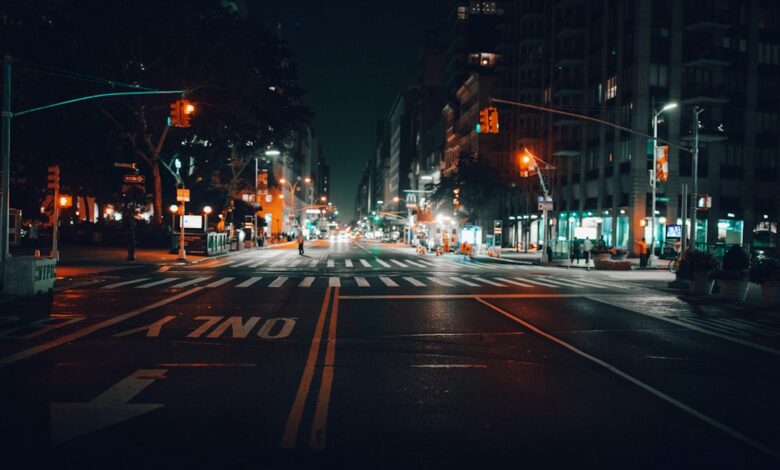
In response to the chaos, French Prime Minister Sébastien Lecornu announced on Monday that he has instructed prefects to impose “very limited” and “localized” curfews in cities to prevent further rioting and looting. Speaking after an emergency meeting with top government officials, Lecornu defended the efforts of police officers who faced violent crowds, noting that despite scenes of severe violence and extensive property damage, no one was killed. He described this outcome as “a miracle,” while confirming that specific details regarding which areas would be placed under curfew would be released later on Monday.
The decision to restrict movement in certain zones comes in the wake of a weekend that saw at least 2,400 people arrested nationwide. The unrest began on Saturday during protests concerning the cost of living and educational conditions, but it quickly devolved into major violence. Authorities reported that groups of hundreds of people sought confrontations with police and specifically targeted public buildings, including city halls and other public offices. The violence continued into Sunday evening, when groups set fires to trash bins, bicycles, and other objects in the streets while looting businesses in Paris, Lyon, Marseille, and other major cities.
The scale of the disorder forced a crisis at the highest levels of the French government. Interior Minister Laurent Nuñez offered his resignation on Sunday, acknowledging that the authorities had “lost control” in some major cities. “You can’t look shopkeepers in the eye when hundreds of businesses have been looted and say we haven’t lost control in some of these major cities. Obviously,” Nuñez said, acknowledging the severity of the situation. He attributed the violence to “hordes of troublemakers and looters” and “far-left activists,” while also conceding that police strategy needed adaptation in the face of “extremely mobile groups.”
However, President Emmanuel Macron refused Nuñez’s resignation. In a statement released by the presidential office on Monday, Macron cited “the need for continued command of law enforcement in the current context” as the reason for retaining the minister. The President instructed Nuñez to take all necessary steps to ensure “full transparency about the failures in planning and intelligence-gathering that led to the violence.” Furthermore, Macron demanded the introduction of “new policing tactics on the ground as quickly as possible” to put an end to the violent events. This directive highlights a shift in the government’s approach, moving from a defensive posture toward a more rigorous internal review and tactical overhaul of police operations.
Nuñez, speaking on France Inter radio, framed his initial offer of resignation as an act of responsibility. “I submitted my resignation because I am responsible for everything that is happening,” he stated. His primary focus, he said, was ensuring that such events did not recur. “Now, the real issue is ensuring that this doesn’t happen again… We obviously need to be better at anticipating the kind of mobilization that is unfolding,” Nuñez explained. The admission of failures in intelligence-gathering suggests that the government had not fully anticipated the scale and nature of the mobilization, a gap that is now the subject of a presidential mandate for reform.
The geopolitical and domestic implications of this unrest extend beyond immediate property damage. The targeting of city halls and public institutions signals a direct challenge to the legitimacy and physical security of local governance. By imposing localized curfews, the central government is asserting its authority to restore order in specific urban centers where the state’s monopoly on violence has been temporarily compromised. The choice to keep Nuñez at the helm, despite his offer to step down, indicates that Paris views the crisis as a solvable operational failure rather than a systemic political collapse requiring a change in leadership. The President’s insistence on transparency regarding planning failures serves a dual purpose: it holds the interior ministry accountable while signaling to the public and the police force that the state is adapting its methods to meet the “extremely mobile groups” that have proven difficult to contain.
The economic impact is also significant, with hundreds of businesses looted across the nation. The disruption to commerce, combined with the destruction of public assets like the Limoges City Hall, places pressure on local budgets and national resources for reconstruction. The implementation of curfews, particularly in cities like Marseille where the prefect banned any gathering from noon to 8 p.m. on Monday, represents a direct trade-off between civil liberties and public safety. As the government moves to enforce these new restrictions, the focus shifts to whether the “new policing tactics” ordered by Macron will be sufficient to prevent a recurrence of the weekend’s violence. The unresolved tension lies in the balance between the government’s need to project strength and control, and the underlying grievances regarding living costs and school conditions that sparked the initial protests. The coming days will test whether the localized curfews and tactical changes can effectively de-escalate the situation without exacerbating the social unrest.



One Comment