
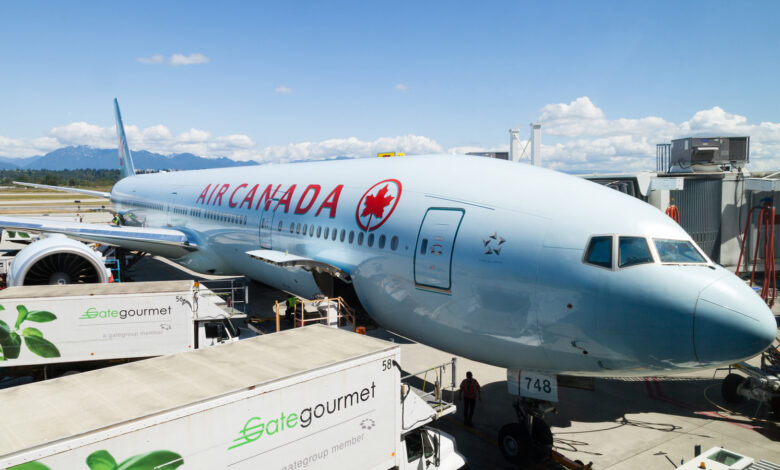
The current weather pattern, characterized by a strong line of storms stretching from the Mid-Mississippi Valley through the Mid-Atlantic and into New England, has created a complex logistical challenge for airlines. For Air Canada, the impact is quantifiable. Data recorded as of 9:00 AM Eastern Standard Time on July 22nd shows a shift in operational performance compared to the previous day. On July 21st, the carrier reported 196 delayed flights, representing 34% of its schedule, alongside 42 cancellations, or 7% of total flights. By Tuesday morning, the metrics had adjusted to 26 delayed flights (4%) and 11 cancellations (1%). However, these figures represent a snapshot at the start of Tuesday’s operations, a day when storms are forecast to intensify.
The airports most vulnerable to these disruptions are concentrated in the Tri-State area. Air Canada has specifically flagged John F. Kennedy (JFK), LaGuardia, and Newark as the highest-risk locations. On Monday, intense storms limited flight visibility, forcing pushbacks for arrivals in both New York and New Jersey. The Federal Aviation Administration (FAA) has implemented traffic control initiatives, effectively grounding flights when safety thresholds are not met. This regulatory intervention, while necessary for safety, translates directly into schedule compression. As canceled flights accumulate, the backlog pushes subsequent departures later, creating a cascading effect that extends well into Wednesday.
For the thousands of passengers affected, the immediate consequence is a lack of control over their travel timelines. The meteorological conditions include high winds, lightning, and heavy rain, with rare tornado warnings issued for upstate New York and eastern Pennsylvania. These warnings are expected to persist into Wednesday, keeping the threat of further groundings alive. For travelers flying into Montreal or Toronto, or departing from the U.S. Northeast, delays are imminent. The unpredictability of severe weather means that rescheduled flights can be pushed back by hours or even a full day, depending on when air traffic control deems conditions safe for operation.
This disruption highlights a specific friction point in international air travel: the delineation of liability between weather events and carrier operations. Air Canada’s policy explicitly categorizes meteorological conditions as “arrival delays outside of Air Canada’s control.” Under the Air Passenger Protection Regulations, compensation is typically reserved for disruptions within the airline’s control, such as maintenance issues or operational errors. In this instance, the carrier states that delays caused by weather, crew illness, or airport restrictions are not eligible for the standard $400 compensation package.
Instead, the airline’s recourse for affected passengers is rebooking. Air Canada aims to place travelers on the soonest available flight. If the offered rebooking does not meet the passenger’s needs, or if the flight is canceled or delayed by three hours or more, passengers may request a refund for the unused portion of their ticket. In cases where the delay renders the travel purposeless, the airline may return the passenger to their point of origin, allowing for a refund of the used portion of the ticket. This policy distinction is crucial for consumers, as it separates the financial remedy for involuntary changes from the statutory compensation for service failures.
The broader economic implication of such weather-driven disruptions extends beyond individual travel plans. For the airline industry, these events represent a recurring operational cost that is difficult to hedge. While the specific financial loss from Tuesday’s delays is not disclosed, the cumulative effect of delayed slots, crew overtime, and accommodation costs for stranded passengers can be significant. Furthermore, the reliance on FAA traffic control during severe weather periods creates a bottleneck that affects all carriers operating in the region, not just Air Canada. The interdependence of airport infrastructure means that a storm in the Mid-Atlantic can throttle capacity across the entire Northeastern network.
As the storm system continues to move, the focus shifts to the near-term outlook for Wednesday. Meteorological forecasts indicate that while storms may remain localized overnight, the risk of strong winds and potential tornadoes remains elevated. For the traveler waiting at JFK or Newark, the resolution is not in the airline’s hands but in the clearing of the sky. The next critical data point will be the FAA’s lifting of ground stops and the subsequent ability of airlines to clear the backlog of delayed flights. Until then, the schedule remains in flux, a reminder of the persistent vulnerability of air travel to atmospheric conditions.
For now, the advice for those in the Tri-State area is to monitor real-time updates. Air Canada’s Flight Disruptions page is being updated regularly to reflect the changing outlook, serving as the primary source of truth for affected passengers. The journey from the Northeast to Canada, or within the U.S., is currently subject to the whims of the weather system, with no guarantee of timely arrival until the storms pass.