The core of this argument rests on a specific, documented disparity in transmission capacity. The officials cited data indicating that China has built more high-voltage transmission infrastructure in the last 15 years than the United States has constructed in its entire history. This infrastructure gap is not abstract; it underpins a measurable shift in global manufacturing dominance. According to National Science Foundation data cited in the letter, China accounted for 31.5% of global knowledge- and technology-intensive manufacturing value added in 2024, compared with 20.7% for the United States. The officials contend that while the U.S. retains advantages in technology, capital markets, and natural resources, these benefits are negified if factories cannot be built or powered quickly enough to reach the market.
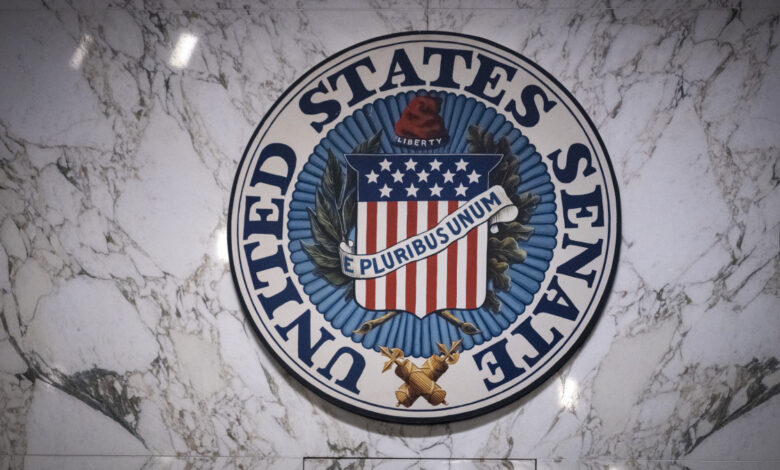
The proposed legislation aims to address these procedural barriers by reinforcing statutory deadlines for key reviews and overhauling environmental rules. A specific provision requires data centers to pay for the new transmission infrastructure built to serve them, a mechanism designed to align costs with consumers of high-demand energy. The bill, introduced in the Senate at the end of September, is expected to be debated after the mid-term elections when Congress returns from recess on November 9. The American Petroleum Institute (API) and major energy companies have urged lawmakers to bring the legislation to the floor, arguing that permitting reform provides the investment certainty necessary to maintain America’s industrial leadership. Conversely, opponents characterize the bill as anti-environmental and a “back-door deal” to facilitate the buildout of hyperscale AI data centers and the fossil fuel infrastructure required to power them.
This legislative push occurs against a backdrop of extraordinary profitability in the global oil and gas sector, yet the financial windfalls of the supermajors are not translating into the rapid infrastructure expansion the U.S. officials advocate. Following the war in the Middle East, oil majors have recorded robust earnings. In the second quarter of the year, the energy sector of the S&P 500 booked annual growth of 128.2%, with the refining subsector recording triple-digit earnings growth. Projections for the third quarter indicate that ExxonMobil could report a profit of $16.2 billion, a 101% increase year-over-year. Chevron is expected to see the largest annual profit increase at 158%, with earnings of $9.3 billion. Shell’s profits are estimated at $10 billion, TotalEnergies’ at $8.4 billion, and BP’s at $5.6 billion, representing an 84% increase from the previous year.
Despite these record sums, the operational response of the supermajors has been one of financial conservatism rather than capital acceleration. The industry’s behavior has shifted significantly since the 2014 bust and the 2020 pandemic, events that, combined with decarbonization policies, led to a retreat from high-cost exploration and a focus on balance sheet strength. Rather than a spending spree, the supermajors are using windfall profits to pay down debt. Chevron has cut its debt-to-operating cash ratio from x1 to x0.4 in the current quarter. BP, whose net debt-to-operating cash ratio stood at x1.7 at the end of last year, aims to bring it down to x0.8 using this year’s robust profits. Shell has announced plans to continue its share buyback, absorbing another $3.5 billion worth during the final quarter of the year.
This financial discipline reflects a strategic recalibration. After a period where companies like BP aggressively pivoted toward wind and solar to align with net-zero targets, the industry has reasserted its focus on core oil and gas operations, driven by the reality of natural field depletion. As Francisco Gea, executive managing director of exploration and production at Repsol, noted, the industry must now prioritize replacing current production. Investment flows are shifting toward frontier exploration in Africa, South America, and Southeast Asia, with Eni’s CEO Claudio Descalzi noting a shift away from the Middle East due to war-related disruptions.
The tension between the U.S. government’s desire for rapid infrastructure buildout and the oil industry’s cautious capital allocation highlights a structural challenge. While the supermajors are generating billions in profit, their strategy prioritizes shareholder returns and debt reduction over the aggressive, rapid expansion of physical assets that the former officials argue is necessary to compete with China’s state-led industrial strategy. As Congress prepares to debate the permitting reform bill, the outcome will determine whether the U.S. can streamline its regulatory environment to match the pace of its geopolitical rivals, or if the infrastructure gap will continue to widen despite the sector’s financial strength.
For now, the next verified development will be the Senate debate scheduled for November 9, where the legislative fate of the Bipartisan American Affordability and Jobs Act of 2026 will be decided, potentially altering the regulatory landscape for energy projects in the United States.