The legal proceedings against the security coordinator center on allegations of intentional or negligent discharge of a firearm during a confrontation at a roadblock not authorized by the Israeli government. While specific statutory charges and the precise judicial stage of the case have not been fully detailed in available reports, the arrest and charging indicate that Israeli police have opened a criminal investigation into the incident. The distinction between a security operative acting under orders and an individual committing a crime is central to such cases, though the current status is that of an accused individual facing formal charges rather than a convicted criminal.
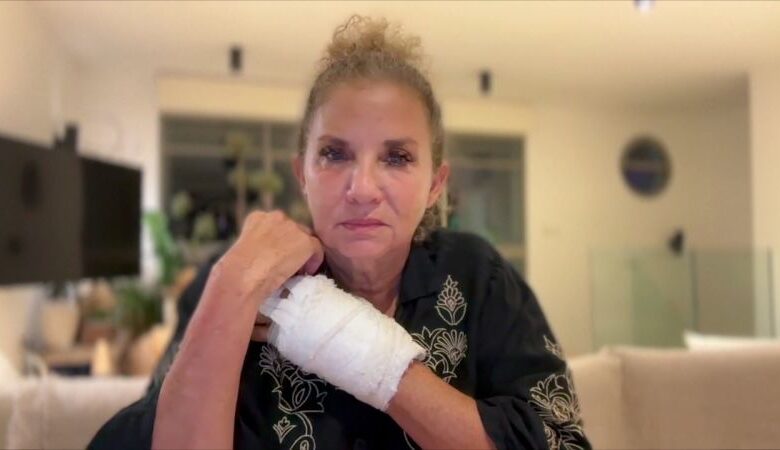
Concurrently, the case of Heidi Levine has drawn international attention to the legal and physical risks faced by journalists in the occupied West Bank. Levine, a veteran photojournalist, was covering the annual olive harvest when she and a group of Palestinians were attacked by a crowd of Israeli settlers. According to Levine’s account, the attackers, who she identified by religious garments, set fire to olive trees and subsequently charged the group. She reported that tear gas was deployed and gunfire was heard, during which a Palestinian man was shot in the leg.
Levine sustained serious injuries, including a broken rib, a broken vertebra, and a severe finger injury requiring surgery. She described being thrown to the ground, kicked, and beaten with sticks. A point of significant public controversy arose regarding video footage of the attack. Israeli Prime Minister Benjamin Netanyahu remarked that the footage “appears to show Levine knocked down and immediately helped to her feet by the same unidentified individual.” Levine explicitly contested this characterization, stating that she was stood up only because her attackers were attempting to remove her gear and personal belongings, including her gold necklace, camera bag, and passport.
The legal and political responses to these incidents have been varied. The White House and Israeli President Isaac Herzog condemned the attack on Levine, while Netanyahu cast doubt on the severity of the assault, stating that “serious questions remain.” This divergence highlights the tension between institutional condemnation of violence against press freedom and political narratives that may minimize the extent of settler aggression.
Law enforcement actions have followed the attacks. Israeli police arrested at least 10 suspects in connection with both the assault on Levine and a separate incident in which settlers attacked a group of European diplomats visiting the Palestinian Christian town of Taybeh. The arrests suggest that investigators are pursuing multiple lines of inquiry, potentially distinguishing between the specific individuals responsible for physical assault and those who may have facilitated or encouraged the violence.
Human rights organizations have documented a significant increase in such incidents. Yesh Din, an Israeli human rights group, has recorded more than 530 incidents of “settler and soldier violence” since the olive harvest began on September 27. These incidents include attacks on people, looting of crops, and destruction of property. The group notes that more than a quarter of this violence occurs in the presence of or under the protection of Israeli soldiers, raising questions about the state’s duty to protect civilians and enforce the rule of law in the West Bank.
The expansion of illegal settler outposts, many of which have been approved by the current Israeli government, has coincided with this surge in violence. This geographic and demographic shift has placed journalists and civilians in new areas of heightened risk. For Levine, the legal and physical aftermath of the attack has reinforced her professional commitment. She stated, “What hurts me the most is I can now really understand what others have gone through… It actually has strengthened my commitment to continue working to try to make a difference.”
As the legal processes unfold, the next formal steps will likely involve court hearings for the arrested suspects and the settlement security coordinator. The cases will test the willingness of Israeli judicial authorities to hold settlers and security personnel accountable for violence against Palestinians and foreign nationals. The outcome of these proceedings will have significant implications for the perception of the rule of law in the West Bank and the safety of international press personnel operating in the region.