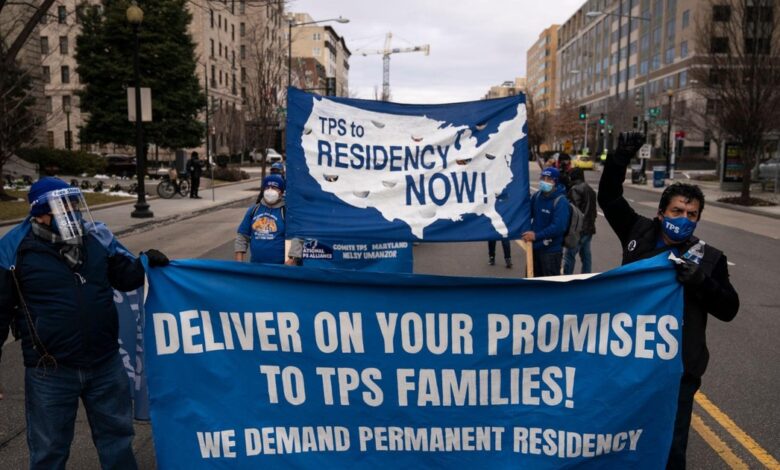
According to Congressional Research Service data, more than 100,000 Ukrainians and 1,790 Sudanese nationals were enrolled in TPS as of March 2025. Ukraine received this protection in 2022 following Russia’s full-scale invasion, while Sudan has held the designation since the late 1990s. The reprieve for these groups occurs as the administration moves to eliminate designations for the majority of other covered countries, citing the temporary nature of the humanitarian relief program.
El Salvador represents another significant exception to the termination trend. Although protections for approximately 170,000 Salvadorans were set to expire on September 9, 2026, the administration has not made an official statement, resulting in an automatic six-month extension under the statute. This delay has raised questions about the interplay between immigration policy and geopolitical cooperation. El Salvador, under President Nayib Bukele, has become a staunch ally, accepting hundreds of Venezuelan and Salvadoran deportees at its high-security Terrorism Confinement Centre (CECOT) in March 2025. While Washington has not established a formal link between this cooperation and the retention of TPS, human rights analysts suggest the situation reflects a delicate balance of diplomatic face-saving on both sides.
The retention of these protections contrasts with the outcome for Haitian nationals. In June 2026, the U.S. Supreme Court ruled in Mullin v. Doe that the administration possesses full authority to terminate TPS, removing a key legal obstacle. Consequently, the administration has proceeded with terminating protections for Haitians and Syrians, despite ongoing gang violence, mass displacement, and a State Department “Do not travel” advisory for Haiti. Humanitarian organizations have raised concerns about the safety of returning Haitian nationals, noting that hundreds have already been deported back to a country riddled with political instability.
The administration maintains that TPS provides temporary humanitarian relief and that decisions to extend or terminate designations depend on assessments of conditions in individual countries. For immigrants whose TPS designation ends, the consequences include the loss of work authorization and protection from deportation. The next expected development is a formal announcement from DHS regarding the long-term status of Ukrainian, Sudanese, and Salvadoran nationals, which remains pending.