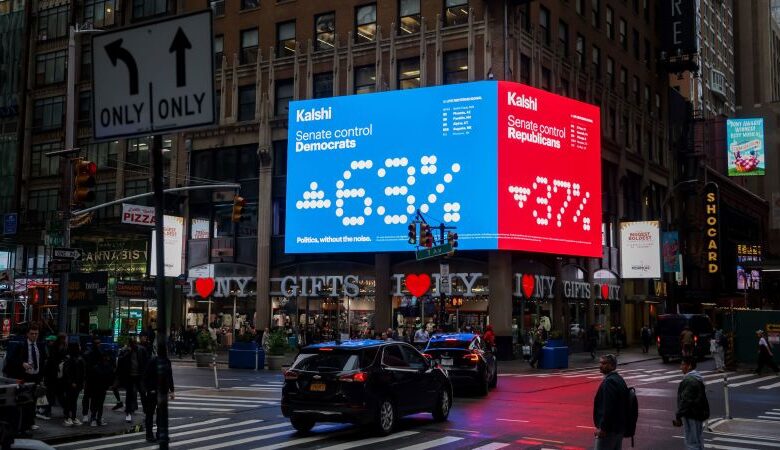
Kalshi, currently the largest US-based prediction company, reported nearly $1.1 billion in trading volume for midterm-related markets. A company spokesperson confirmed that this volume encompasses a wide array of markets, including individual race outcomes, voter turnout projections, candidate endorsements, and specific events such as debates or rally remarks. Its primary rival, Polymarket, has seen more than $340 million in trading volume on similar midterm markets. This figure includes activity on both its US-facing platform and its offshore site, which is popular with international users.
The growth in these figures is not merely a statistical anomaly but a reflection of a broader shift in political culture. Dustin Gouker, an industry expert who writes a newsletter about prediction markets, described the volume as “sizable.” While it remains significantly lower than trading volumes in sports or cryptocurrency markets, Gouker noted that it constitutes a “meaningful signal” that aggregates polls and public sentiment into actionable probabilities. He expects trading activity to ramp up significantly on Election Day, as professional bettors seek to capitalize on volatile market shifts occurring in parallel with polling station closures.
However, the mechanics of these markets mirror traditional gambling, where the majority of participants lose money. The distinction between a “market” and a “bet” is often blurred in public perception, though technologically, these platforms operate as exchanges for derivative contracts tied to specific event outcomes. For businesses and analysts, the value lies in the granularity of the data; unlike broad opinion polls, prediction markets allow for precise gauging of sentiment on niche issues, such as whether a specific candidate will debate an opponent or what specific policy statements might be made.
The surge in activity has not been without controversy. The “prediction frenzy” has reportedly scrambled US political culture, with campaign staffers and donors closely monitoring the odds. This intense scrutiny has drawn the attention of federal regulators, who have pledged to crack down on insider trading related to the midterms. In a concrete enforcement action, Kalshi suspended six 2026 candidates who were found to have improperly bet on their own races. This regulatory posture marks a significant departure from previous administrations; while the Biden administration took action against PredictIt and attempted to shut down election markets in 2024, the current administration has embraced the industry, finalizing new rules that explicitly protect election markets under federal law.
The legal landscape has become a critical driver of this growth. PredictIt, the self-described “original political prediction market” operating since 2014, declined to share specific dollar figures for its 2026 volume but cited a “favorable regulatory climate” as a key factor in its business growth. Co-founder John Aristotle Phillips noted that after prevailing in court against previous regulatory attempts to suppress such markets, the industry now has a clearer pathway. “There’s a hunger for information,” Phillips said, arguing that allowing Americans to stake their own money on forecasts is beneficial for public discourse. This legal clarity has encouraged smaller players to enter the space, with some targeting the US market ahead of the 2028 presidential election.
Smaller platforms are also participating in this trend, though on a much smaller scale. ForecastEx, owned by Interactive Brokers, reported more than $6.4 million in trading volume for midterm markets. Meanwhile, Smarkets, a UK-based platform, saw approximately $200,000 in trading volume among its British users regarding the midterms. The disparity in volume between US-based giants and international or smaller competitors underscores the dominance of the domestic market in this sector.
As Election Day approaches, the focus shifts to the practical implications of these trading volumes. For the first time, real-time market prices are being treated as a parallel metric to traditional polling, offering a dynamic view of voter confidence that polls cannot easily replicate. Yet, the distinction between informed trading and potential market manipulation remains a point of tension. Regulators are now tasked with distinguishing between legitimate speculative activity and insider trading, a challenge that will likely define the future of political prediction markets in the United States.