
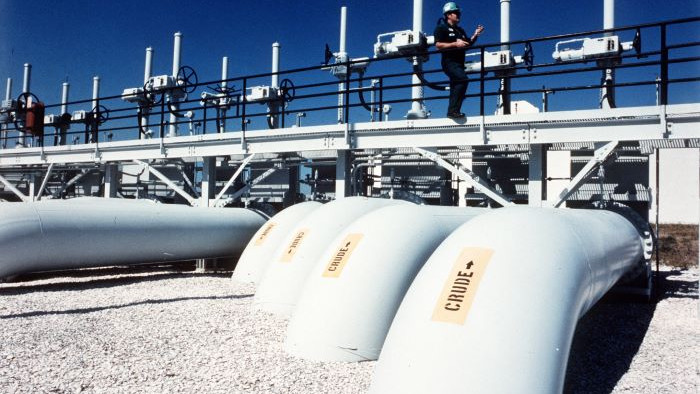
The authorized volume represents a significant but localized intervention. Lake Charles has a processing capacity of approximately 264,000 barrels per day, meaning the 400,000-barrel authorization covers roughly a day and a half of the refinery’s operational requirements. The crude is slated for immediate delivery from the SPR’s West Hackberry site in Louisiana. While the DOE did not specify the exact cause of the delivery disruption, Phillips 66 confirmed it will receive the crude, though the company declined to discuss specific refinery operations or commercial activities, stating it did not anticipate any broader operational impacts.
This transaction is structured as an exchange rather than a sale. Under this mechanism, Phillips 66 is required to return the borrowed barrels to the reserve, along with additional crude as a premium. This distinction is crucial for understanding the state of the SPR, which is currently at 282.7 million barrels, its lowest level since 1982. Analysts suggest this figure may represent an operational minimum, limiting the flexibility of future government interventions.
The current release follows a pattern of increased SPR usage this month. On October 10, the DOE authorized up to 4 million barrels in emergency exchanges for ExxonMobil and BP, responding to weather-related supply disruptions. These recent actions are part of a broader depletion of the reserve that has occurred under both the current administration, citing the Iran conflict, and the previous administration, which withdrew significant volumes following Russia’s invasion of Ukraine in 2022.
The timing of this release coincides with a sharp escalation in crude oil prices. On Friday, Brent crude traded at $117.04 per barrel, a 3.42% increase, while West Texas Intermediate (WTI) rose 4.07% to $103.52. With Middle Eastern supply routes remaining constrained and global crude prices hovering above the $100 mark, maintaining refinery supply has become an increasingly expensive proposition. The 400,000-barrel authorization addresses a specific, localized refinery issue rather than the broader global shortage, but it signals the heightened sensitivity of the US supply chain to disruptions.
In a separate but related development regarding US energy security and corporate governance, former executives of the $25 billion Polar Train LNG project have raised serious concerns about Russian influence. A former CEO of the Alaskan venture told the Financial Times that the project was financed and effectively controlled by the Russian energy giant Novatek without the explicit approval of the US government. These allegations suggest a potential breach of strategic oversight in a project intended to bolster US energy independence, adding a layer of geopolitical complexity to the current energy landscape.
As the SPR continues to shrink and oil prices remain elevated, the interplay between physical supply constraints and geopolitical risks is becoming a central driver of market volatility. The immediate release to Phillips 66 is a tactical move to ensure refinery operations continue, but the structural depletion of the reserve leaves fewer options for the US government to mitigate future shocks.