
The single death was reported in Liuqiu Township, Pingtung County, in southern Taiwan. Authorities confirmed that a man was swept away by storm-driven waves on a beach. Police received a report around noon Thursday, and rescuers found him without vital signs around 2 p.m. He was pronounced dead at approximately 5 p.m. after being rushed to the hospital. This incident highlights the immediate danger posed by storm surge and high seas, which persist even as wind speeds diminish.
The human toll extended beyond the fatality to widespread injury and displacement. As of Saturday, the Central Emergency Operations Center (CEOC) reported 527 injuries, a figure that rose significantly from 94 recorded early Friday morning. The injuries were primarily caused by falling trees, electrical cables, billboards, and other storm debris. Traffic accidents accounted for 30 of the early Friday injuries, while falls and falling objects caused 26. The casualty list included foreign nationals, with reports identifying two Vietnamese and one Indonesian citizen among the injured. Additionally, 1,286 people were evacuated nationwide as of 8 a.m. Friday, with the highest numbers in Hualien County (576), Yilan County (351), and New Taipei (278). Residents living near the Wanli River barrier lake in Hualien were among those moved to safety.

Infrastructure across Taiwan was severely disrupted. At the peak of the storm, over 288,000 households experienced power outages, though most service was restored by later reports. The economic impact was immediate: Taiwan’s stock exchange, valued at approximately $5 trillion, closed on Friday, and hundreds of flights were cancelled across the region. Nearly all of Taiwan’s 22 counties and cities implemented a “typhoon holiday,” suspending schools and offices, with the exception of Kinmen county, which continued operations as usual.
The meteorological path of Champi was closely monitored by the Central Weather Administration (CWA). As of 11 a.m. Friday, the typhoon was centered about 260 kilometers southeast of Yilan County, moving north-northeast at 11–15 km/h. It packed maximum sustained winds of 155 km/h and gusts up to 191 km/h, with gale-force winds extending 320 km from its center. Forecasts indicated that the eye would pass without making direct landfall on Taiwan’s main island, though officials cautioned that the storm could stall, loop, or wobble, potentially altering its path. The CWA issued yellow alerts for 44 streams in Yilan at risk of debris flows and large-scale landslides, identifying 27 districts and townships across eight counties as particularly vulnerable.
The context of this event is significant for climate analysis. Typhoon Champi emerged in a year characterized by an active Super El Niño, a climate pattern that warms the Pacific Ocean and fuels storm intensity. While El Niño conditions increase the likelihood of stronger typhoons, it is critical to distinguish between long-term climate trends and individual events. The sources do not provide specific attribution studies linking this single storm directly to anthropogenic climate change. However, the storm’s peak intensity as a “super typhoon” and its role as the strongest storm of the year so far align with broader observations of increasing tropical cyclone activity in the Western Pacific.
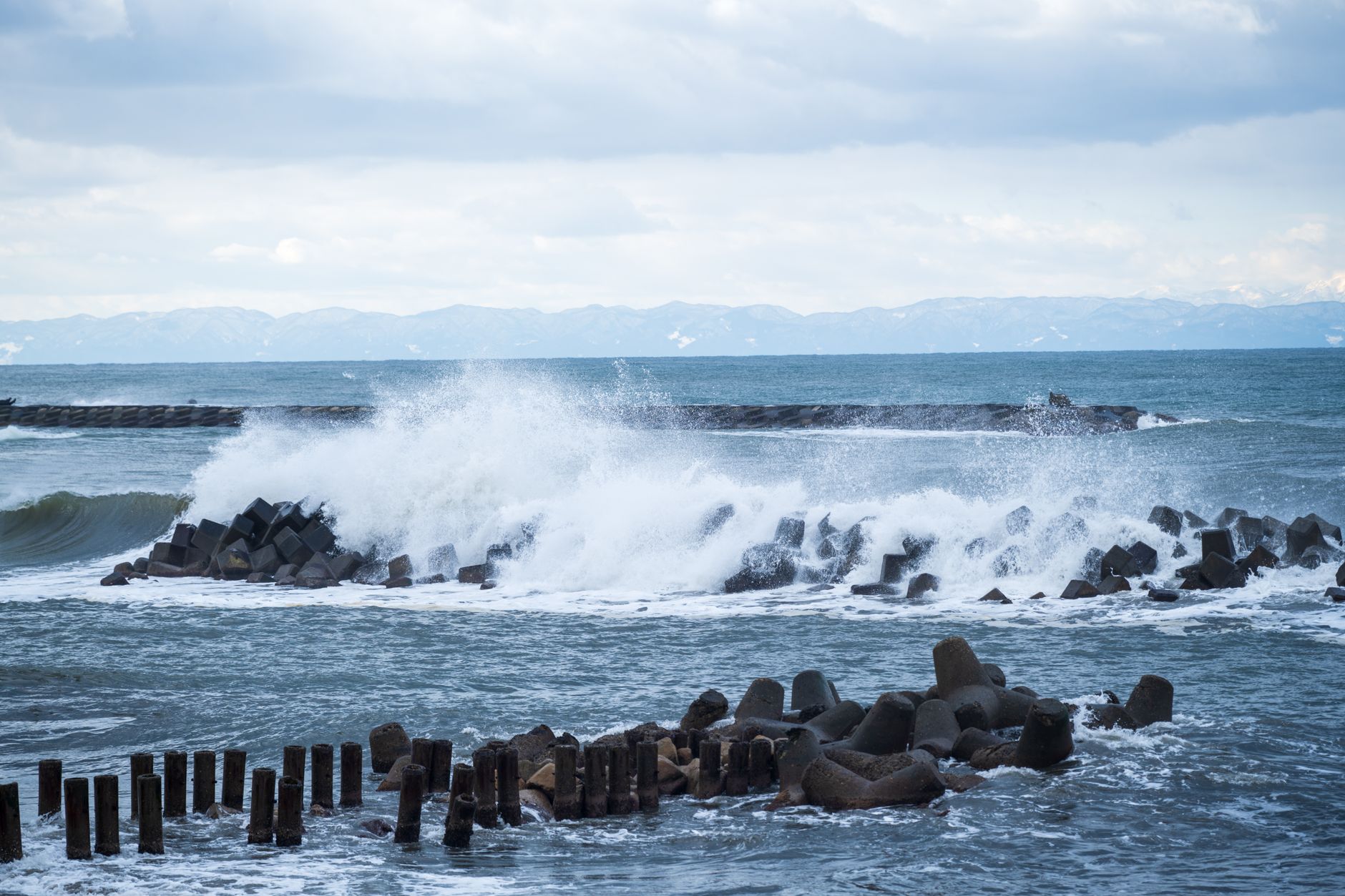
As Champi moved away from Taiwan, it headed north towards the coast of China and subsequently towards southern Japan. In Japan, over 160 flights were cancelled across four airlines, and power cuts affected nearly 8,400 households in Okinawa prefecture. In the Philippines, heavy rains and winds were reported in the Batanes island chain, with local authorities showing waves crashing into seaside villages, though no immediate casualties were reported there.
Officials in Taiwan, China, and Japan urged residents to remain alert even as the storm weakened, particularly those in mountainous and coastal areas at risk of lingering heavy rain and big waves. Rescue teams in China were deployed, and fishing boats were recalled to port as the typhoon approached the eastern coast. The CWA lifted the land warning on Saturday evening as the typhoon moved away from the island, marking the end of the acute threat to Taiwan, though the environmental impacts of the rainfall and wind damage will require ongoing assessment.
