The core of this development is the imminent agreement between Aramco and a syndicate of international lenders. The sum involved—$10 billion—represents a significant injection of capital that serves multiple purposes simultaneously. Primarily, it bolsters Aramco’s finances, providing a buffer against the volatility that conflicts in the region can introduce to crude export metrics. In an era where energy security is inextricably linked to geopolitical stability, the ability to access such large-scale debt capital is a testament to the company’s enduring creditworthiness, despite the turbulent environment surrounding its operations.
To understand the significance of this loan, one must look at the mechanics of how Aramco operates within the global energy system. As a state-backed entity, Aramco is the backbone of Saudi Arabia’s economy and a critical pillar of global supply. Its crude exports drive not only its own revenue but also the broader stability of oil markets. When conflicts threaten these export routes—whether through physical attacks on infrastructure, insurance premium spikes, or diplomatic restrictions—the immediate financial impact can be severe. By locking in $10 billion in funding, Aramco is effectively decoupling its immediate operational continuity from the short-term shocks of geopolitical instability. This ensures that even if export volumes dip or revenues fluctuate due to market panic, the company retains the financial muscle to maintain operations, service existing debts, and continue its massive investment programs.
The drivers behind this move are clearly rooted in risk management. The “conflicts in the Middle East” referenced in recent reports are not abstract threats; they represent tangible risks to the logistics of oil transport. The infrastructure that moves crude from the Eastern Province to global markets is extensive but vulnerable. A loan of this magnitude allows Aramco to navigate potential price swings without having to sell assets or cut back on long-term capital expenditure. For the international banking sector, participating in this syndicate is an acknowledgment of Aramco’s central role in the energy landscape. Their willingness to lend $10 billion signals confidence in the company’s ability to service this debt, even under stress scenarios.
Who is affected by this financial maneuver? Directly, the global oil market gains a measure of reassurance. Speculators and traders often react sharply to news of potential supply disruptions. By demonstrating financial resilience, Aramco helps stabilize sentiment among investors who might otherwise price in higher risk premiums for Middle Eastern crude. For consumers, the effect is indirect but real. Stability in the supply chain helps prevent the kind of speculative spikes in fuel prices that can ripple through transportation, manufacturing, and heating costs. While a $10 billion loan does not instantly change the price of gasoline at the pump, it contributes to the macroeconomic stability that keeps energy costs from becoming erratic.
The technical and policy implications are also worth noting. This loan underscores the continuing dominance of fossil fuels in the global energy mix, despite the ongoing transition to renewables. It highlights that even as the world builds out wind and solar capacity, the infrastructure and financial systems supporting oil remain deeply entrenched and capable of mobilizing vast sums of capital. For grid operators and energy planners, this reinforces the reality that oil and gas will remain a significant part of the energy puzzle for the foreseeable future, requiring robust financial and logistical frameworks to manage their risks.
However, uncertainties remain. The loan mitigates financial risk, but it cannot eliminate physical risk. If a conflict were to cause a prolonged halt in exports, even a $10 billion buffer would face strain. The duration and severity of the Middle East conflicts are unknown variables. Furthermore, the global economic environment, including interest rates and currency fluctuations, will influence the cost and ease of servicing this debt. The agreement also raises questions about the long-term sustainability of relying on debt to hedge against geopolitical instability. Is this a one-off measure, or does it signal a new era of defensive financing for major oil producers?
As the agreement nears finalization, the focus will shift from the negotiation tables to the operational floor. For Aramco, the next verified development will be the actual disbursement of funds and their allocation. Will the capital be directed toward upgrading export infrastructure to mitigate future risks, or will it be held as a liquid reserve? The response from global markets will also be a key indicator. If oil prices remain stable following the announcement, it will validate the strategy. If prices continue to swing wildly, it will suggest that financial buffers alone are insufficient to quell the uncertainty inherent in the current geopolitical landscape.
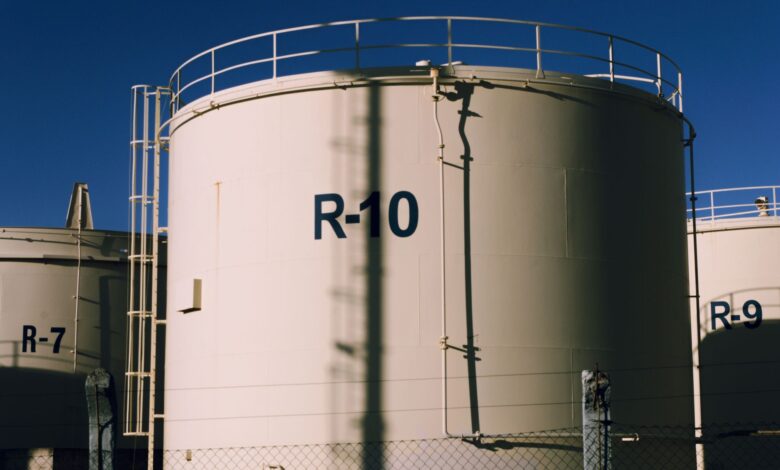
In the end, the story returns to the facility itself—the vast oil fields and processing plants where the crude is extracted and refined. The $10 billion loan is a financial echo of the physical reality that lies beneath the soil. It is a recognition that in a world of increasing complexity, the ability to move energy reliably is not just a technical challenge, but a financial one. As Aramco secures this funding, it reaffirms its position not just as a producer, but as a central node in the global energy network, capable of weathering storms that might otherwise disrupt the flow of power to the world.