
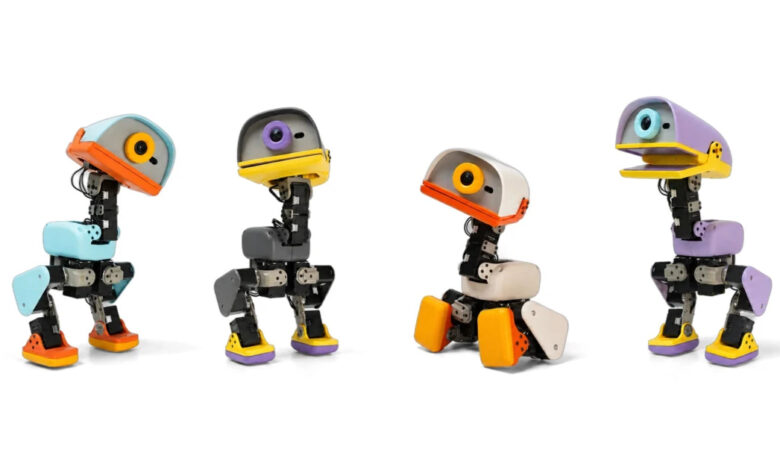
The Microduck is priced at $399, excluding taxes and shipping, and is manufactured by Pollen Robotics, a Bordeaux-based startup that joined Hugging Face in April 2025. Although the 20,000 figure represents cumulative advance orders since the preorder window opened on August 27, the recent spike is directly attributed to the viral marketing effect of the executive demonstration. Deliveries are scheduled for completion before Christmas, positioning the device as a potential contender for the holiday season. Delangue initially framed the milestone as a forecast, noting that the robot could become the most sold robot of 2026, but the figure now stands as a reported count of advance purchases rather than delivered units.
Technically, the Microduck weighs under 800 grams but contains 15 motors, a camera, a LiDAR range sensor, two inertial measurement units, and an articulated beak capable of grasping objects. It ships with seven trained behaviors, including walking, sitting, crouching, and recovering from falls. A separate roller attachment enables a “roller-skating” mode. The robot’s software is open source under the Apache 2.0 license, allowing owners to teach new routines and share them with the community, although the hardware design files remain proprietary. The devices are trained using Nvidia’s technology stack, where AI agents build virtual obstacle courses. Isaac Lab then trains movements across 4,096 simulated environments on a Blackwell GPU, with Isaac Sim verifying performance before the moves are tested on physical hardware.

The commercial significance of the Microduck lies less in the hardware sales and more in Nvidia’s role as an infrastructure provider for robotics developers. By supplying the chips and simulation software behind the consumer-facing showcase, Nvidia reinforces its position in the expanding robotics market. According to IDC figures cited by Forbes, nearly 25,000 humanoid robots were shipped worldwide in the first half of 2026, a 432.1% increase from the previous year, with revenue exceeding $740 million. However, 69% of these shipments were destined for research, exhibitions, and data collection rather than everyday commercial use. The research firm projects worldwide humanoid shipments to exceed 750,000 units by 2030. The Microduck represents a distinct consumer segment, with the International Federation of Robotics reporting 34.2 million units in consumer robotics sales in 2025, a 37% year-over-year increase.
Nvidia agreed on September 3 to acquire Hugging Face for $12.93 billion, a deal expected to close in the first half of 2027 pending regulatory approval. The Microduck is Hugging Face’s second robot, following the Reachy Mini. While the immediate financial impact of the 20,000 preorders is significant, the long-term strategic value for Nvidia is demonstrated through the adoption of its simulation and computing platforms in consumer robotics development.