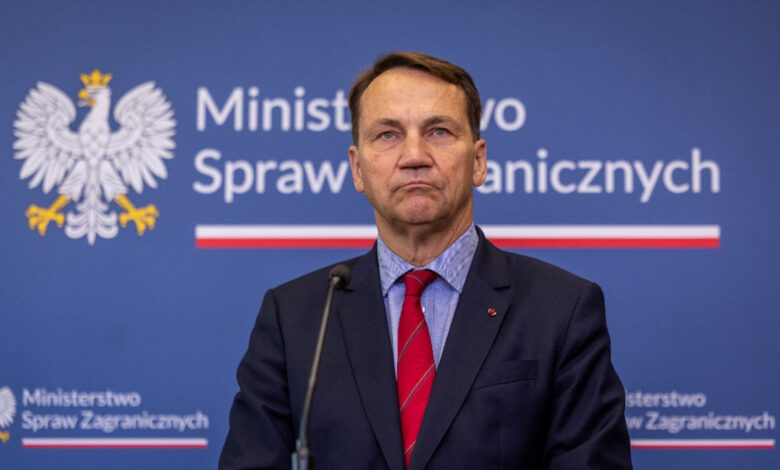
Sikorski’s analysis is grounded in the current static nature of the conflict. He noted that the 1,200-kilometer-long front line remains effectively frozen, with Russian offensive operations having stalled. This lack of territorial advancement coincides with what he described as rising casualty rates among Russian soldiers. For a nation engaged in a prolonged war of attrition, the combination of a stagnant front and heavy personnel losses represents a significant drain on human capital and military logistics. Sikorski argued that these factors are setting the stage for a depletion of resources, provided the opposing side maintains its defensive integrity through the most difficult season of the year.
The minister identified two primary strategies employed by Russian President Vladimir Putin to overcome these constraints. The first is a “partially covert mobilization.” Sikorski stated that the Kremlin is attempting to throw an additional 200,000 soldiers into the conflict, a move he characterized as an effort to break through the entrenched front lines. This implies a substantial increase in the recruitment and training pipeline, a process that is both costly and logistically complex. The second strategy relies on what Sikorski termed the traditional Russian reliance on “General Winter.” This is not merely a meteorological observation but a description of an active military tactic: the systematic destruction of combined heat and power (CHP) facilities. By targeting energy infrastructure, particularly in Kyiv, Russia aims to degrade Ukraine’s ability to maintain civilian morale and economic function during the cold months, thereby forcing a strategic concession without direct military breakthrough.
These military actions have direct implications for the energy sector and household stability in Ukraine. The destruction of CHP facilities disrupts the supply of both electricity and heating, critical components for maintaining industrial output and residential comfort. In response to this threat, the Polish public and government have mobilized to provide tangible support. A fundraising campaign called “Warmth from Poland for Kyiv” has been relaunched. Last winter, this initiative saw 80,000 people donate funds to purchase generators for the Ukrainian capital. The current iteration of the campaign aims to raise 10 million zlotys, equivalent to approximately €2.5 million, to procure similar equipment.
The organizers of the campaign framed their efforts as a direct counter to Russian expectations. “Russia is counting on our exhaustion – on us growing used to the darkness and looking away,” the organizers stated. Their strategy is to provide “practical help” in the form of generators, which serve as a decentralized energy solution that can keep homes warm and hospitals operational even when the central grid is compromised. This approach highlights a shift in humanitarian and military aid toward resilience infrastructure, where the preservation of civilian life and economic activity is treated as a critical component of national defense.
Sikorski’s optimism that Ukrainian survival through winter will lead to Russian resource depletion is not without uncertainty. It depends on the continued flow of such aid and the ability of Ukraine’s energy grid to withstand further attacks. The 10 million zloty target for the Polish campaign represents a specific, measurable commitment, but the broader European response remains a variable. If the aid flows falter, the pressure on Ukrainian households and industries could intensify, potentially undermining the defensive posture Sikorski describes. Conversely, if the generators and other humanitarian supplies arrive in sufficient numbers, the argument is that Ukraine will outlast the current phase of Russian resource consumption.
The economic logic here is one of endurance versus exhaustion. Russia’s strategy of covert mobilization and infrastructure targeting requires sustained investment in manpower and artillery, while Ukraine’s strategy relies on maintaining morale and essential services through external support. The 1,200-kilometer front line serves as the physical manifestation of this stalemate. As long as this line holds, the pressure on Russian resources increases, particularly if their offensive capabilities fail to yield territorial gains. The destruction of CHP facilities is a high-cost tactic, requiring precision strikes and continuous bombardment, which further depletes Russian munitions stocks.
For European policymakers and the public, the call for generators is not just a humanitarian gesture but a strategic investment in Ukraine’s capacity to remain a viable state. The 80,000 donors who participated in last year’s campaign demonstrate a baseline level of public engagement that the organizers hope to replicate and expand. The €2.5 million target is a modest figure in the context of broader European defense budgets, but it represents a concrete, immediate impact on the ground in Kyiv. By providing the means to survive the winter, these contributions support the broader goal of ensuring that Ukraine does not collapse under the weight of Russian aggression, thereby validating Sikorski’s prediction that Russian resources will eventually run out.
The situation remains fluid, with the outcome of the winter campaign hinging on the effectiveness of both military defenses and energy resilience. The next critical phase will see the implementation of these aid efforts and the subsequent assessment of their impact on civilian stability and military effectiveness. If Ukraine survives the winter as anticipated, the balance of resources may shift, forcing a re-evaluation of the conflict’s trajectory for the following year.