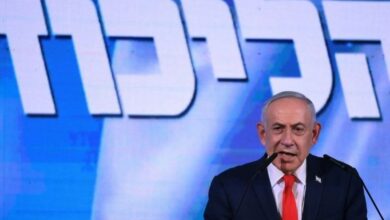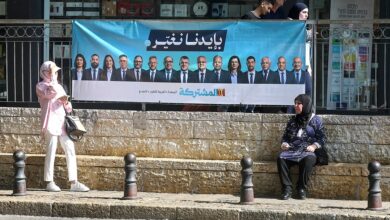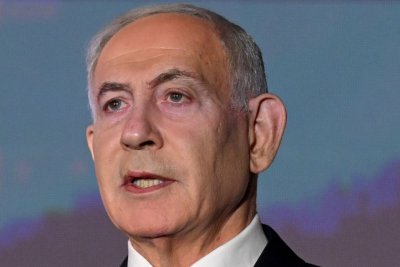
The shift is driven largely by a historic increase in Arab voter participation. According to the Israel Democracy Institute, Arab voter turnout reached approximately 80%, a stark contrast to the 53.2% recorded in the 2022 election. Overall voter turnout also hit 77.7% by the official closing time on election night, the highest level at that hour since 1999, according to Israel’s Central Elections Committee. While Netanyahu’s Likud remains the largest individual party with 26 seats, followed by Eisenkot’s Yashar party with 21 and former Prime Minister Naftali Bennett’s Beyachad party with 12, the arithmetic of the Knesset now favors a coalition that excludes Netanyahu, or at least forces him into difficult negotiations.
Amid these results, the political narrative has been complicated by allegations of foreign interference. A report by Channel 12 alleged that substantial sums originating in Qatar were transferred to influence voter participation in Arab communities, with some funds allegedly traveling through financial channels previously used for transfers to terrorist organizations. In response, Israel’s security services have launched a probe into these claims. However, it is crucial to note that these allegations have not been independently substantiated, and the investigation is ongoing.
Doha has reacted swiftly and forcefully to the accusations. Majed al-Ansari, a spokesperson for the Qatari Foreign Ministry, stated on Thursday that Qatar categorically denies interfering in Israeli elections or funding activities intended to influence their outcome. Al-Ansari accused “certain Israeli politicians and their contacts in the media” of conducting a disinformation campaign against Doha, arguing that successive allegations have portrayed Qatar as financially supporting opposing sides of the Israeli political spectrum—including Prime Minister Netanyahu, the political left, and Arab voters. “If these claims were to be believed, Qatar would apparently own all of Israel,” al-Ansari wrote, describing the accusations as “ridiculous and dangerous in equal measure.”
The Qatari spokesperson urged Israeli officials to focus on domestic issues, such as improving living conditions and addressing the consequences of regional policies, rather than using Doha as a “scapegoat for the political failures of certain Israeli politicians.” Reiterating that Qatar does not participate in Israeli electoral politics, al-Ansari stated that any incoming government must engage seriously with the Palestinian issue and recognize Palestinian national rights, including the establishment of an independent state along the June 4, 1967, lines, with East Jerusalem as its capital. Qatar asserted it would continue its diplomatic and humanitarian activities, including regional mediation, despite the allegations.

Within Israel, the dispute over the integrity of the election has deepened partisan divisions. Yair Golan, leader of the Democrats party, accused Netanyahu of “undermining” the election by alleging irregularities in the Arab vote. Golan characterized the Prime Minister’s actions as an “ugly delegitimization campaign” against Arab voters, aimed at rerunning an election that Netanyahu effectively lost in terms of majority formation. Conversely, Netanyahu’s party has claimed the election was “stolen” by “foreign entities,” a narrative that aligns with the unverified reports of Qatari financial flows but lacks independent corroboration at this stage.
The institutional implications of the current Knesset composition are significant. Although opposition leaders, including Eisenkot, ruled out including Arab parties in their governing coalition during the campaign, the 19 seats held by the Joint List (projected 11 seats) and Ra’am (projected 8 seats) provide the opposition with crucial legislative leverage. This support could allow the opposition to replace Knesset Speaker Amir Ohana, a Netanyahu ally, and gain greater control over the legislative agenda even before a new government is formally formed. The near-doubling of Arab representation from 10 seats in 2022 to a projected 19 in 2026 signals a lasting change in the country’s political demographics and voting patterns.
Analysts warn that the situation carries risks beyond domestic politics. One analyst noted that Iran is attempting to “create a rot from within” through “information warfare,” suggesting that the ambiguity surrounding the source of funds and the political exploitation of the allegations may be part of a broader regional strategy to destabilize the internal political balance. The uncertainty surrounding the security services’ probe and the lack of verified evidence for the Qatari interference claims leave the political situation in a state of flux. As coalition talks approach, the focus remains on whether the opposition can consolidate its 67-seat advantage into a stable government, or if the dispute over election integrity will lead to another early ballot. For now, the Knesset faces a fragmented landscape where the largest party cannot govern alone, and the credibility of the electoral process itself has become a central battleground.