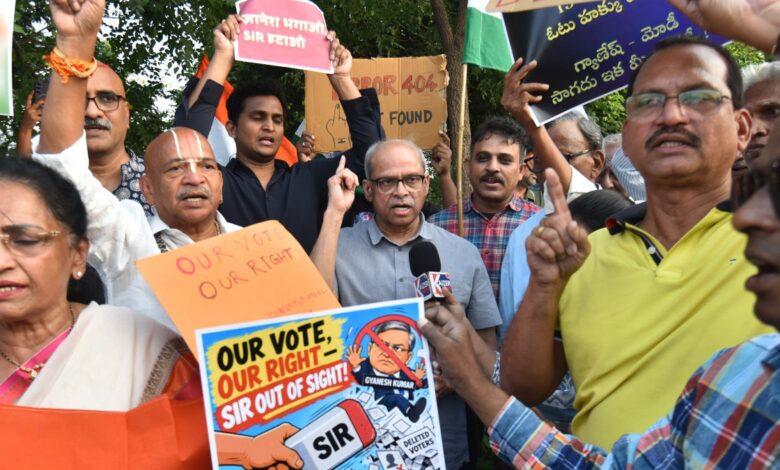
The HRW report highlights stark gender disparities in the exclusions. Data from the newspaper The Hindu shows that nearly 60 percent of those deleted in Bihar and over 60 percent in West Bengal were women. In West Bengal, where six million people were unable to vote in recent legislative elections, women constituted more than half of the deleted voters in 88 percent of constituencies. The report attributes this bias to procedural errors, such as marking women as “permanently shifted” after marriage or failing to account for changes in surnames and addresses, which disproportionately impact widows and single women.
Religious and ethnic minorities also face significant exclusion. In West Bengal’s Bhabanipur constituency, where Muslims comprise 20 percent of the population, nearly 52 percent of names flagged for “logical discrepancies” were Muslim. HRW notes that the electoral software often flags families with many siblings or those with name variations, leading to unjust deletions despite valid identification documents such as Aadhaar cards and PAN cards being submitted during adjudication hearings.
The consequences of these deletions extend beyond voting rights, affecting access to social security and basic services. Despite a Supreme Court ruling in July prohibiting the use of SIR data for purposes other than electoral revision, state authorities have continued to link voter status to government benefits. In Bihar, the BJP-led state government removed over 3 percent of names from the public distribution system for subsidized food rations following their electoral deletion. Similarly, in West Bengal, women were denied cash transfers under the Annapurna Yojana program, and students were denied scholarships, even when their appeals against deletion were pending.
Legal challenges have not fully halted these administrative barriers. The Calcutta High Court directed authorities in July to continue distributing food rations and issuing documents to deleted voters, yet individuals report that local officials still refuse to comply without final legal clearance. For example, a PhD student in West Bengal had to approach the court to obtain a residence certificate after local authorities denied the document, blocking his university admission.
The report also links the SIR process to broader human rights concerns, including unlawful expulsions. Home Minister Amit Shah has defended the SIR as a tool to “detect, delete, and deport” alleged infiltrators, although the Supreme Court clarified in May 2026 that the SIR is not a citizenship test. Following the completion of the SIR, the West Bengal government set up detention camps in May 2026. HRW documents cases where individuals, including a woman in Bankura district, were detained by police solely because their names were deleted from the rolls, despite ongoing legal appeals. The organization warns that the lack of clear procedures for reinstatement and the use of voter status as a proxy for citizenship veracity have created a climate of fear among marginalized communities.
Human Rights Watch urges the Election Commission and state governments to rectify the flawed data processing, ensure immediate restoration of deleted voters’ access to social services, and halt the use of electoral rolls for immigration enforcement.