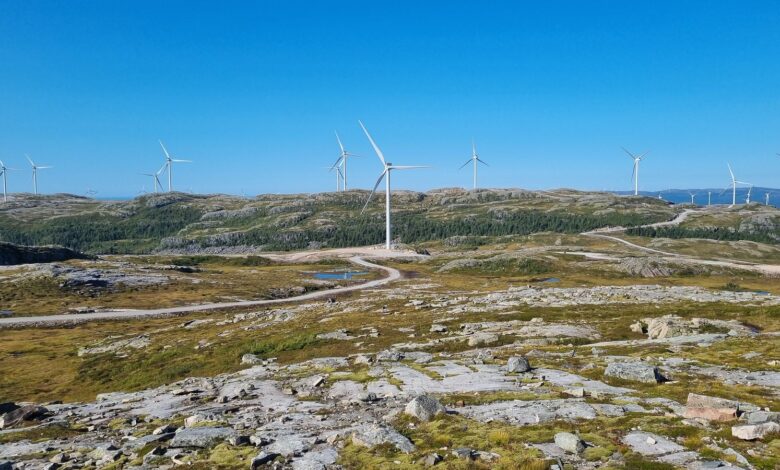
The Fosen wind park, located on the jagged coast of central Norway, is the largest onshore wind energy project in Europe. It comprises 277 wind turbines, including the Storheia farm—the largest single development in the park—with 80 turbines, each standing 262 feet high. The facility is owned and operated by a consortium including state-owned utility Statkraft, power company TrønderEnergi, and Nordic Wind Power. The project has been fully operational since early 2021, valued at approximately $1.3 billion.
The core of the legal conflict was the significant adverse effect the turbines had on the traditional winter grazing lands used by Sámi herding communities, known as siidas. For generations, these families relied on the undulating, stony valleys of the Fosen peninsula for reindeer grazing. The installation of the wind infrastructure effectively barred access to these territories, disrupting a livelihood and cultural practice that dates back centuries. Leif Arne Jåma, a Sámi herder and one of the plaintiffs in the original case, described the landscape before construction as wild and primordial, noting that the presence of the turbines represented a profound alteration to the environment his community had sustained for generations.
The path to this settlement was marked by escalating tension. Following the Supreme Court’s ruling, which stated the wind farm was illegal unless substantial remedies were implemented, the government and operators initially failed to take immediate action. By June 2023, exactly 600 days after the verdict, the farm was still operating without a resolution. This inaction prompted a series of high-profile protests. In February 2024, 13 Sámi youth from the Norwegian Sámi Association’s Youth Committee began occupying the Ministry of Petroleum and Energy in Oslo. Within a week, the occupation grew to include nearly 200 human rights campaigners, including members of Young Friends of the Earth and Swedish climate activist Greta Thunberg. At its peak, the peaceful occupation shut down 10 government ministries and drew 2,000 supporters before ending at the royal palace.
Parallel to the political protests, civil disobedience targeted the wind farm directly. In June 2023, members of Motvind Norge, an organization opposing wind power on conservation grounds, blocked the entrance to the facility, shutting it down for a week. Police cleared the protesters and issued fines. Later, in January 2024, Norwegian authorities criminally charged 20 Sámi activists and supporters for blocking access to multiple government buildings during the occupation.
The final agreement allows the wind farm to remain in operation, a decision that represents a compromise between energy policy and Indigenous rights. Under the terms, the settlement provides a grant of 5 million kroner (approximately $473,000) to strengthen Sámi culture. Crucially for the herders, the agreement establishes a new area for reindeer winter grazing and allocates a portion of the energy produced by the wind farm for local purposes. The Norwegian Minister of Energy described the case as “burdensome and difficult,” particularly for the reindeer herding families, and stated that the solution paves the way for future generations to continue the tradition of reindeer herding.
This dispute has drawn international attention not only for its environmental implications but also for its implications for Indigenous rights in the context of the green energy transition. The case follows a broader pattern of legal scrutiny regarding Sámi rights in Scandinavia; in 2019, the UN Human Rights Committee ruled that Finland violated the political rights of its Sámi Parliament representatives. Additionally, the UN Committee on the Elimination of Racial Discrimination had urged Norway to stop construction on the Fosen project as early as 2018, a warning that was ultimately overridden by the government’s licensing decisions.
For the Sámi communities involved, the settlement offers a measure of restitution and a guarantee of future grazing access, yet it does not reverse the physical transformation of the landscape. The case highlights the complex trade-offs inherent in the global push for renewable energy, where the environmental benefits of reducing carbon emissions must be weighed against the cultural and economic rights of Indigenous populations. As the Fosen wind park continues to generate power, the agreement sets a precedent for how nations may seek to balance energy infrastructure with the protection of traditional livelihoods, though questions remain about the long-term sufficiency of the new grazing areas and the financial support provided.