
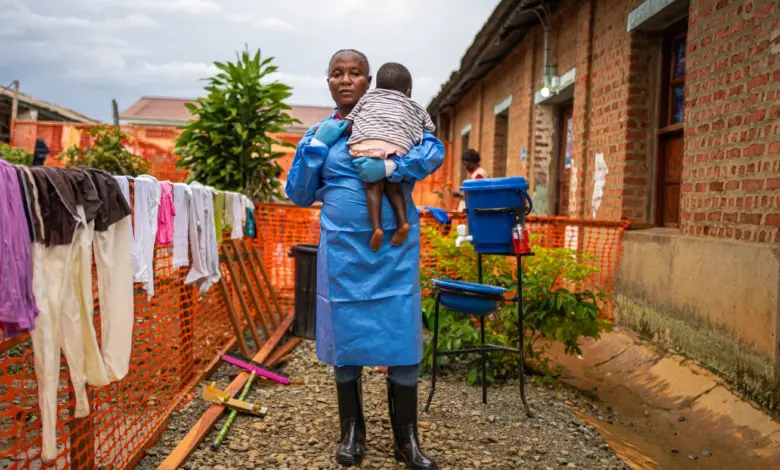
According to the World Health Organization (WHO), the situation remains critical, with 50 to 80 new cases recorded daily across eight affected provinces in the DRC. A particularly concerning trend is that 80% of these cases originate from outside known transmission chains, indicating that the virus is spreading in communities where surveillance efforts may be insufficient. Mohamed Janabi, the WHO’s regional director for Africa, emphasized the human cost behind the statistics, stating, “Behind every figure is a life interrupted, a family mourning, a health worker under pressure and a community seeking reassurance.” He urged for earlier reach, safer care closer to communities, and strengthened trust to prevent fear from becoming a barrier to survival.
The mortality rate is especially devastating for children. Approximately one-third of those who have died in this outbreak are kids. Children under the age of five, whose immune systems are still developing, are hit particularly hard; roughly three out of four infected children have died. This high pediatric fatality rate underscores the severe vulnerability of young populations to the Bundibugyo species of the Ebola virus responsible for this outbreak.
Experts attribute the rapid escalation to a combination of factors, including a delayed detection. While the outbreak was officially declared in May, evidence suggests the virus likely began circulating in February or March. Katie Thomas-Canfield, interim Ebola response director for the International Rescue Committee, noted, “That’s a really long time for things to be undetected in communities, and that means we started at a disadvantage.” This delay was exacerbated by the fact that existing diagnostic tests were not initially calibrated for the Bundibugyo species, a rarer strain of Ebola. Additionally, the outbreak began in a remote region of northeastern DRC, further complicating early containment efforts.

The geographic expansion of the outbreak has raised international concerns. Genomic testing released recently confirms that recent cases in Nigeria and Kenya belong to the same genetic lineage as current cases in the DRC. However, the mode of transmission for the index cases in these countries remains unclear. The Nigerian patient had visited Uganda from September 15 to October 3, while the Kenyan index patient traveled from the DRC through Uganda from October 1 to October 3. Both individuals were present at Entebbe airport in Uganda on October 3. Notably, genetic samples from both patients do not carry markers associated with the Ugandan Ebola cases reported in May and June of this year, which eliminates the possibility of underreported spread within Uganda. Instead, the evidence points to a direct link with the DRC outbreak.
As of the latest counts, Kenya has confirmed nine cases and two deaths, while no additional Ebola patients have been identified in Nigeria beyond the index case. Jean Kaseya, Director-General of the Africa Centres for Disease Control and Prevention, warned that the geographic extension is unprecedented, noting that it is the first time three African regions have been simultaneously affected. He stated, “Each country, not only in the African region, but all continents, must now increase the preparedness level and the possibility for [response].”
In response to the evolving situation, the U.S. Centers for Disease Control and Prevention (CDC) has implemented new travel restrictions. Although the CDC assesses the risk to Americans as low, it has announced that all passengers boarding international flights to the United States must attest via a signed statement that they have not been in the DRC during the previous 21 days. This requirement, effective from November 3 through December 18, means that travelers, including U.S. citizens and nationals, who have been in the DRC within 21 days of their flight will be denied boarding. This rule applies to all passengers transiting through the DRC, regardless of whether they disembark. The CDC reported that approximately 500 staff members are involved in the response, including more than 120 deployed to the affected countries.

Health officials caution that while the current outbreak has surpassed the case count of the early stages of the 2014–2016 West Africa epidemic, the latter remains the largest in total case numbers (over 28,000). The distinction between relative speed and total magnitude is critical for understanding the current threat. The current outbreak’s rapidity suggests that containment strategies must be agile and robust to prevent further international spread. The uncertainty surrounding the precise transmission pathways to Nigeria and Kenya highlights the need for enhanced genomic surveillance and contact tracing in transit hubs.
As the outbreak continues to evolve, the focus remains on strengthening community trust and expanding testing capabilities for the Bundibugyo strain. The coming weeks will be crucial in determining whether the virus can be contained within the DRC or if it will lead to a broader regional emergency. Public health agencies are monitoring the situation closely, with the next significant update expected to provide clarity on the effectiveness of current containment measures and the potential for further cross-border transmission.