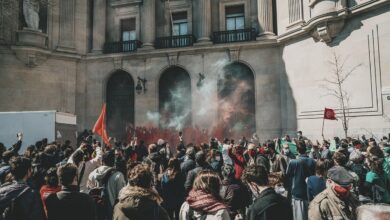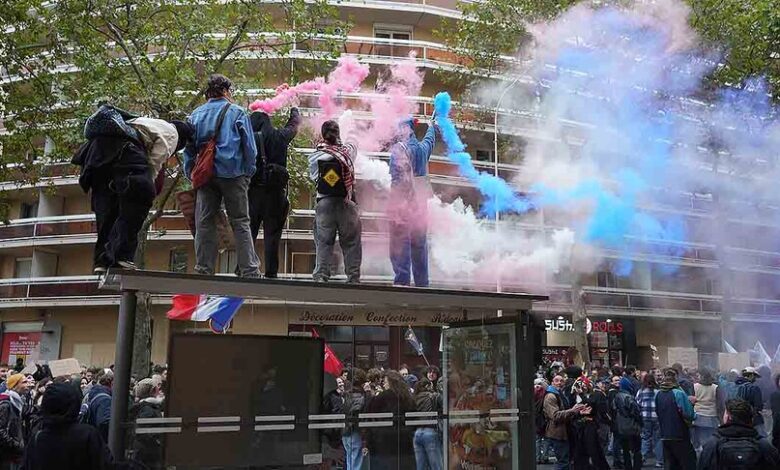
The demonstrations were framed by broad-based grievances against the administration of President Emmanuel Macron. Protesters cited rising living costs, specific education and economic policies, and a perceived increase in racism as primary drivers of their mobilization. In Paris, the main march began at 14:00 local time at the Porte de Bagnolet, a location deliberately chosen to remain distant from the city’s historic center. Marchers proceeded toward the Porte de Charenton, carrying banners with slogans such as “We want a general strike,” “The streets are ours,” and “We are young, determined, and revolutionary.” Other signs read “Fund schools instead of genocides,” “We want to live,” and “Macron, you are shaming France,” reflecting a mix of domestic policy criticism and international solidarity, particularly regarding Gaza, with many participants wearing keffiyehs and carrying Palestinian flags.
Despite the official route, parallel unauthorized gatherings occurred, most notably in the Bastille district, where a large crowd, predominantly students, defied local restrictions to march through the city streets. The atmosphere was further colored by the timing of the protests, which coincided with Halloween; a significant number of participants wore costumes of cartoon characters, blending traditional protest iconography with the holiday.
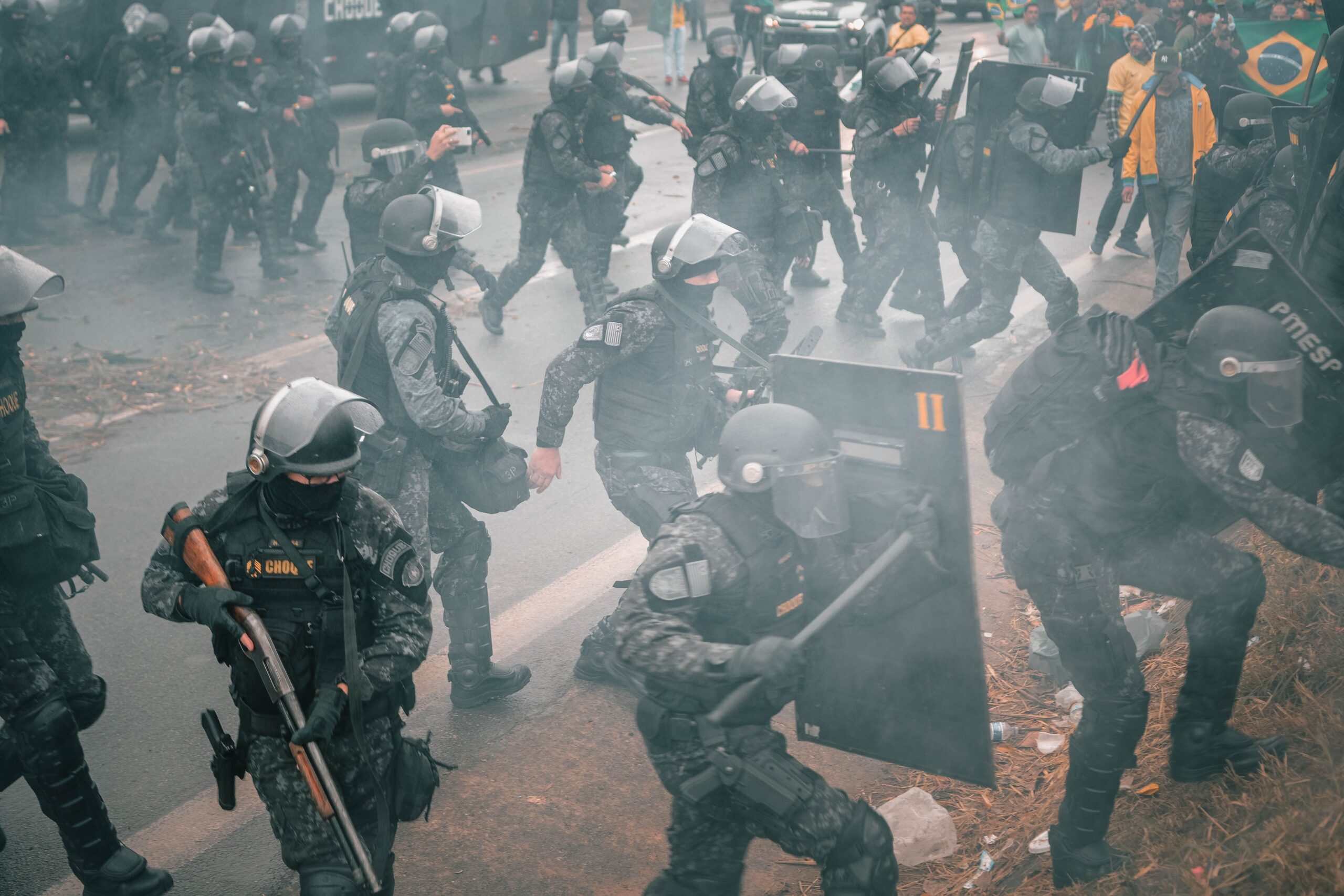
As the Parisian march concluded at the Porte de Charenton, tensions spiked, prompting police to intervene with tear gas to disperse the dense crowd. Similar clashes were reported across the country. In Rennes, police used tear gas and batons against demonstrators; social media footage circulated showing two officers striking the same protester with batons. In Lyon, officers responded to projectiles thrown by protesters with tear gas. In Marseille, masked individuals threw stones and glass bottles at security forces, who also deployed tear gas. In Toulouse, police used water cannons and tear gas to disperse unauthorized demonstrators.
These events mark the third major day of unrest since the violent demonstrations on October 17, which saw over 3,000 businesses damaged or looted. In response to that initial wave of violence, the government implemented tightened security protocols, including partial curfews in certain areas. Nevertheless, protesters returned to the streets on October 24, defying these restrictions.
According to official figures cited in the reporting, the cumulative toll of the protests since October 17 has included more than 1,000 injuries and approximately 2,000 arrests. A police helicopter was observed patrolling the route in Paris, underscoring the elevated security posture. The recurrence of large-scale mobilization and the persistence of violent confrontations suggest that the dispute over economic policy and social equity remains a critical and unresolved challenge for the French government.
The next phase of the crisis will depend on the government’s response to the escalating violence and the continued ability of organized labor and civil society to maintain mass mobilization against the backdrop of tightened legal restrictions on public assembly.