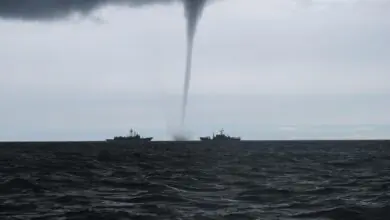
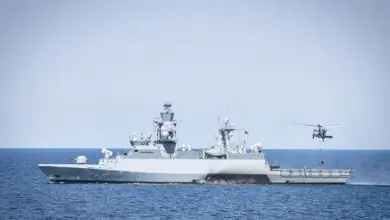
The primary target of these coordinated efforts was the Russian frigate Neustrashimy, which had been escorting sanctioned cargo ships through the English Channel. Between October 1 and 14, the Royal Navy deployed the Type 45 destroyer HMS Dauntless and the patrol vessel HMS Tyne to monitor the Russian warship. Commander Neil Skinner, commanding officer of HMS Dauntless, stated that the ship maintained “close and proficient monitoring” of the frigate, providing reassurance to the UK and its allies. The Ministry of Defence has not disclosed how many sorties the Protector conducted during these specific missions or which sensors were used.
The Protector RG1 is the British variant of the General Atomics MQ-9B SkyGuardian, a medium-altitude, long-endurance aircraft designed for extended surveillance. Based at RAF Waddington, the system has an endurance of more than 40 hours and is certified to operate routinely in controlled civilian airspace, a capability highlighted by RAF No. 13 Squadron commander Sam Haley as vital for operations over busy maritime approaches. This deployment follows earlier operations in Cyprus and coincides with the announcement on October 30 that the Protector fleet had accumulated 1,000 operational flight hours since November 2025.
Simultaneously, other Royal Navy assets conducted intensive surveillance across three separate operations. In the north, four Merlin Mk2 helicopters and approximately 90 personnel were deployed at short notice from RNAS Culdrose to Glasgow Prestwick Airport for Operation Iceblast. Between September 29 and October 8, these helicopters tracked the Vishnya-class intelligence-gathering ship Viktor Leonov in the Outer Hebrides. The Russian vessel was monitoring NATO forces participating in Exercise Strike Warrior, an allied training exercise involving more than 2,000 personnel from six nations. Captain James Hall, commanding officer of RNAS Culdrose, described the operation as a critical demonstration of the UK’s ability to secure its homeland 24/7.
Further south, HMS Tyne was tasked between October 11 and 14 to intercept the Ropucha-class landing ship Aleksandr Shabalin. The Russian warship was escorting the cargo ship MV Energy-2 and the tugboat Proton towards the Baltic Sea. Lieutenant Commander Sam Fields, commanding officer of HMS Tyne, noted that the ship’s rapid activation from North Shields demonstrated the flexibility and enduring utility of the Royal Navy’s patrol vessels. A Wildcat helicopter from 815 Naval Air Squadron accompanied HMS Tyne to provide additional surveillance.
These recent activities are part of a broader trend in UK maritime security. Royal Navy data indicates that activity monitoring Russian movements increased by 25% during the first seven months of 2026 compared with the same period in 2025. In the 2025-26 financial year, Royal Navy vessels were activated 116 times under Operation ADDISON to monitor 61 Russian warships and 28 merchant vessels. This heightened posture follows the June boarding and detention of the shadow fleet tanker MV Smyrtos, an operation that appears to have increased the cost to Moscow of moving sanctioned cargo through the Channel by necessitating the diversion of scarce warships for escort duties.