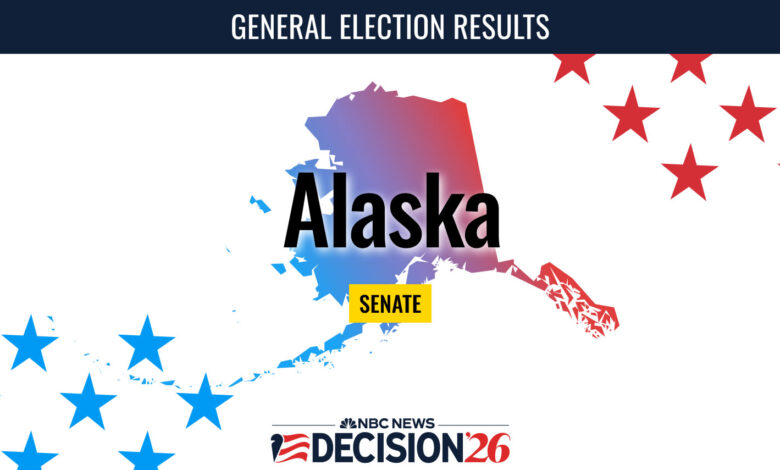
The uncertainty stems from the logistical realities of administering an election in a state defined by its scale. With 394 of 401 precincts reporting on Tuesday night, Peltola held 48% of first-choice votes to Sullivan’s 47.7%. However, these figures represent only a preliminary snapshot. Thousands of absentee and early votes cast before Election Day remain uncounted, alongside ballots from rural precincts. Burke Croft, of the consulting firm Ship Creek Group, noted that the state’s size creates “unique logistical challenges,” with historical trends suggesting that Election Night counts typically represent only about 70% of the overall vote. In past Alaskan elections, shifts of up to four points have occurred as late-arriving ballots were tallied, meaning that the initial lead or deficit seen on Tuesday night is not indicative of the final outcome.
At the center of this delay is Alaska’s “top four” primary and ranked choice voting system. Under this framework, voters rank candidates in order of preference. To win outright, a candidate must secure more than 50% of first-choice votes. Since neither Peltola nor Sullivan reached this threshold, the race will likely proceed to a ranked choice tabulation, scheduled for November 18. In this process, the candidate with the fewest votes is eliminated, and their supporters’ votes are redistributed to their second choices in an instant runoff until one candidate achieves a majority. Two other candidates, independent Dan J. Sullivan—who shares a name with the incumbent and has denied allegations of being a Democratic plant—and Republican Gerald Heikes, had garnered 1.7% and 2.3% of the vote, respectively. Their elimination and the subsequent redistribution of their ballots will be critical in determining the winner.

The political stakes are high for both parties. A victory for Peltola would extend the substantial Democratic gains seen in other Senate races on Election Day, potentially making her the 55th or 56th Democratic senator in a large majority. If she prevails, she and Senator-elect Peggy Flanagan of Minnesota would become the first female Indigenous senators in U.S. history. Conversely, a win for Sullivan would offer a “gram of relief” to Republicans, who endured heavy losses nationwide, allowing them to maintain a presence in a Senate where they are expected to be in the minority. Sullivan, speaking to supporters on Tuesday night, expressed confidence: “I’m confident when all the votes are counted, I will have the honor of representing you in the United States Senate.” Peltola, addressing the inevitable delay, urged patience from voters in the Lower 48, stating, “It will be weeks. It will be weeks. We know this. This is normal. This is Alaska normal.”
Beyond the Senate race, Alaskans voted in contests for governor, U.S. House, and 50 of 60 state legislative seats. Voters also weighed in on two significant ballot measures. Ballot Measure 2 proposes repealing Alaska’s open primaries, ranked choice general elections, and certain campaign finance disclosure requirements. Ballot Measure 3 seeks to affirm an existing state law requiring voters to be U.S. citizens. The outcome of these measures could fundamentally alter the state’s electoral infrastructure for future cycles, potentially ending the very ranked choice system currently delaying the Senate result.
As the state waits for the final tally, tensions have simmered regarding the integrity of the race. Some national Republican officials, citing reporting from The New York Times, have vowed to challenge a Peltola victory if she prevails. The slow count is exacerbated by state law, which allows overseas absentee ballots to arrive up to 15 days after Election Day, provided they are postmarked by November 3. In 131 of the state’s more than 400 precincts, election workers count ballots by hand and transmit results via phone, a process that contrasts sharply with the machine tabulation used in most other areas. Election officials are scheduled to provide updated counts on November 10, 18, and 25, with the final certification of results set for November 25.
For now, the political narrative of the 2026 midterms in Alaska remains incomplete. The 626-vote gap is a temporary artifact of an incomplete count, not a definitive verdict. As the final ballots from remote communities and overseas voters are processed, the margin could widen or vanish entirely. The resolution of this race will not only determine the composition of the U.S. Senate but will also serve as a test case for the durability of Alaska’s experimental voting systems in a deeply contested election environment. Until the November 25 certification, the Senate’s partisan arithmetic remains in a state of flux, held in abeyance by the geography and procedure of the Last Frontier.