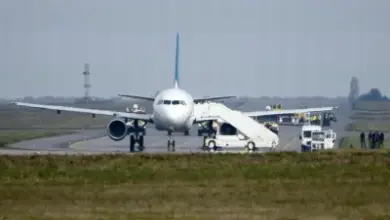
The most high-profile incident involved an Aer Lingus flight traveling from Dublin to Rome. Following a reported bomb threat, the aircraft declared an in-flight emergency and was rerouted to the Evreux airfield west of Paris. French authorities stated that the French Air Force dispatched escort aircraft immediately upon receiving the alert. The plane was escorted to the airfield, where a bomb squad was deployed to the scene. The office of Prime Minister Sébastien Lecornu confirmed that 151 passengers and six crew members were moved to safety. Flight-tracking data from Flightradar24 corroborated the diversion, showing the aircraft circling over the Evreux area after the emergency declaration.
In Bulgaria, a separate cluster of threats resulted in three aircraft requesting emergency landings in Sofia. According to the Bulgarian interior minister, flights originating from Copenhagen and Madrid landed in the capital. The transport minister reported that inspections of all three aircraft yielded negative results, with no suspicious items found. Among these was a Ryanair flight from Dublin carrying 185 passengers and a Wizz Air flight from Bergamo with 176 passengers on board, both of which landed safely after undergoing security checks.
Italy experienced similar disruptions, with at least two flights landing in Milan under police escort. An Aegean Airlines flight from Thessaloniki and a Ryanair flight from Porto both arrived at their destination in Milan, where police and bomb disposal experts inspected the baggage and crew. Aegean Airlines also reported that a flight from Athens to Vienna had been targeted but departed after confirmation that the threat was “baseless.” In Spain, authorities reported that three flights at Madrid airport were affected by hoax bomb threats, though it remains unclear if these aircraft were among those that diverted to Sofia.
The Czech Republic reported that four airplanes heading to Prague received bomb threats. Czech police stated that all aircraft underwent pyrotechnic inspections, which produced negative results. The investigation was subsequently handed over to the National Centre against Terrorism, Extremism and Cybercrime (NCTEKK). Prague Airport spokeswoman Denisa Hejtmankova noted that all threats were received via email from anonymous addresses. Additionally, flights from Britain, Ireland, and Greece landed in Prague as scheduled after receiving threats, with subsequent searches finding nothing suspicious.
In Poland, the aviation security response was triggered by threats affecting LOT Polish Airlines operations. A flight from Warsaw to Brussels landed safely in Belgium following a security warning, with inspections revealing no dangerous items. Separately, a LOT flight from Warsaw to Paris was stopped while taxiing for take-off at Warsaw Chopin Airport, and passengers were transferred to another aircraft as a precaution. One runway at Chopin Airport was temporarily closed during standard security procedures. Earlier in the week, a LOT flight from London Heathrow to Warsaw was diverted to Warsaw-Modlin airport, which was briefly closed while the plane was searched.
Other affected carriers included Finnair, which reported a threat to a flight operated by Jettime from Helsinki to Vienna; the flight landed normally and returned to service after inspection. Romania’s intelligence agency confirmed that a Wizz Air flight from Milan to Bucharest received a bomb threat but landed safely in Bucharest without incident. In Austria, an Aegean Airlines flight from Athens to Vienna was targeted but departed after the threat was deemed unfounded.
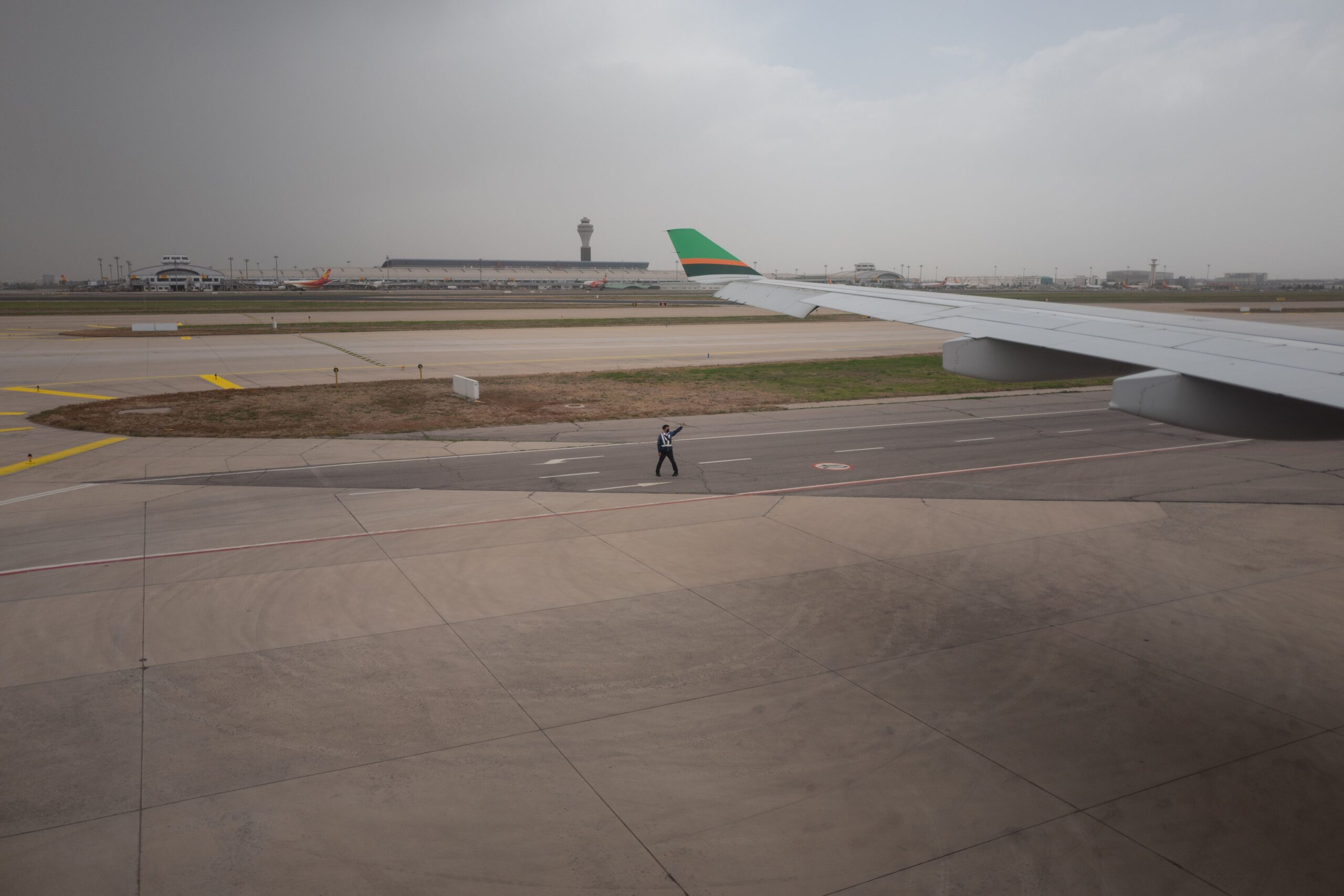
The scale of the disruption has raised questions regarding the resilience of European aviation infrastructure against low-cost, high-impact disruption. While the immediate threats were identified as hoaxes, the operational burden is significant. Each diversion requires the coordination of military assets, such as fighter escorts in France, as well as specialized police units and bomb disposal squads. The temporary closure of runways and airports, such as at Warsaw Chopin and Warsaw-Modlin, causes cascading delays for other flights and ground transportation.
Authorities have emphasized the robustness of their aviation security systems. A UK government spokesperson, commenting on similar threats affecting flights departing Britain, stated that the country possesses one of the most robust aviation security systems in the world, with well-tested processes for dealing with both potential and malicious hoax threats. The Metropolitan Police confirmed that its aviation unit is monitoring the situation. In France, the rapid deployment of the Air Force to escort the Aer Lingus plane demonstrated the protocol for in-flight emergencies involving credible (even if later disproven) threats.
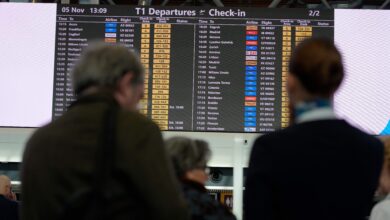
Despite the lack of physical explosives, the incidents highlight a persistent security challenge: the ease with which anonymous digital threats can be weaponized to cause physical disruption. The coordination across multiple countries and carriers suggests a targeted campaign rather than isolated incidents. As investigations continue, the focus remains on identifying the source of the anonymous email threats. For now, air traffic across Europe has returned to normal schedules, with airlines confirming that all affected aircraft have completed inspections and resumed operations where applicable. The strategic implication is a renewed scrutiny of digital communication channels used for flight operations and the potential for further attempts to exploit these vulnerabilities.