
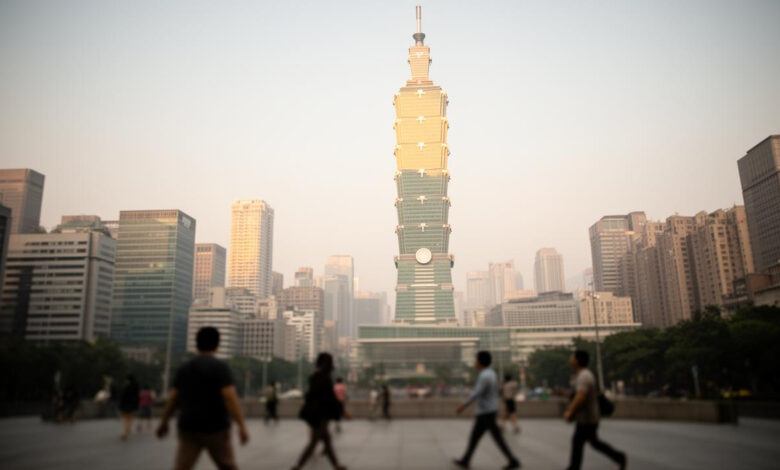
The precipice of this local rout was set thousands of miles away in New York. Following the Democratic Party’s landslide victory in the U.S. midterm elections, market participants grew anxious about potential regulatory tightening on AI infrastructure buildouts. This political shift, combined with disappointing earnings reports from chipmakers Qualcomm and Arm, triggered a synchronized global sell-off. On November 5, the Philadelphia Semiconductor Index crashed 12.25% in a single day, its steepest decline since March 2020. The Nasdaq fell 5.52%, officially entering correction territory, while TSMC’s ADRs sank 10.78%. When the Asian trading session opened the next day, the contagion was immediate. The TAIEX’s 12.19% weekly decline was second only to the Philadelphia Semiconductor Index’s 15.7% fall among major markets.
In response to the ferocious selling pressure, Taiwan’s National Stabilization Fund convened an emergency meeting on the afternoon of November 6, resolving to activate its market-support mechanism. Simultaneously, the Financial Supervisory Commission rolled out short-selling restrictions to curb speculative downside momentum. These interventions, coupled with a subsequent recovery in U.S. tech stocks—where the Philadelphia Semiconductor Index rebounded 4.21% on November 6—helped stabilize sentiment, allowing the TAIEX to recover 1,864.59 points from its intraday low.
For retail investors, the volatility exposed the psychological and financial risks of concentrated positions in technology-heavy assets. Former anchor Liu Hsin-tung, who shared her trading mindset on social media, described a strategy of entering in batches, buying odd lots of Taiwan Semiconductor Manufacturing Co. (2330.TW) and the Yuanta Taiwan Top 50 ETF (0050.TW). She noted that she believed slowly accumulating without going all-in was patient enough, only to watch prices continue probing lower after her purchases. “The market has more patience than I do,” she lamented. Her experience mirrors a broader tension among investors: the fear of missing out on a rebound versus the risk of catching a falling knife.
Despite the panic, data from the Taiwan Depository and Clearing Corp (TDCC) reveals a counterintuitive trend: regular monthly purchases of exchange-traded funds (ETFs) increased last month. The number of investors making regular purchases rose by 1.24 million from the previous month, with a cumulative growth of 6.37 million for the year. This suggests that many retail investors view the volatility as a buying opportunity rather than a reason to retreat. Among the 94 ETFs listed in Taiwan, the 0050 ETF saw the largest increase in regular investors, adding 324,400 new participants.
The trading data from November 6 further illustrates the bifurcated response of the market. While panic selling was evident, it also drew unusually strong bargain-hunting demand, particularly in leveraged products. The top three ETFs by volume on that day all exceeded one million lots, two of which were leveraged 2x ETFs. Capital TAIEX Leveraged 2X (00685L) led with 1.562 million lots, followed by CTBC Taiwan Income Active ETF (00406A) with 1.39 million lots and Yuanta Taiwan 50 Leveraged 2X (00631L) with 1.311 million lots. The 00631L recorded a record volume, topping one million lots for the first time, with turnover of NT$34 billion.
However, the most significant concentration of funds remained in standard index products. The Yuanta Taiwan 50 ETF (0050) posted single-day turnover of NT$78.4 billion (approximately $2.4 billion), a record high. This volume was driven by both long-term savers and tactical traders. In online forums, the 0050 remains a focal point for debate. A novice investor recently asked why they shouldn’t sell their 0050 holdings at high levels to take profits before potential further declines. Veteran savers responded with a mix of skepticism toward market timing and unwavering faith in compounding. Many argued that attempting to guess highs and lows is futile, stating, “At the mountain top or the mountain foot, you’re looking at the same moon—that tiny difference isn’t worth guessing.” Others emphasized that for a long-term vehicle, time is the best moat, with some investors reporting they have held for four or five years without selling a single share.
The performance gap between different ETF categories highlights the market’s dependence on AI demand. Technology-heavy ETFs have benefited from sharp gains in semiconductor stocks, with Capital Taiwan Growth ETF (00981A) posting the strongest return so far this year at 76.29% including dividends. In contrast, income-focused funds like the Capital Taiwan Selected High Dividend ETF (00919) posted a lower return of 43.57% year to date. This divergence underscores the risk for investors who may have concentrated their portfolios in high-growth tech assets without adequate diversification.
As the market digests the impact of the U.S. election results and the stabilization measures, the focus shifts to whether the National Stabilization Fund’s interventions can provide a durable floor. The next critical data point will be the sustained flow of regular ETF purchases. If the 1.24 million new regular investors continue to accumulate despite the volatility, it may signal a structural shift in retail behavior toward disciplined, long-term investing. However, the record volumes in leveraged ETFs suggest that speculative appetite remains high, keeping the market vulnerable to further sharp swings. For households and businesses alike, the lesson from November 6 is clear: in a market driven by global tech sentiment, local policy interventions can mitigate panic, but they cannot entirely insulate investors from the volatility of the global semiconductor cycle.