The court’s decision marks the culmination of a legal process initiated after the EFCC secured an interim order to seize the properties. According to a statement released by the Commission, no individual or organization came forward to challenge the seizure during the notice period, leading to the conversion of the interim order into a final forfeiture. The properties were described as being “reasonably suspected” to have been acquired with the proceeds of unlawful activities.
The forfeiture application was filed on behalf of the EFCC by its counsel, C.C. Okezie. The application was supported by an affidavit sworn to by EFCC operative Buluebiere Karamo, who outlined the investigative basis for the seizure. Karamo disclosed that the Commission had received intelligence indicating that Ifeanyi Franklyn Arinze, a convicted internet fraudster, led a syndicate of operators based in Lagos.
In its affidavit, the EFCC alleged that Arinze used the pseudonym “Tonya” on the iMessage platform to contact victims in the United States. The Commission stated that Arinze instructed these victims to open foreign financial accounts, specifically citing Zelle, Apple Pay, PayPal, Cash App, and Venmo. The victims were allegedly directed to transfer funds received into these accounts to a Chinese national identified as “Chinko Applepay.”
According to the allegations, upon receiving the funds, the intermediary credited Arinze’s Kuda Bank account with the naira equivalent of the transferred amounts. Arinze then allegedly distributed the funds to other members of the syndicate while retaining a 10 percent commission. A financial analysis of the Kuda Bank account reportedly revealed total inflows of N2,149,495,381.42 (approximately $1.3 million USD at current rates) between August 2022 and February 2026.
Investigators also alleged that Arinze operated 49 Gmail accounts, alongside multiple Facebook and Instagram accounts, which were utilized to facilitate the fraudulent schemes. The scale of the digital infrastructure suggests a coordinated effort to obscure the source of funds and manage multiple victim interactions simultaneously.
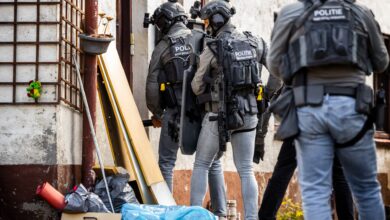
The legal proceedings trace back to Arinze’s arrest on April 20, 2024, during a sting operation conducted at Remi Olowude Street in Lekki, Lagos. He was apprehended alongside several other individuals. Following the investigation, Arinze was arraigned before the Federal High Court on a two-count charge of computer-related fraud.
On June 5, 2024, Justice Aneke (as recorded in the source material) accepted Arinze’s guilty plea and convicted him. The judgment ordered him to be of good behavior and to desist from cyber-related offenses. The EFCC alleged that Arinze subsequently breached the terms of this judgment, which contributed to the commission’s decision to pursue the forfeiture of assets linked to the original fraudulent activities.
The final forfeiture order underscores the Nigerian judiciary’s role in enforcing asset recovery laws in cases of financial crimes. By ordering the transfer of the luxury vehicles and electronic devices to the Federal Government, the court has effectively neutralized the material benefits associated with the alleged criminal enterprise. The procedure followed aligns with standard civil forfeiture protocols in Nigerian law, where the burden shifts to the owner or claimants to prove the legitimate origin of the assets once the state demonstrates reasonable suspicion of illicit proceeds.
With the issuance of the final order, the legal dispute over the specific items listed has been resolved. The vehicles and digital devices are now the property of the state, intended to be disposed of or utilized in accordance with federal regulations on forfeited assets. There are no further procedural steps indicated in the public filings regarding these specific items, as the right to challenge the forfeiture has expired without objection.