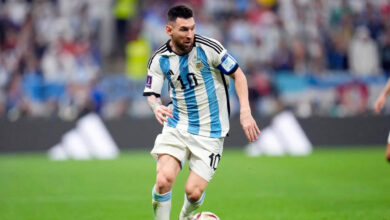

The milestone arrives at a pivotal juncture for the Egyptian national team, which is currently navigating a transition in leadership. Hassan, the record-holder he replaced, was dismissed as Egypt’s head coach last week. His successor, Ali Maher, guided the team to a dominant performance against Malawi, with early goals from Nasser Maher, Omar Marmoush, and Mohamed Hany establishing a 3-0 lead by half-time. Salah’s late arrival on the scoresheet ensured the margin of victory was comprehensive, adding to a campaign that has seen Egypt accumulate seven points in Group B after three matches. They now sit three points clear of Angola, who host South Sudan on Saturday.
While Salah’s individual achievement commands attention, the broader context of the Africa Cup of Nations qualifiers revealed significant volatility across the continent. In Group A, Morocco’s Achraf Hakimi, the favorite to win a second consecutive African Footballer of the Year award, scored twice as his team crushed Niger 5-1 in Casablanca. Hakimi’s performance reinforced Morocco’s status as the pacesetters in their group, though the momentum elsewhere suggested qualification races remain tightly contested.
Conversely, Tunisia’s campaign is in peril following a shock 2-0 home defeat to Libya. The result leaves the Tunisians bottom of Group H with just two points, having lost their first match of the cycle. The defeat is particularly damaging given a venue switch enacted two months ago, which means Tunisia’s remaining three fixtures must be played away from home. Their record of reaching every AFCON tournament since 1994 is now at risk. For Libya, the victory was transformative; Ali Youssef converted a 44th-minute penalty, and Hamdou Elhouni, a former player for Tunisian club Esperance, added a second goal in the 62nd minute. The win lifted Libya from last place to a share of the group lead on four points, level with cohosts Uganda, who face Botswana in Kampala on Saturday.

In Group L, Nigeria secured a crucial 3-1 victory over Tanzania in Uyo, moving their campaign back on track after a 3-0 defeat in Guinea-Bissau two months prior. The match featured a dramatic turnaround from the bench. Tolu Arokodaro, who has scored six goals in his last five matches for Ajax Amsterdam, came off the substitute’s bench for the second half. He struck twice within eight minutes: first with a near-post back heel off a low cross to put Nigeria ahead for the second time after 52 minutes, and then from close range as the match reached the hour mark. Nigeria now sit on six points, one point behind leaders Guinea-Bissau, who drew 1-1 with Madagascar on Thursday.
Tanzania, despite the loss, are guaranteed a place at the 2027 AFCON as cohosts alongside Kenya and Uganda. This status means the competitive battle in Group L is strictly for the single remaining qualification spot, with Nigeria, Guinea-Bissau, and Madagascar all vying for it. For Nigeria, the path forward is clear: away wins against Tanzania on Tuesday and Madagascar in March, combined with a home victory over Guinea-Bissau in March, would assure their qualification for the 24-nation tournament, the first to be staged in East Africa since Ethiopia hosted in 1976.
In Group D, a tactical clash between two South African coaches ended in a surprising 2-2 draw. Pitso Mosimane, managing South Africa’s Bafana Bafana, faced former Manchester United coaching staffer Benni McCarthy, who guides Kenya’s Harambee Stars. Although Mosimane’s team took the lead, Ryan Ogam equalized for Kenya in the final minute of regular time. From a South African perspective, the result represented two points lost, yet they remain top of the group with seven points. Guinea, who are automatic qualifiers, sit on six points, while Kenya have two and Eritrea have one.
The statistical landscape of these qualifiers highlights the disparity between individual brilliance and collective consistency. Salah’s 70th goal is a landmark that cements his legacy as Egypt’s premier international striker, a record that stood for decades before his arrival. However, the group dynamics suggest that individual performance, while vital, does not guarantee group dominance. Tunisia’s struggle, despite possessing high-profile talent, underscores the difficulty of the away fixtures they now face. Meanwhile, Nigeria’s reliance on late-game impact from substitutes like Arokodaro indicates a squad capable of resilience, even if their earlier results in Guinea-Bissau were poor.
As the qualifiers progress, the focus shifts to the upcoming fixtures. Egypt will look to extend their comfortable lead in Group B, while Morocco aims to maintain its hold on Group A. For Tunisia, the next few months will be a test of character, requiring victories in away matches to salvage their qualification hopes. Nigeria, on the other hand, must convert their recent form into points against Madagascar and Guinea-Bissau to secure their spot in the 2027 tournament. The stage is set for a decisive stretch of matches that will determine which teams advance and which are left to watch from the sidelines.
Salah’s record-breaking performance in Cairo serves as a reminder of the enduring power of individual excellence in international football. Yet, as the groups tighten and the calendar moves toward March, the collective effort of teams like Nigeria, Morocco, and Uganda will be the deciding factor in who reaches the final tournament in East Africa.