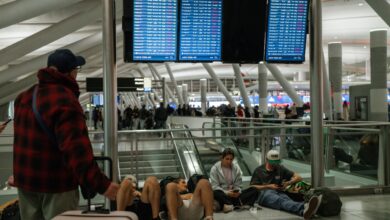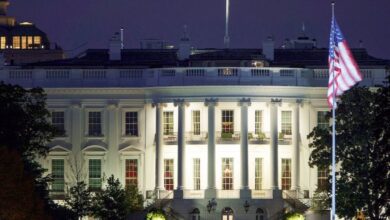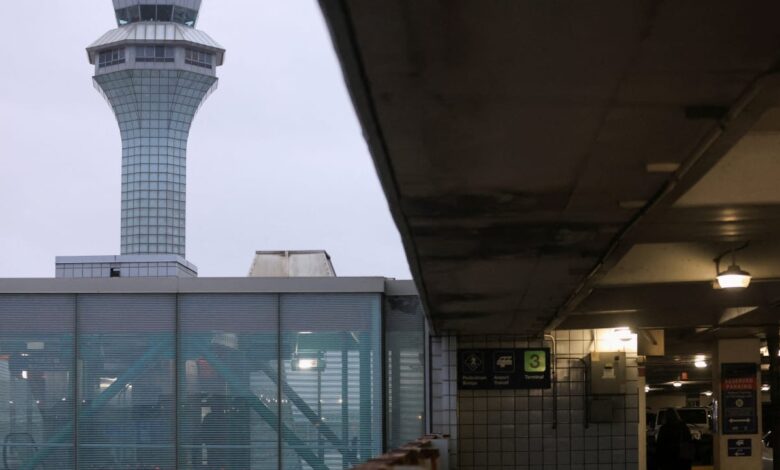
In the wake of the disruption, the Trump administration boosted its request for air traffic control funding to $50 billion late Friday. This figure represents a substantial increase from the $30.1 billion requested earlier in the day by Transportation Secretary Sean Duffy and the White House. The shift in the administration’s stance was framed as a response to an acute crisis. “This is an emergency,” Secretary Duffy stated. “What’s more important than having an air traffic control system that actually works?”
The political maneuvering behind the funding request is driven by a narrow legislative window. The administration is urging the Republican-led Congress to approve the funding in the final weeks of the year. This urgency is underscored by the fact that Democrats are set to take control of Congress in January. By securing bipartisan support or swift Republican passage before the change in leadership, the White House aims to lock in the capital for modernization projects that have been deferred for years.
The core of the dispute lies in the age and reliability of the existing infrastructure. The FAA relies on decades-old computers and, in some instances, replacement parts purchased through auction websites. Last week, the agency announced it would replace floppy disks, still used for weather and other critical information at more than 400 air traffic control facilities, by the end of 2028. While the administration argues that the system is on the brink of failure, critics and some lawmakers point to existing appropriations. The Republican-led Senate Commerce Committee noted that Congress had already approved $1.9 billion to replace outdated en route centers, suggesting that the priority should be the execution of existing funds rather than a massive new injection of capital.
The breakdown in the system is not an isolated incident but part of a recurring pattern of disruption in recent years. In September, a dual failure involving a circuit at a Philadelphia air traffic facility and the accidental severing of a fiber-optic cable in New Jersey by a construction crew led to thousands of delays and cancellations across the densely populated Northeast. More tragically, in January 2025, a midair collision at Ronald Reagan Washington National Airport killed 67 people, heightening the political stakes of safety and infrastructure reliability.
The economic and political implications of the funding request are significant. The $50 billion total includes $10.1 billion specifically for air traffic control modernization. This portion is allocated to $7.2 billion for a common automation platform and controller workstations, and $2 billion for cloud computing. The remaining $18 billion of the broader request is earmarked for airport-related projects, including $10 billion to modernize or replace aging terminals, and $2 billion to replace and improve FAA air traffic control towers.
Administration officials have highlighted progress already made to justify the need for continued investment. In a letter to lawmakers, White House Office of Management and Budget Director Russell Vought and Transportation Secretary Sean Duffy stated that the FAA has replaced 68% of its legacy copper telecommunications network with high-speed fiber infrastructure. They described the proposed investment as critical to completing the modernization of the national airspace, aiming to deliver a resilient telecommunications backbone, modern hardware and software, and state-of-the-art control towers.
Support for the funding request extends beyond the executive branch into the private sector. Major airlines, including American Airlines, Delta Air Lines, United Airlines, and Southwest Airlines, have expressed support for the request. For these carriers, the reliability of the air traffic control system is directly tied to operational costs and customer satisfaction, given the frequent complaints about airport congestion and flight delays that have plagued the industry.
However, the path to approval is not without political friction. The administration’s argument hinges on the notion that the current system is inadequate for the volume and complexity of modern air travel. Opponents of the expanded budget may argue that the $12.5 billion already approved by Congress in July 2025 for air traffic control upgrades and increased hiring of controllers is sufficient, provided it is properly managed. The July appropriation was a response to longstanding complaints about technology problems and staffing shortages.
The gap between the administration’s $50 billion ask and the $12.5 billion already allocated highlights a deeper disagreement over the scale of the problem. The administration views the recent ground stop as evidence that the existing investment is insufficient to prevent further catastrophic failures. Meanwhile, the Senate Commerce Committee’s emphasis on prioritizing the $1.9 billion for en route centers suggests a preference for targeted, incremental improvements over a massive overhaul.
As the year draws to a close, the focus turns to the legislative calendar. With Democrats poised to gain control of Congress in January, the Republican majority has a limited window to pass the funding package. The pressure to act is compounded by the tangible impact on the public, who have experienced the direct consequences of system failures through delayed flights and safety risks. The outcome of this budget negotiation will determine the trajectory of U.S. aviation infrastructure for the coming decade.
The central question remains whether Congress will accept the administration’s characterization of the situation as an emergency requiring immediate, large-scale funding. If approved, the $50 billion package would represent the most significant investment in U.S. air traffic control in years. If rejected or significantly reduced, the reliance on aging technology and the risk of further disruptions will persist, leaving the system vulnerable to the same types of failures that have already claimed lives and stranded passengers.
The next political development will hinge on the Senate’s ability to maneuver the bill through committee and floor votes before the holiday recess. The involvement of major airlines in supporting the request adds a layer of industry pressure on legislators. However, the ultimate decision rests with lawmakers who must weigh the urgency of the administration’s claims against their own assessments of the system’s current state and the fiscal implications of the proposal.
In the end, the fate of the $50 billion request will be judged not just by the votes cast in Congress, but by the performance of the air traffic control system in the months and years to come. The recent ground stop has served as a stark reminder that the infrastructure underpinning American air travel is under strain. Whether this crisis leads to a comprehensive modernization or a continuation of patchwork repairs will be the defining legacy of this budget fight.