
The abduction occurred on January 15, 1992, at the family villa on the Costa Smeralda. Four criminals took the boy, holding him captive for nearly six months. During this period, the kidnappers demanded a ransom, with a letter delivered to the parents on June 16 requesting ten billion lire. The release followed shortly after, on July 11. Immediately following the event, a manhunt was launched across the island. However, the immediate aftermath was complicated by the actions of Graziano Mesina, a former figure in Sardinian banditry who was already a fugitive. Mesina revealed to the Rai1 news program that the release had come thanks to the payment of a ransom, specifically citing five billion lire. Investigators, however, immediately disputed this claim, stating that no payment had been made and that the release was the result of police pressure, with the kidnappers feeling encircled and choosing to release the child to avoid capture.
The legal proceedings that followed resulted in partial convictions but left significant gaps in the full identification of the gang. The leadership of the group was identified as Matteo Boe, from Lula. Boe was captured three years later in a hotel in Porto Vecchio, Corsica, by agents of the Sassari Mobile Squad. In his pocket, investigators found a roll of film. When developed, the photos showed Boe in front of a cave on Montalbo, a location Farouk recognized as his place of imprisonment. The images also showed him with Ciriaco Baldassarre Marras and Mario Asproni. Marras was arrested shortly after Boe, and Asproni was captured after a brief period of hiding.
In the subsequent shortened trial, the court issued sentences reflecting the severity of the crimes. Boe was sentenced to 20 years in prison, while Asproni and Marras each received 30 years. These sentences were part of a broader wave of kidnapping cases in Sardinia during the 1990s, which also included the abductions of Miria Furlanetto, Giuseppe Vinci, Ferruccio Checchi, Vanna Licheri, Silvia Melis, and Titti Pinna di Bonorva. Despite the convictions of Boe, Marras, and Asproni, the rest of the gang involved in the Kassam kidnapping was never fully identified, and that portion of the case remains unresolved.
The legal consequences for the convicted individuals extended over many years. Matteo Boe returned to freedom in June 2016 and subsequently published an autobiographical work. Graziano Mesina, who had played a role as a mediator in the kidnapping, had already spent nearly 40 years in prison. In 2004, he received a pardon from the Head of State. However, his legal troubles did not end there; in December, after a year and a few months in hiding, he began serving another 30-year sentence for drug trafficking, a final sentence handed down in July 2020.
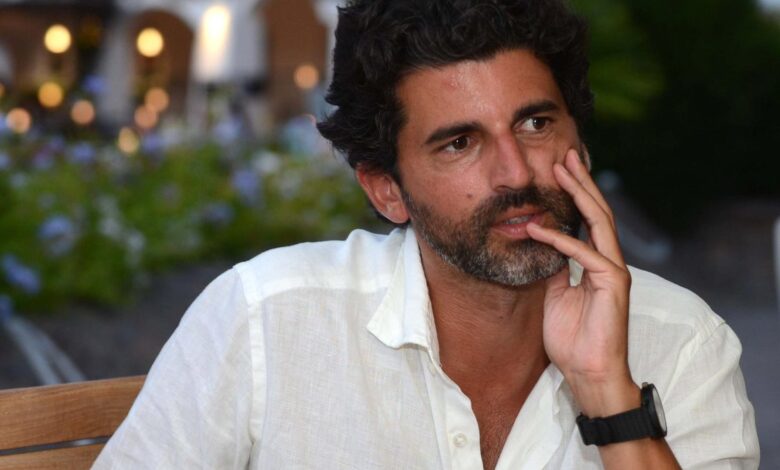
Decades later, the case has re-entered the public sphere through cultural media rather than new judicial proceedings. The television series “177 Days: The Kidnapping of Farouk,” directed by Carlo Carlei, premiered at the Rome Film Fest and is set to air on Rai 1. The series stars Marco Bocci and Antonia Desplat as the parents, Fateh and Marion Kassam. The production is based on the book “My Son Farouk: Anatomy of a Kidnapping,” written by Fateh Kassam with Marco Corrias. Farouk Kassam, now 42 and an entrepreneur, stated that participating in the project allowed him to “repeatedly confront the trauma I experienced as a child.” He described the series as a tool for growth and facing fears, noting that the production team made deliberate choices to represent reality accurately.

Director Carlei and star Marco Bocci emphasized a respectful approach to the narrative. Bocci noted that the screenwriters made the “intelligent choice” to tell the story from the perspective of the family, the community, and the investigation, rather than from the child’s perspective, as portraying the child’s suffering directly would have been impossible. This narrative decision highlights the broader legal and historical context of the era, focusing on the contrast between the wealthy Costa Smeralda and the darker underbelly of Sardinian criminality. While the media commemoration provides a platform for reflection, the legal record remains defined by the convictions of the three main perpetrators and the enduring mystery of the unidentified members of the gang.
As the anniversary of the release approaches, the focus remains on the verified judicial outcomes: the sentences served by Boe, Marras, and Asproni, and the separate conviction of Mesina. The case stands as a documented instance of organized crime in Sardinia, where the legal system secured convictions for the core members of the kidnapping ring, yet the full scope of the conspiracy remains partially obscured by the silence of the unidentified accomplices. The next confirmed step in the public narrative is the prime-time broadcast of the series, which serves as a cultural memorial rather than a new legal proceeding, leaving the unresolved aspects of the investigation as they remain in the official record.