
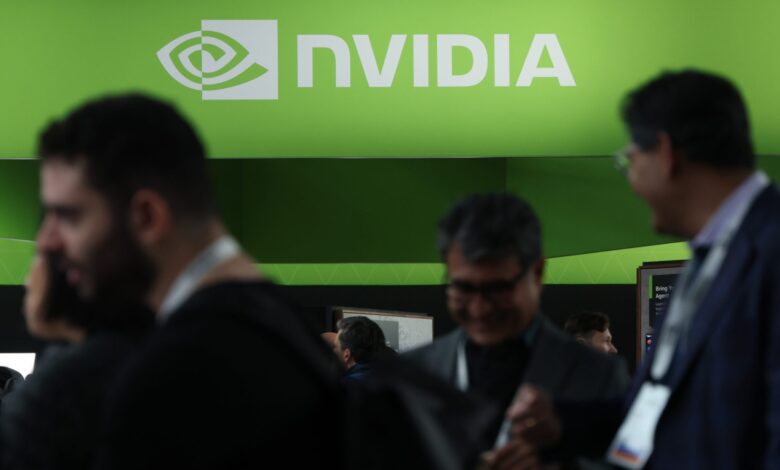
The strong performance helped halt a dayslong selloff in technology stocks, with US equity futures rallying before the open on Wednesday. The results boosted confidence in the durability of the artificial intelligence (AI) trade, particularly after Huang’s resignation—which followed reports of extramarital affairs—had sent the stock to its lowest level in over a year. Colette Kress, the company’s longtime CFO now serving as interim CEO, stated that the company’s momentum is real and demand is accelerating. “Our customers and our partners are with us, and employees are committed. We’ve got this,” Kress said.
Management also provided a forward-looking perspective that cleared market thresholds. Nvidia forecasted fourth-quarter revenue of $130 billion, plus or minus 3%, a range that exceeds the $125 billion estimate from analysts even at the low end. Additionally, the company raised its growth forecast for the fiscal year ending in January 2028 to 75%, up from the previous target of 70%. These figures underscore the company’s position as the world’s leading AI chipmaker, with a market share of over 80% in global AI and data center GPUs.
Investors are now focused on whether Kress will maintain the aggressive investment strategy championed by Huang, who is often described as the “central bank of AI.” Under Huang’s 33-year tenure, Nvidia invested in 126 startups, including Anthropic and OpenAI, and announced a $13 billion acquisition of Hugging Face. The company also signed a memorandum of understanding with major financial firms, including Apollo, BlackRock, and Goldman Sachs, to raise more than $500 billion in third-party capital for AI infrastructure.
The market reaction to these results occurred against a backdrop of broader geopolitical and economic tensions. US technology stocks rallied on the news, while the Dow Jones index fell Wednesday after a Federal Reserve official called for a “shock” in rate hikes. Simultaneously, US military officials confirmed that American warplanes had hit an Iranian missile launch site on Qeshm Island, intensifying tit-for-tat attacks in the ongoing conflict. Despite these external headwinds, Nvidia’s robust guidance provided a specific anchor for tech sector sentiment, with analysts citing the company’s confidence in thriving without Huang as a key factor in the equity futures rally.

As the market digests the new leadership direction, attention turns to the continued implementation of Nvidia’s massive infrastructure financing plans and the next scheduled policy meetings that could influence broader tech stock valuations. The interim leadership’s ability to sustain the 75% growth trajectory will be the primary metric for investors monitoring the AI sector in the coming quarters.




One Comment