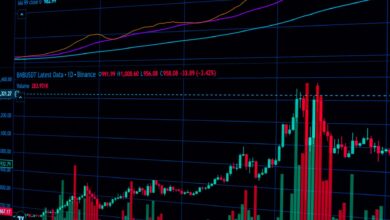

The turmoil coincided with a dip in crypto assets. Bitcoin fell below $60,000 for the first time since July, trading around $58,084 on November 20. The cryptocurrency has declined 14.1% over the past week. CoinGlass reported that exchanges liquidated $2.4 billion in crypto futures in a single day, forcing leveraged traders out of positions. Simultaneously, U.S. spot Bitcoin ETFs saw outflows of $582 million on November 19, bringing total outflows to $1.1 billion over four trading days and $4.4 billion over the past month.
Investor appetite for frontier AI also appeared to waver following the initial debut of Anthropic. The company priced its IPO at $83, but shares fell to $83.47 on their second day of trading before closing at $88.91, down 8.5%. Analysts noted that the simultaneous decline in Anthropic and Bitcoin challenges the theory that capital was rotating from crypto to the new AI stock. Instead, data suggests a broader shift toward safety, with the 10-year U.S. Treasury yield dropping to 4.92% on November 20, falling below the 5% threshold for the first time in six sessions. The U.S. dollar also strengthened, closing at approximately 0.91 euros.

Nvidia’s decline is compounded by internal leadership uncertainty. The company is in the process of a leadership transition following the departure of CEO Jensen Huang. In its fiscal 2027 third-quarter release, Nvidia cited an “ongoing independent board committee investigation” and a “leadership transition” as key risks. Additionally, Fox Business reported on November 20 that Nvidia received a California subpoena linked to an investigation of chip sales to China. The company had sold $2.4 billion in licensed Hopper data center products to China in the third quarter before halting shipments. Chairman Harvey Jones stated that the incoming CEO will have to “navigate those waters very carefully.”
The sell-off extended across the semiconductor sector. Broadcom (NASDAQ: AVGO) and Advanced Micro Devices (NASDAQ: AMD) also extended their declines. AMD faced additional pressure after reports alleged ties to China, causing its stock to fall sharply before the open. NBA analyst Jonathan Golub of Seaport Research Partners argued that the AI-driven selloff may be overdone, noting that demand for computing power remains strong. However, he warned that a major challenge lies in whether markets can continue financing the hundreds of billions of dollars required for new AI infrastructure.

The market environment is further influenced by recent political outcomes, with Bloomberg citing Democrats’ decisive victory in midterm elections as a factor in this month’s turbulence. For now, investors appear to be prioritizing capital preservation, with capital flowing into government debt and the dollar amid heightened uncertainty over tech sector stability and regulatory oversight.