
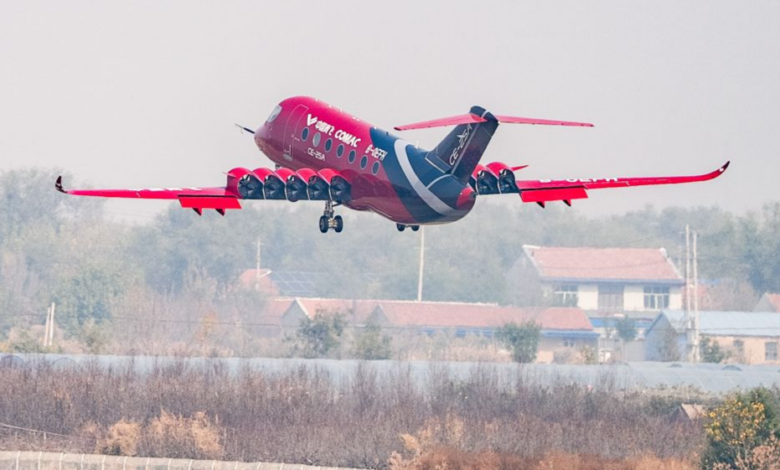
The test session lasted 57 minutes and 46 seconds in total, with the aircraft spending 16 minutes and 38 seconds in the air. During the airborne phase, the CE-25A covered a distance of 60.4 kilometers. This milestone follows the aircraft’s first unmanned autonomous test flight on February 2. COMAC reported that the CE-25A has completed 19 unmanned autonomous flight tests during its development phase.
The CE-25A is designed as a 19-passenger commercial aircraft for short-haul routes between cities. It has a maximum takeoff weight of 10 metric tons (approximately 22,000 pounds), a cruising speed of 300 kilometers per hour (162 knots), a cruising altitude of 2,400 meters (7,900 feet), and a range of 400 kilometers (approximately 250 miles). The aircraft is powered by a distributed electric ducted-fan propulsion system, consisting of 10 electric ducted fans mounted above its wings.
The development of the CE-25A is a joint effort involving COMAC, battery manufacturer Contemporary Amperex Technology Co Ltd (CATL), Shanghai Jiao Tong University, and other domestic partners. The aircraft is being developed in accordance with China’s CCAR-25 airworthiness regulations, which apply to transport-category large commercial passenger aircraft.
The Civil Aviation Administration of China (CAAC) has accepted COMAC’s application for a type certificate for the CE-25A. This acceptance marks the beginning of the regulatory review process, which must be completed before the aircraft can enter commercial service. No specific certification date or entry-into-service timeline has been announced. This development follows the certification of the four-seat RX4E electric aircraft for commercial operations under Part 23 regulations in January 2025.