The appointment is not a routine cabinet shuffle; it signals a strategic response to a fractured legislative landscape. Lara’s departure followed the failure of Congress to complete the approval process for the 2027 General Budget of the Nation. The Senate and the House of Representatives approved different versions of the budget, and the required reconciliation process to unify the two texts never took place. This procedural breakdown prompted a debate over the validity of the legislative process and forced the executive branch to seek a solution through decree. In this context, the Interior Ministry plays a central role, as it coordinates relations with political parties, negotiates with congressional caucuses, and manages dialogue with local and regional authorities. The administration now requires a figure capable of brokering consensus among a fragmented congressional majority to advance its agenda, which includes the controversial Economic Rescue Law, an Anti-Terrorism Statute, and a criminal submission framework.
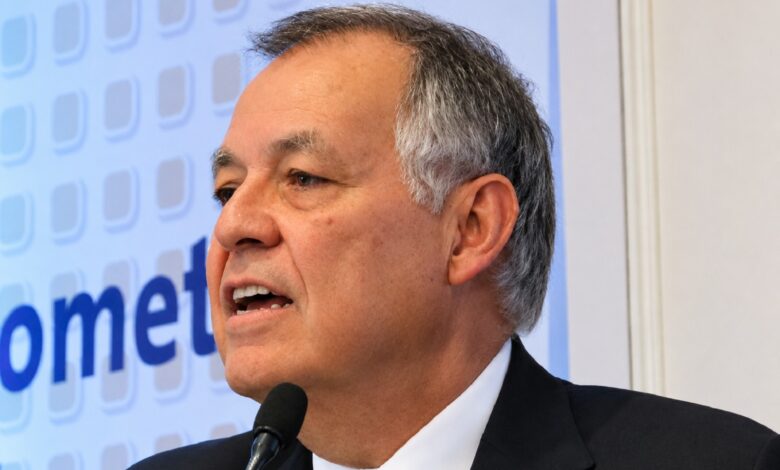
Ordoñez enters the Cabinet room as one of the most polarizing and experienced figures in Colombian public administration. A jurist trained in administrative law and constitutional jurisprudence, his career has spanned all three branches of public power. He rose to national prominence as Attorney General from 2009 to 2016, serving under both Álvaro Uribe and Juan Manuel Santos. During that period, he led high-profile disciplinary investigations and established himself as a leading voice of Colombia’s conservative movement. His public career has been shaped by steadfast positions on issues such as abortion, euthanasia, and same-sex marriage, views that have earned him support among right-wing sectors while drawing strong criticism from human rights organizations and progressive movements.

The selection of Ordoñez has been clarified by the President’s own statement, which directly contradicts earlier reports suggesting he would serve as Colombia’s ambassador to the Organization of American States (OAS). While some sources indicated that Ordoñez was confirmed as the extraordinary and plenipotentiary ambassador to the OAS, a position he previously held from 2018 to 2022 under President Iván Duque, the Official Gazette and the President’s announcement confirm his role as Interior Minister. President De La Espriella stated, “I welcome Dr. Alejandro Ordóñez Maldonado, who will take over as the new Minister of the Interior. His experience, character, and trajectory will be fundamental to facing the great challenges of our Nation.” The President also thanked outgoing minister Rodrigo Lara Restrepo for his service and noted that Justice Minister Iván Cancino would assume temporary functions of the interior portfolio until the formalization of Ordoñez’s position.
The political significance of this appointment extends beyond domestic policy. Ordoñez is known for his combative style and his history of clashes with the left, most notably his role in the 2013 removal of Gustavo Petro from the office of Mayor of Bogotá, a decision that was ultimately overturned by the courts but cemented his reputation as a nemesis of the leftist coalition. For the incoming administration, Ordoñez is a jurist with extensive experience in public service and a staunch defender of conservative principles. For his critics, however, his return to a top policy position raises questions about the government’s ability to build consensus with groups that have deep disagreements with the president. Center-left and opposition coalitions view his return to domestic policy as a signal of institutional hardening, while conservative factions in Congress have welcomed his firmness.

The appointment also carries unresolved legal and financial complexities. Ordoñez is still awaiting a ruling regarding a disciplinary sanction he imposed in 2010 against then-Senator Piedad Córdoba, which forced her removal from office. That decision was later overturned by the Council of State, resulting in the Attorney General’s Office being required to pay the family of the late politician more than 1.4 billion Colombian pesos (approximately US$440,000). Additionally, the Attorney General’s Office has requested a ruling requiring Ordoñez to pay 1.6 billion Colombian pesos (approximately US$500,000) to the institution over that same sanction. These legal entanglements add a layer of uncertainty to his tenure, even as the administration seeks to leverage his deep knowledge of administrative law and established networks across traditional parties to navigate the halls of Congress.
As the administration seeks to restructure executive agencies and tighten public expenditure, the next phase of De La Espriella’s tenure will be defined by how effectively Ordoñez can manage social and political tensions. The Interior Ministry’s mandate to maintain dialogue with local and regional authorities will be tested as the government attempts to secure parliamentary support for its remaining legislative priorities. The clash between the executive’s hardline approach and a fragmented Congress, exacerbated by the budgetary crisis, sets the stage for a period of intense institutional negotiation. Ordoñez’s return to the heart of domestic power confirms De La Espriella’s intention to surround himself with figures who share his political and ideological vision, prioritizing ideological alignment over consensus-building in a moment of acute legislative dysfunction.