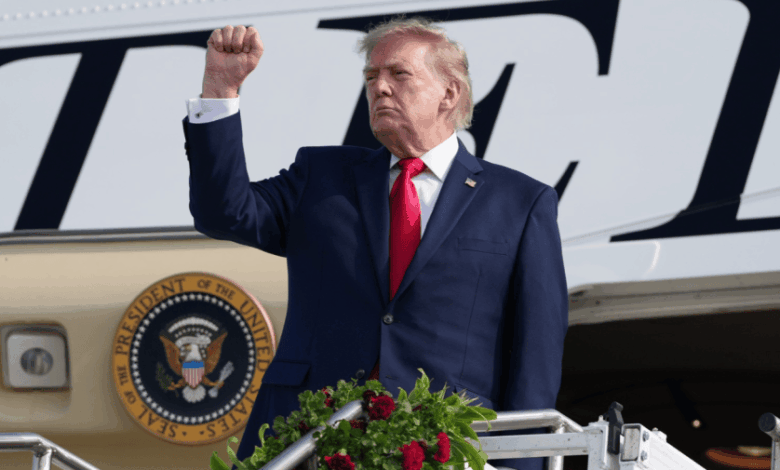
According to a report by *The New York Times*, citing American and Israeli officials briefed on the discussions, President Trump is considering a fresh round of strikes lasting four to seven days. The proposal was advanced by Israeli Prime Minister Benjamin Netanyahu, who has been pressing Washington to join Israel in joint air operations. However, a senior Israeli official disputed the characterization that Netanyahu had “pressed” the U.S. to act, with a spokesman for the prime minister stating that Netanyahu has consistently worked to “safeguard the security” of Israel. The timing of these discussions is driven by specific intelligence assessments. U.S. and Israeli leaders are evaluating warnings that Tehran has made significant progress in rebuilding its missile and drone arsenals. Furthermore, the intelligence community is focused on Iran’s advancement in chemical and biological weapons programs, which Trump cited in his interview as a direct consequence of U.S. efforts to block Iran’s nuclear ambitions.
“There is indication that Iran is looking at gases, looking at bio because we’ve shut them out with the nuclear,” Trump told Heinrich. “Nuclear is much harder, and they’re looking at gas, and they’re looking at the bio. You know, the biological weapons, not nice, and other things.” This assessment suggests a strategic pivot by Tehran toward unconventional warfare, a shift that complicates the U.S. deterrence framework. The immediate military objective of any renewed strikes would be to degrade these emerging capabilities and halt the rebuilding of conventional missile and drone stockpiles. However, the window for such action is constrained by the current disposition of U.S. forces. Officials noted that the substantial American military firepower currently deployed in the Middle East creates a temporary “window of opportunity” for a decisive strike campaign before logistical realities or political shifts alter the landscape.

Behind the scenes, the prospect of another major military campaign has exposed significant disagreements within the U.S. administration. While the intelligence community, including CIA Director John Ratcliffe and IDF Military Intelligence Directorate chief Maj. Gen. Shlomi Binder, has advocated for resuming operations, other officials question whether the emerging threats justify a new offensive. The political context is equally complex; the war, which began nearly eight months ago, has contributed to rising prices and has not delivered the swift victory initially promised. Following the Republican Party’s defeat in the midterm elections, there is heightened sensitivity regarding the timing and cost of renewed conflict. This internal debate is reflected in recent policy shifts, as Trump reportedly instructed Vice President JD Vance to abandon efforts to reach a negotiated settlement, instead favoring sustained economic pressure to force Iran to relinquish its nuclear program.
Despite the hardline rhetoric and military planning, diplomatic channels remain open. Trump confirmed in his interview that the United States is in contact with Iran and that Tehran is interested in reaching an agreement. “They want to make a deal, but I want a deal that can be lasting,” he said, emphasizing the need for an agreement that would survive future changes in American leadership. He referred to a potential turning point “after January 1st,” though he did not elaborate on whether this referred to a military operation, a diplomatic deadline, or another significant decision. This ambiguity leaves the exact trajectory of U.S.-Iran relations uncertain. The administration is currently balancing the risk of escalating a conflict that has already strained economic resources against the strategic necessity of countering Iran’s expanding weapons capabilities.

The technical and strategic implications of a renewed strike campaign are profound. A four-to-seven-day air campaign would require precise targeting of missile production sites, drone manufacturing facilities, and potential chemical and biological weapons laboratories. The limitations of such a strike are significant; while air power can degrade infrastructure, it cannot permanently eliminate a state’s intent to rearm or its ability to disperse production. Furthermore, the geographic and logistical constraints of maintaining a large-scale presence in the Middle East remain a burden for U.S. defense planners. The threat of a “dirty bomb,” while not explicitly confirmed by Trump, underscores the broader security concerns that have led some senior administration officials to reside on military installations as a precautionary measure.
As the administration weighs these options, the focus returns to the immediate operational environment in the Middle East. The next confirmed development will likely hinge on whether the “window of opportunity” is seized for a kinetic response or if the administration doubles down on economic coercion. The interplay between intelligence warnings of chemical and biological threats, the political pressure from Israeli allies, and the domestic economic fallout of the ongoing conflict will determine whether the rhetoric of “wiping them out” translates into a new phase of military engagement in the coming weeks.