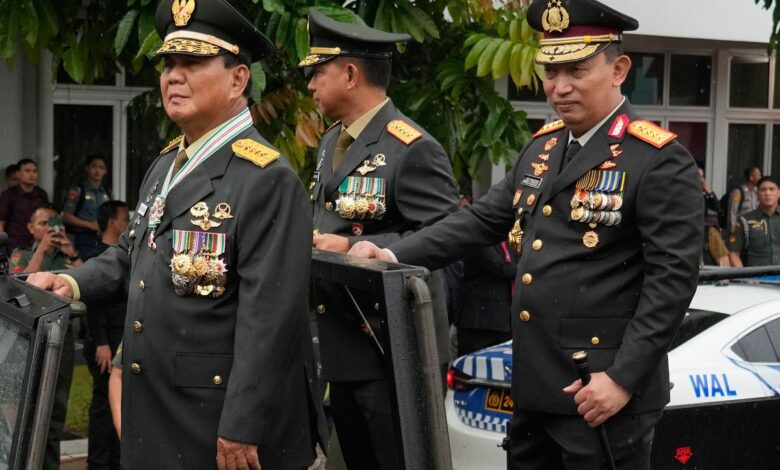
In a nearly nine-hour hearing before the Police Professional Ethics Commission, an internal panel found that Santoso had committed a “disgraceful act,” resulting in his dishonorable discharge. National Police spokesperson Trunoyudo Wisnu Andika stated that Santoso was accused of abusing his authority while leading the monitoring division within the National Police’s Criminal Investigation Department. Investigators allege that Santoso conducted wiretaps without the legal approvals required under Indonesian law, utilizing police access and equipment in a “non-procedural and unprofessional manner.”
Santoso is the second suspect to be expelled from the force through internal disciplinary proceedings. Last week, an ethics commission ordered the dismissal of Inspector General Ahrie Sonta Nasution, head of the National Police Legal Division, after finding him guilty of serious professional misconduct. Both Santoso and Nasution have indicated plans to appeal the decisions. In addition to these dismissals, authorities have detained Nasution and Santoso as criminal suspects. A fourth official, Inspector General Slamet Uliandi, who led the Criminal Investigation Agency’s Information and Communications Technology Division, has also been named a suspect but has not been detained due to health concerns.
The scope of the alleged surveillance operation is extensive. Investigators allege that the wiretaps targeted the communications of the president, palace officials, lawmakers, political party figures, governors, anti-corruption officials, activists, and students. According to authorities, Santoso received wiretapping orders from Uliandi, who allegedly claimed the instructions originated from then-National Police Chief Listyo Sigit Prabowo. Listyo, who is not related to President Prabowo, served as the national police chief until recently and is now a key suspect in the case.
The scandal has illuminated significant political fault lines within Indonesia’s leadership. Listyo Sigit Prabowo is widely regarded as a close aide to former President Joko Widodo, known as Jokowi. The allegations have intensified scrutiny of the relationship between the current administration under President Prabowo and the lingering influence of Jokowi’s political network. This tension was further highlighted last week by the resignation of Gibran Rakabuming Raka, Jokowi’s son, from the position of vice-president, a move that drew additional attention to the rift between the two camps.
Police official Johnny Eddizon Isir confirmed that Listyo Sigit Prabowo’s ethics hearing is scheduled for next week, though no exact date has been specified. The timing of this hearing is critical, as it will determine whether the former police chief faces similar disciplinary consequences to his subordinates. The case has drawn significant public and political interest, with the potential to impact the credibility of the National Police and the broader governance structure.
Legal experts note that the allegations of unauthorized wiretapping violate specific provisions of Indonesian law regarding surveillance and privacy. The involvement of senior officials in such activities raises questions about oversight and the rule of law within the security apparatus. The police have stated that they are committed to a thorough investigation and that all suspects will be treated equally under the law.
As the investigation continues, the next major development will be the outcome of Listyo Sigit Prabowo’s ethics hearing. The decision in this case could have far-reaching implications for the political landscape in Indonesia, potentially reshaping allegiances within the security forces and influencing the relationship between the executive branch and the former administration.
For now, the focus remains on the ethical and legal proceedings against the remaining suspects. The police have emphasized that the process is ongoing and that they are gathering all necessary evidence to ensure a fair and just resolution. The dismissal of Santoso and Nasution serves as a stark reminder of the consequences of abusing power within the Indonesian police force.