The central economic and security implication of these discussions lies in the stability of global defense spending and international trade relationships. Nuclear deterrence has long been a cornerstone of geopolitical stability, and any movement toward arms limitation could significantly alter defense budgets, military procurement cycles, and the strategic balance of power that underpins global commerce. Yet, Trump’s comments suggest that the path from high-level diplomatic agreement to concrete treaty obligations remains fraught with complexity.
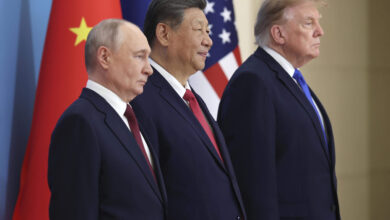
During the summit, Chinese President Xi Jinping proposed a set of rules for the coexistence of great powers, one of which explicitly called for the destruction of all nuclear weapons. This proposal set the tone for the tripartite dialogue. In the joint declaration on peace issued at the conclusion of the meeting, the leaders of China, the United States, and Russia reaffirmed the consensus that a nuclear war “cannot be won and must never be fought.” Consequently, the three nations agreed to discuss the reduction of nuclear risks and the prevention of nuclear proliferation.
Despite this shared language in the joint declaration, Trump highlighted significant divergences in the practical implementation of such goals. He noted that Xi Jinping “agrees in principle” with the concept of nuclear arms limitation. However, the U.S. President emphasized the logistical and psychological barriers to execution. “It is very difficult to tell someone, ‘We have 4,000 units of nuclear weapons, we will give up half of them,’” Trump said. “It is hard to do.”
This statement underscores the scale of the challenge facing global security policymakers. The reference to 4,000 units likely alludes to the size of major national arsenals, illustrating the sheer magnitude of stockpiles that would need to be managed, verified, and dismantled under any new treaty regime. For industries involved in defense manufacturing, the prospect of arms limitation could have long-term implications for demand, though such effects are typically gradual and contingent on the specific terms of any agreement. In the near term, the primary economic impact is likely to be indirect, influencing investor confidence in geopolitical stability and the cost of capital for multinational corporations operating in these regions.
Trump assured that he would continue to raise the issue, describing it as something that “needs to be done” but is “psychologically difficult.” This acknowledgment of the psychological dimension highlights the deep-seated strategic cultures of the nuclear powers. For the United States, Russia, and China, nuclear weapons are not merely weapons of war but symbols of national sovereignty and status. Any reduction in these arsenals would require a fundamental shift in strategic thinking, a process that is rarely swift or linear.
The summit’s outcome, a joint declaration on peace, represents a diplomatic milestone but does not yet specify concrete mechanisms for arms reduction. The agreement to “discuss” the reduction of nuclear risks leaves the door open for future negotiations but does not commit any of the three nations to immediate, verifiable steps toward disarmament. This ambiguity is likely to be a key factor in how markets and policymakers interpret the long-term trajectory of global security. Analysts will be watching for follow-up talks that could translate the declaration’s principles into actionable policy.
For households and businesses, the immediate economic effects of this summit are subtle. The reaffirmation of the principle that nuclear war is unwinnable serves as a stabilizing narrative for global markets, reducing the risk premium associated with geopolitical escalation. However, the lack of a concrete arms control agreement means that defense industry stocks and related supply chains may continue to operate under the assumption of sustained high-level military readiness. The “psychological” difficulty Trump mentioned suggests that future negotiations may be protracted, potentially delaying any significant shifts in defense procurement or international security architecture.
As the leaders return to their respective capitals, the focus will shift from the symbolic weight of the tripartite meeting to the granular details of bilateral and multilateral security dialogues. The next critical step will be to determine whether the shared language in the Shenzhen declaration can be translated into specific, measurable goals for risk reduction. For now, the global economic environment will continue to be shaped by the dual forces of geopolitical tension and the fragile hope for diplomatic resolution.
The story begins and ends with the challenge of translating abstract principles into concrete reality. While the leaders of the three nuclear powers have agreed on the necessity of reducing risks, the path forward remains blocked by the very size and significance of the arsenals they possess. The next policy decision to watch will be the release of any technical roadmaps or follow-up summits that might define the scope and timeline of these discussions, offering a clearer picture of how global security policy might evolve in the coming years.