
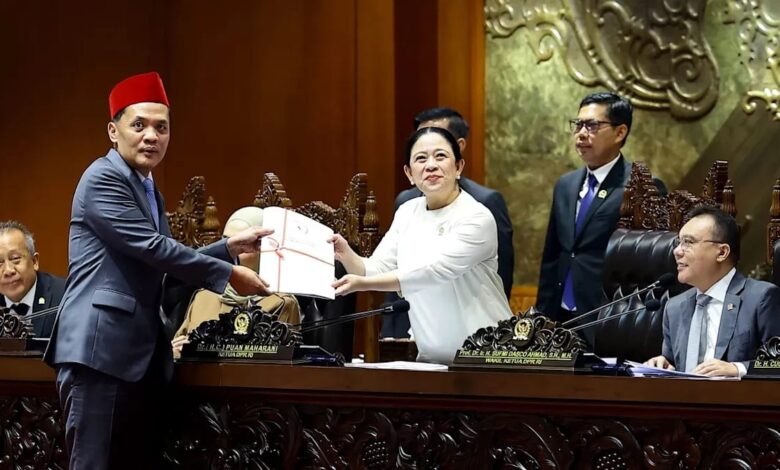
The legal significance of this development lies in the shift from a person-centered to an asset-centered approach in criminal justice. Under the new regime, the principal legal question is no longer solely whether an individual is guilty of a specific crime, but whether specific assets are linked to criminal activity. This allows the state to pursue the recovery of illicit wealth directly, addressing the long-standing challenge of recovering state losses from corruption and other serious offenses. The law authorizes investigators to begin tracing assets once a criminal case is identified or a suspect is named, empowering them to request information from individuals, government agencies, and institutions. Authorities may suspend transactions, freeze assets, or seize property, provided these temporary measures are subject to legal procedures and court approval.
The mechanism for permanent transfer of assets to the state is strictly procedural. Assets can only be permanently confiscated after a final and binding court ruling. In cases involving non-conviction-based forfeiture (NCBF), state attorneys must apply to the court, identifying the assets, the legal grounds, and supporting evidence. This application must be publicized through courts and media to allow interested parties to challenge the proposed confiscation. For assets located overseas, applications must be filed with the Central Jakarta District Court. If foreign authorities reject a request to freeze or seize property, investigators may seek to freeze or seize substitute assets belonging to the same person in Indonesia, up to an equivalent value, subject to professional assessment and court approval.

Despite the procedural safeguards, the law has drawn significant criticism regarding its scope and governance structure. Firdaus Cahyadi, founder of Indonesia Climate Justice Literacy (ICJL), highlighted that the legislation was passed without meaningful public involvement, raising concerns about the influence of political and business elites. A central point of contention is the list of predicate offenses. The law covers corruption, narcotics and psychotropic substances, terrorism and its financing, human smuggling, arms and dangerous materials smuggling, human trafficking, and specific forms of technology-enabled fraud or embezzlement. However, environmental crimes, including those in the forestry, plantation, and mining sectors, are not explicitly recognized as standalone predicate offenses.
Cahyadi argued that this exclusion creates a loophole, stating, “The problem is that most political elites have extractive businesses, creating the potential for crimes committed by the extractive industries to escape the scope of this law.” By not defining environmental destruction and natural resource exploitation as independent grounds for forfeiture, the law may fail to target assets accumulated through such activities. Furthermore, the legislation establishes a new Asset Management Agency and a Supervisory Agency, both placed under the authority of the president. Critics question this concentration of power, suggesting it centralizes control in the presidency, especially following the recent establishment of the National Agrarian Reform Agency (BRAN) under the Agrarian Reform Management.

Procedural protections for property owners and third parties remain a key component of the law. Third parties can challenge confiscation if their property is wrongly targeted, such as a buyer who purchased a house in good faith without knowing it was paid for with criminal proceeds. In such cases, the state attorney must establish the link between the property and the alleged crime, while the owner must demonstrate legal ownership and good faith. Objections can be filed after the application is publicized but before the first-instance ruling. Cases must be heard in open court using authentic and lawfully obtained evidence. If an objection is successful, the property must be returned. Additionally, those affected can seek compensation from an endowment fund, capped at the assessed value of the frozen or seized assets. Individuals who provide information in good faith during asset-tracing investigations are protected from civil, administrative, and criminal proceedings.
The swift passage of the law, which was initially targeted for mid-December but accelerated to Thursday, has been viewed with caution by observers. Some suggest the timing is tied to the government’s efforts to finance ambitious programs, including those of President Prabowo Subianto. While the law represents a milestone in Indonesia’s fight against illicit wealth, the unresolved questions regarding its applicability to environmental crimes and the independence of the oversight bodies remain subjects of dispute. The next confirmed legal step will be the operationalization of the new agencies and the filing of the first applications under the new non-conviction-based forfeiture provisions, where the practical limits of the law’s scope will be tested.