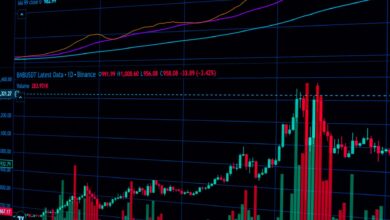

The primary driver of this decline is the market’s reassessment of the Federal Reserve’s monetary stance. According to CME FedWatch data, the probability of the Fed raising interest rates by 25 basis points in December 2026 has surged to 96%, up from 92% earlier in the week. Higher interest rates increase the opportunity cost of holding non-yielding assets like gold. Concurrently, the US dollar has strengthened to its highest level in 19 months, making dollar-denominated gold more expensive for international investors and further dampening demand. Analysts, including Jim Wyckoff of American Gold Exchange, noted that these macroeconomic headwinds are likely to keep pressure on prices in the near term, though some suggest the market may soon find a bottom.
The correction in global prices has been mirrored by a significant downturn in the Vietnamese domestic market, where prices have fallen to their lowest levels of 2026. On the morning of November 21, Saigon Jewelry Company (SJC) adjusted its gold bar prices downward, setting the buying price at 128.5 million VND per ounce and the selling price at 133.5 million VND per ounce. This represents a decrease of 700,000 VND per ounce in both directions compared to the previous session. The buying price for SJC gold bars has now fallen below the 130 million VND threshold, marking a new low for the year.

Other major retailers have followed suit, though with slight variations in pricing structures. PNJ, Doji, and Bao Tin Manh Hai have all listed gold bars at 129.2 million VND for buying and 134.2 million VND for selling. Bao Tin Minh Chau reported a lower buying price of 128.3 million VND, while Phu Quy set its buying price at 128.7 million VND. These figures indicate a broad-based sell-off across the Vietnamese market, with the gap between domestic and world prices reaching its highest level since the beginning of the year, exceeding 22 million VND per ounce in some calculations when adjusted for local exchange rates and premiums.
A notable development in the Vietnamese market is the widening of the buy-sell spread, which has reached record highs for certain products. For SJC 99.99% pure gold rings, the buying price dropped sharply by 2.7 million VND to 127.3 million VND, while the selling price decreased by only 700,000 VND to 133.3 million VND. This adjustment widened the spread to 6 million VND per ounce. Consequently, a buyer who purchases gold rings at the current selling price and immediately sells them back would incur an instant loss of nearly 4.5%, even if the global gold price remains stable. Similar trends were observed at Phu Quy, where the spread for gold rings expanded to 5.2 million VND from the previous 3 million VND.
The divergence between domestic and international prices, coupled with widening spreads, reflects heightened volatility and liquidity concerns in the local market. While global stock markets experienced volatility on November 20, with the Nasdaq Composite falling 5.28% and the S&P 500 dropping 3.7% following a failed IPO by tech firm Anthropic, the impact on gold was compounded by the aforementioned macroeconomic factors. Re-escalated tensions in the Strait of Hormuz, which typically serve as a safe-haven driver for gold, were insufficient to counterbalance the pressure from a stronger dollar and hawkish Fed expectations.
Investors and consumers in Vietnam face a challenging environment, with the prospect of further declines if the Fed proceeds with the anticipated rate hike. The current price levels represent a significant departure from the highs seen earlier in the year, and the widening spreads suggest that retailers are managing inventory risk in a rapidly falling market. For the immediate future, the focus remains on the Federal Reserve’s December decision and the trajectory of the US dollar, both of which will likely dictate the next phase of gold’s price action.