
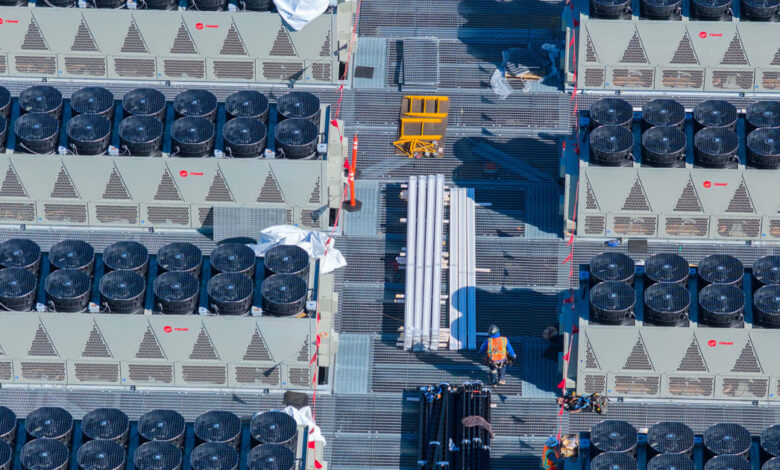
Kress clarified that future financial assistance for partners will be narrowly focused on “land, power, and shell”—the physical site, electricity hookups, and building structure required before hardware installation. This marks a departure from the previous strategy under former CEO Jensen Huang, which included investing tens of billions of dollars into AI startups and cloud providers that subsequently purchased Nvidia GPUs. Critics had previously labeled this approach “circular dealmaking.” Kress’s directive to put “suppliers first” reflects a broader industry concern regarding who will finance the massive global build-out of AI data centers as debt levels rise.
The tightening of credit terms comes as AI investment reaches historic proportions. A September 2026 report from the Brookings Institution projects that U.S. investment in AI and related equipment will exceed $10 trillion between 2025 and 2032, averaging 3.6 percent of GDP annually. This scale of expansion is comparable to the late 19th-century railroad boom. This year, the five largest U.S. hyperscalers—Alphabet, Amazon, Meta, Microsoft, and Oracle—are estimated to spend $800 billion or more on AI infrastructure, a 94 percent increase over 2025. Despite these massive expenditures, Rebecca Patterson, a senior fellow at the Council on Foreign Relations, noted that leading AI labs have yet to see meaningful returns, raising questions about the timing and degree of future revenue.
Market sentiment has been further complicated by high stock valuations and rising debt. A Federal Reserve Bank of San Francisco economic letter published in November 2026 found that the noncyclical rate of unemployment is the primary factor explaining the rise in the Standard and Poor’s 500 cyclically adjusted price-earnings (CAPE) ratio since 2022. This suggests a strong link between the AI-driven stock market run-up and broader labor market health. While the boom has fueled consumer spending and economic growth, investors remain wary that high debt levels and softening revenues could threaten the sector’s stability and the U.S. economy’s competitive position against China.
The economic impact of the AI boom is also visible in regional real estate markets. New York City has seen a significant influx of AI-related activity, with more than 2,000 AI companies operating in the city. In the first six months of 2026, AI firms signed leases for approximately 1.5 million square feet of commercial space. Major players including Anthropic, Palantir, and OpenAI have established offices in New York to be closer to financial institutions and portfolio businesses. This expansion has driven up demand in the luxury rental market, with newly wealthy AI professionals entering an already competitive housing sector. The convergence of high corporate spending, high valuations, and tangible real estate demand underscores the deepening integration of AI into the broader U.S. economy.

As Nvidia enforces stricter boundaries on its capital commitments, the industry faces a critical transition. The next phase of the AI boom will depend on whether demand can sustain the current pace of infrastructure spending without reliance on circular financing. For investors and policymakers, the focus shifts from the sheer scale of investment to the fundamental viability of revenue generation as the initial burst of speculative capital matures.