Coalition spokesperson Major General Turki al-Maliki confirmed the interception via social media, stating that air defense systems successfully neutralized the three ballistic missiles detected over Riyadh. The Saudi Civil Defense Directorate activated early warning systems in the capital and the nearby city of Sulayil, issuing alerts to the public via mobile phone and social media. Authorities urged citizens to remain calm, follow official instructions, and move to safe zones. Shortly after the alerts, the Civil Defense Directorate announced that the threat had passed in the affected areas.
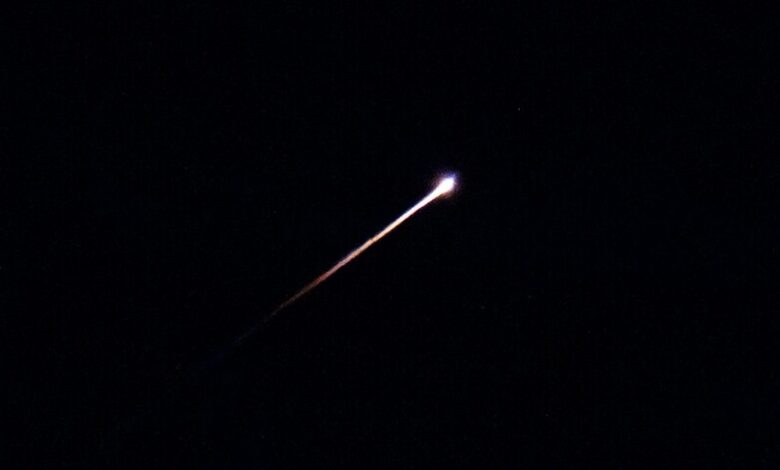
On the ground, a Reuters witness reported seeing a projectile streak across the Riyadh sky, leaving a trail of smoke, shortly before hearing a loud explosion. This visual confirmation aligns with the coalition’s statement regarding the missile interception.
The Houthi movement, led by the Iran-backed Ansar Allah, has framed its actions as retaliatory. Yahya Sarea, the military spokesman for the Houthis, claimed that his forces conducted a “qualified military operation” targeting the Shuqaiq power station and Hodeidah port in southern Saudi Arabia. Sarea alleged that these strikes caused “significant damage” and were direct responses to Saudi attacks on power plants in Saada and Al-Muqah, as well as a dock at Hodeidah port. He further warned that any further Saudi strikes on Houthi-controlled infrastructure would result in “direct” counter-strikes against Saudi ports and power facilities.
The current escalation follows intense cross-border strikes observed on Friday. The Saudi-led coalition stated it had targeted the Red Sea port of Hodeidah and conducted operations aimed at degrading Houthi missile and drone capabilities in Sanaa, the Houthi-held capital. In response, the Houthis issued warnings to airlines to avoid Saudi airspace and threatened additional targeting of Saudi Red Sea ports.
Yemeni Houthi officials also provided a broader context for the recent violence, claiming that Saudi warplanes and missiles had carried out 78 air and missile strikes over the previous 24 hours. Sarea specified that these attacks targeted civilian settlements and facilities in Sanaa, Hodeidah, Taiz, Lahij, Saada, Marib, and Jawf. He attributed the strikes to F-15 and Typhoon fighter jets launched from Hamis Muqit and Taif bases, as well as missile strikes originating from Jizan. Sarea claimed these operations resulted in civilian casualties, including women and children, bringing the total number of Saudi air and missile attacks since the reignition of the conflict to 5,429. The coalition has not independently verified these specific casualty figures or the exact number of sorties conducted in the 24-hour period.
The conflict, which has resulted in a severe humanitarian crisis in Yemen, reignited in July after a period of stalemate that had persisted since 2022. Saudi Arabia has supported the internationally recognized Yemeni government for over a decade against the Houthi insurgency. The Houthis have secured control of Yemen’s Red Sea coast and have forced Saudi-backed government forces to retreat to the temporary capital of Aden in the south.

Analysts note that the timing of these escalations coincides with the broader US-led military engagement against Iran. The Houthi movement, closely aligned with Tehran, views its actions as part of a wider regional support network for Iran. The repeated targeting of Riyadh, a strategic and symbolic center of the Saudi state, underscores the Houthi capability to project force deep into Saudi territory despite the coalition’s air superiority and advanced air defense networks.
The interception of the missiles demonstrates the operational readiness of Saudi air defense systems, but the repeated successes of Houthi launches in reaching the vicinity of the capital highlight the persistent threat posed by ballistic missile technology in the region. The ongoing exchange of strikes between the coalition and the Houthis continues to destabilize the region, with significant implications for regional security, maritime trade routes, and the broader geopolitical balance involving Iran and its allies.
As of Saturday, the Saudi Civil Defense Directorate had not reported any confirmed structural damage or casualties in Riyadh resulting from the intercepted missiles. The next phase of the conflict will likely depend on the Saudi coalition’s response to the Houthi threats against infrastructure and the continued level of Iranian support for the Yemeni faction. The situation remains fluid, with both sides signaling intent for further military action if provocations continue.