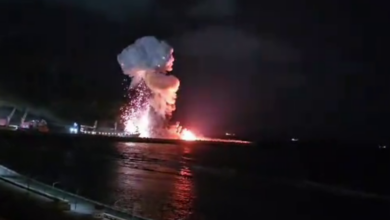
The unveiling serves as a direct counter-narrative to claims that Iranian military infrastructure has been degraded by recent conflicts, which include the US-Israel war that began in late February. According to the Islamic Republic of Iran Broadcasting (IRIB), the new dual-launcher is engineered to launch missiles vertically, a capability that reportedly offers speed-control advantages aiding in the evasion of air defense systems. State media further asserted that the latest generation of Iranian ballistic and cruise missiles has improved in range, accuracy, and guidance, specifically noting independence from the US Global Positioning System (GPS).
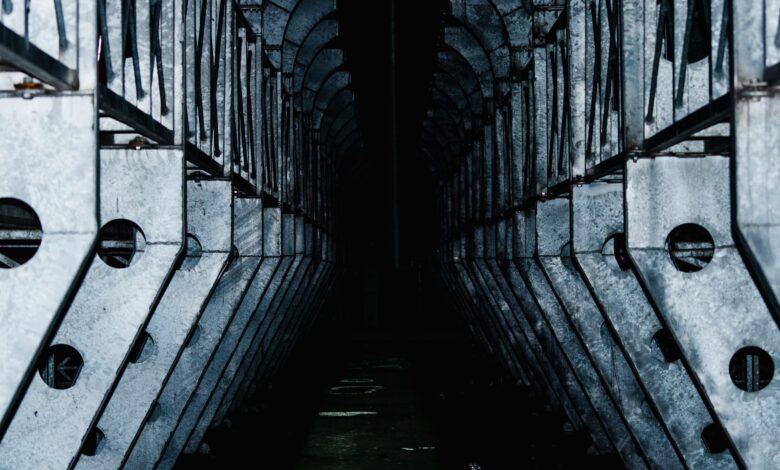
The facility, referred to by officials as part of a “missile city,” was first announced by the IRGC aerospace force on November 10 via the semiofficial Tasnim News Agency. Tasnim reported that Iran is constructing underground military complexes designed to sustain weapons production and storage even under heavy bombardment. The IRGC has stated that production lines for missiles and drones have been transferred from the surface to these subterranean sites to ensure continuity of manufacturing. Footage broadcast by IRIB showed kilometers of tunnels and a dense array of hardware, though Al Jazeera correspondent Resul Serdar noted from Tehran that it remains unclear when the specific footage of the underground site was filmed.
Analysts suggest the display is a calculated act of deterrence rather than a precursor to immediate tactical escalation. “The IRGC are trying to send a message to the outside world that they are not short of ammunition; they have enough missiles and enough launchers,” Serdar observed, adding that while the display has propagandistic elements, it aims to restore deterrence capabilities should the war resume.
Rami Khouri, a public policy fellow at the American University of Beirut and a nonresident senior fellow at the Arab Center Washington DC, emphasized the long-term strategic planning behind the infrastructure. “So there’s no doubt that Iran has stored an enormous amount of all of this,” Khouri told Al Jazeera, noting that Iran has planned for such scenarios for decades. He explained that these underground sites allow Iran to safely store spare parts, raw materials, and chemicals necessary for missile and drone creation, in addition to finished weapons. “They’ve shown … they’re prepared to stand sanctions and keep fighting,” Khouri said.
However, this military posturing exists against a backdrop of severe economic constraint. Iran is currently under mounting pressure from a US naval blockade that has disrupted its oil exports. Rob Geist Pinfold, a lecturer in international security at King’s College London, noted that “very little if any oil is coming out of Iran at the moment,” contributing to an economy already in recession. Pinfold argued that Iran is now more emboldened to assert its capabilities due to the outcome of the US midterm elections, where President Donald Trump’s Republican Party suffered sweeping losses. “So [Trump] looks more like the boy who cried wolf,” Pinfold stated, suggesting that the rising cost of living in the US, partly attributed to the war, has disincentivized further American escalation.
The dual-missile launcher represents a specific technical evolution in Iran’s arsenal, moving toward systems that can saturate air defenses with multiple projectiles from a single emplacement. The use of liquid-fuelled missiles, which require more complex preparation than solid-fuel counterparts, suggests a focus on high-precision, high-payload strikes rather than rapid, short-notice reactions. By showcasing these assets in a fortified, underground environment, Tehran is signaling that its strategic deterrent remains intact and operational, even as its economic lifelines are strangled by naval enforcement. The next phase of this standoff will likely hinge on whether Tehran translates this demonstrated capability into kinetic action or maintains the status quo of economic pressure and military signaling.