
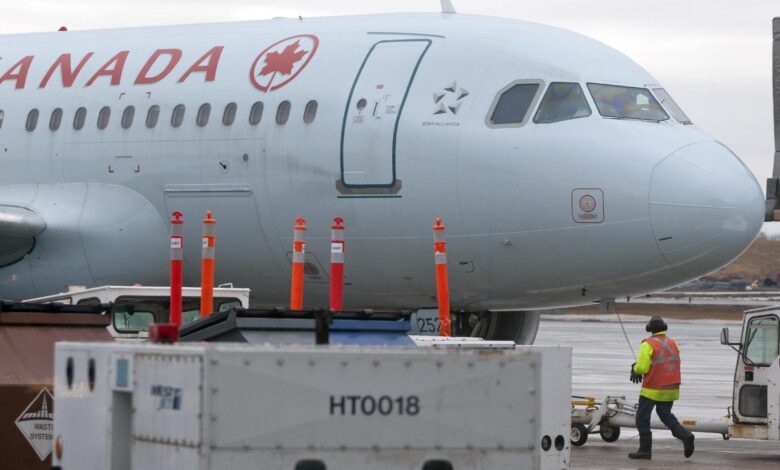
The most immediate impact is felt in the transborder market, where Air Canada will discontinue five US routes for the 2027 season. The most consequential cut is the permanent termination of the Toronto Billy Bishop–Boston service, which will cease operations on December 1, 2026. This route was unique as a year-round nonstop connection between downtown Toronto and Logan International Airport, offering a critical alternative to the longer transit times required via Toronto Pearson. Its removal leaves Boston travelers without a direct downtown-to-downtown link from Toronto.
Also eliminated is the Toronto Pearson–Charleston, South Carolina service, which launched in March 2024. Air Canada was the only Canadian carrier serving Charleston, and its exit leaves the city with zero nonstop flights from Canada. Data from the airline shows a sharp decline in this route’s utility: departures fell from 200 in 2024 to 92 in 2026, a 54 percent drop, while outbound seat capacity declined from an estimated 15,200 to 6,992. Other US cuts include seasonal services from Montreal to Seattle, and from Vancouver to Nashville and Raleigh-Durham.
These reductions align with a broader macroeconomic trend in Canada-US travel. According to Statistics Canada, air travel between the two countries fell 28 percent in May 2026 compared to May 2024. By September 2026, volumes remained 29 percent below September 2024 levels. Car crossings were also down 31 percent during the same comparison period. Industry analysts attribute this sustained decline to ongoing trade tensions, tariff disputes, and a broader Canadian pullback from US destinations, factors that have reshaped the commercial viability of transborder routes.
In Europe, Air Canada is withdrawing its seasonal Halifax–Brussels service. The route, which operated three weekly flights on Boeing 737 MAX 8 aircraft from June to September 2026, will not resume in summer 2027. The airline cited a regular review of capacity alignment with customer demand as the reason for the decision. This follows similar moves by WestJet, which removed all 2027 flights from Halifax to Copenhagen and Madrid, and Icelandair, which ended direct flights to Halifax in September. Despite these exits, the Halifax International Airport Authority projects a record 4.4 million passengers will use the airport in 2026, noting that remaining services to London, Frankfurt, and Zurich maintain strong European connectivity.
The airline’s most dramatic operational cut involves its longest route: Vancouver to Singapore. The service, launched in April 2024 as a strategic gateway to Asia, will end on January 24, 2027. At approximately 12,818 kilometers with a block time stretching up to 16 hours and 45 minutes, the route was economically fragile. Operating a Boeing 787-9 on such a long sector imposes significant payload penalties due to fuel weight, tying up aircraft for nearly two days per rotation. The route’s reliance on premium cabins to offset fuel burn made it vulnerable to shifts in corporate travel and fuel prices. Air Canada has not provided a specific public explanation for the cancellation, but the move frees up the 787-9 for shorter, potentially more profitable segments.
In India, Air Canada will not resume its Toronto–Mumbai service in 2027, leaving New Delhi as its only Indian destination. The Toronto–Mumbai route, which operated via London Heathrow as a fifth-freedom service, last flew in March 2026. Its withdrawal coincides with the entry of Air India, which launched its inaugural nonstop Toronto–Mumbai flight on October 25, 2026. Air India’s new service returns to Canada via Rome Fiumicino, directly competing for the high-demand visiting friends and relatives (VFR) and business travel market. This shift highlights a changing competitive landscape where foreign carriers are capturing market share in North America.
Air Canada stated that it regularly reviews its schedule to ensure capacity is aligned with customer demand and travel patterns. While the airline has not detailed the specific financial metrics driving each cut, the combination of falling transborder volumes, the high fixed costs of ultra-long-haul operations, and new competition from low-cost and flag-carrier rivals suggests a strategic pivot toward higher-yield or more efficient network segments. For travelers, the immediate consequence is reduced direct connectivity, requiring more connections or alternative carriers for destinations like Charleston, Boston (from downtown Toronto), and Singapore.