
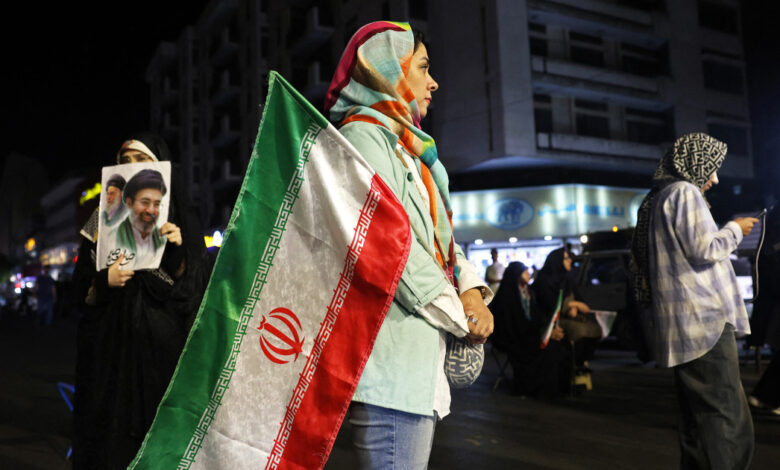
On Thursday, a visit by Pakistan’s army chief, Field Marshal Asim Munir, to Tehran was reported by Iran’s semiofficial ISNA news agency as being aimed at “reaching the point of officially announcing acceptance of the memorandum of understanding.” The agency stated that Tehran was responding to Washington’s latest proposal, which had “reduced the gaps to some extent” between the two sides. Iranian Foreign Ministry spokesman Esmail Baghaei confirmed that Tehran had received U.S. views and was reviewing them, noting that Pakistan, which has played a central role in the negotiations, was helping facilitate the exchange of messages.
The diplomatic push comes against a backdrop of significant military threat. President Donald Trump stated on Wednesday that if the U.S. did not “get the right answers,” it was “all ready to go” for renewed military action. “It could be a few days, but it could go very quickly,” Trump told reporters at Joint Base Andrews. He described the negotiations as being in their “final stages” but warned that things could get “a little bit nasty” if an agreement is not reached. Earlier in the week, Trump said he had called off an attack on Iran planned for Tuesday after leaders from Qatar, Saudi Arabia, and the United Arab Emirates urged him to “hold off” to allow “serious negotiations” to continue. In a message on Truth Social, Trump emphasized that any deal would include “NO NUCLEAR WEAPONS FOR IRAN.”
The core of the negotiations centers on a deal that would curb Iran’s nuclear program and restore shipping traffic through the Strait of Hormuz. However, the scope of the agreement remains a point of contention. In a separate development highlighting the complexity of the diplomatic landscape, U.S. and Iranian diplomats restarted indirect talks over Tehran’s nuclear program for the first time since last year’s war. During these talks, U.S. officials, including Secretary of State Marco Rubio and top negotiator Steve Witkoff, outlined demands that Iran must not make any nuclear fuel domestically, must restrict the range of its ballistic missiles, must end its support for proxy groups, and must account for highly enriched uranium missing since last summer’s strikes.
Iranian Foreign Minister Abbas Araghchi stated that the talks focused on nuclear weapons and were a “good start,” adding that the sides were able to exchange viewpoints and express concerns regarding a possible deal. Araghchi indicated there would be a new round of talks, though the U.S. side had not confirmed this. Notably, the U.S. delegation included the top U.S. military commander from the Middle East, a presence that signaled the continued military buildup in the region alongside the diplomatic efforts.
Economic and security experts remain skeptical about the durability of any agreement. Karim Sadjadpour of the Carnegie Endowment for International Peace argued that the Iranian regime remains intent on defying the United States, fearing that yielding to pressure would project weakness and invite further demands. “Up until now Iran has shown no flexibility on moderating its ballistic missile program, or its regional proxies,” Sadjadpour said. He suggested that Iran’s goal is to limit the conversation strictly to nuclear issues and to prolong the process to avoid immediate military strikes.
Despite diplomatic language, evidence suggests continued military preparations by Iran. U.S. officials confirmed that Iran is attempting to reconstitute its ballistic missile program. Jeffrey Lewis, a distinguished scholar at Middlebury College who studies satellite imagery, noted that missile production facilities, many of which Israel attempted to destroy, appear to be back online. “It seems pretty clearly that Iran is well on its way to resuming production of its missiles,” Lewis said. U.S. officials acknowledged that this could lead to renewed strikes by Israel or the U.S. in 2026.

The immediate economic impact of the conflict is visible in the maritime sector. U.S. Marines boarded an Iranian-flagged tanker, the Celestial Sea, on Wednesday after it attempted to violate the American maritime blockade. This incident underscores the physical reality of the blockade that is keeping oil prices elevated. The Revolutionary Guard has also issued stark warnings, stating that if aggression against Iran is repeated, the regional war will “extend beyond the region” and result in “crushing blows” in places the U.S. cannot imagine.
As the world watches the movement of oil tankers and the shuttle diplomacy of Pakistani officials, the focus remains on whether the “gaps” identified by Tehran can be closed before the deadline Trump has implicitly set. The next few days will determine if the diplomatic channel can hold firm against the military pressure, or if the economic shock to global energy markets will deepen further.




One Comment