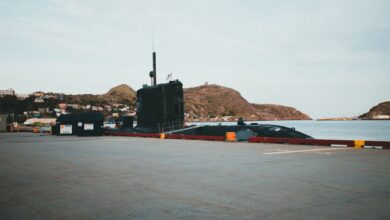
The core of the inquiry focused on the operational status of China’s ballistic missile submarines (SSBNs), the only platform capable of launching nuclear weapons from beneath the sea. The specific mention of a “third-generation” vessel points to the Type 094 Jin-class submarine, the backbone of China’s current sea-based nuclear deterrent. When a state’s ultimate instrument of war is tested, it triggers a cascade of strategic calculations among potential adversaries and allies. The fact that this query reached the level of a daily defense briefing indicates that the report gained sufficient traction in international defense circles to warrant an official Chinese touchstone, even if the content of that touchstone is strictly procedural.
China’s nuclear posture has long been characterized by a doctrine of minimum deterrence, maintaining a small but survivable arsenal sufficient to inflict unacceptable damage on any aggressor. However, the quantitative and qualitative expansion of this arsenal in recent years has altered the regional balance of power. The transition from purely land-based and air-launched delivery systems to a more robust sea-based component is a critical evolution. A credible second-strike capability—one that can survive a first strike and retaliate—requires a submarine fleet that is not only present but also quiet enough to remain undetected during a crisis.
The geopolitical implications of testing such systems extend beyond the immediate technical achievement. For the United States and its allies in the Indo-Pacific, the operational readiness of the Type 094 and its successor classes represents a significant variable in strategic planning. The ability to launch intercontinental ballistic missiles from submerged platforms complicates the defense architectures of potential opponents, forcing a continuous investment in anti-submarine warfare (ASW) capabilities. This creates a dynamic where advances in one nation’s offensive nuclear force drive expenditures in another’s defensive systems, a classic security dilemma playing out in the Pacific.
Contextualizing this development requires looking at the broader trajectory of China’s naval modernization. The People’s Liberation Army Navy (PLAN) has been the beneficiary of significant industrial capacity, allowing for the construction of new hulls and the development of ancillary technologies. The source material notes recent debuts in related maritime domains, such as the Y-9 anti-submarine aircraft appearing in South China Sea exercises. The Y-9 is part of a broader ASW ecosystem; its presence highlights that the submarine is not operating in a vacuum but as part of a layered network of air, surface, and underwater assets. The interplay between these platforms suggests a maturing maritime strategy that integrates detection, deterrence, and defense.
Furthermore, the mention of other advanced platforms, such as the CH-7 high-altitude, high-speed drone completing its first flight in Northwest China, underscores the technological breadth of China’s defense sector. While the drone is not directly related to nuclear submarine operations, it illustrates the same underlying driver: the rapid integration of new technologies into military doctrine. The convergence of long-range strike capabilities, advanced surveillance, and nuclear deterrence points toward a more integrated and resilient defense posture.
The diplomatic pressure surrounding such tests is significant. In an era of heightened great power competition, transparency—or the lack thereof—shapes trust and stability. When a state conducts tests of strategic weapons, it is often interpreted as a signal of capability or, in some interpretations, a signal of intent. The Chinese government has consistently maintained that its nuclear strategy is defensive, aimed solely at self-defense and preserving regional peace. However, the perception of rapid capability gains can outpace the stated intent, leading to anxiety among neighboring states and strategic rivals who may feel compelled to accelerate their own modernization efforts.
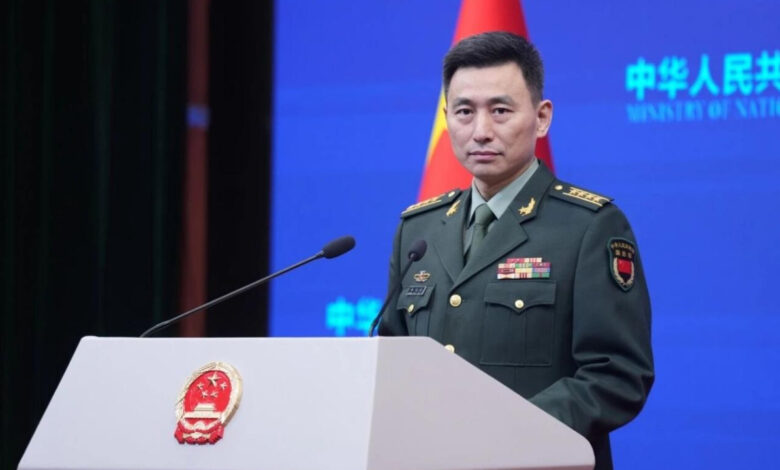
The response by Spokesperson Zhang Xiaogang, while brief in the available record, serves as a checkpoint in this ongoing dialogue. It does not confirm or deny the specific details of the test in the manner of a full disclosure, which is standard for strategic assets. Instead, it acknowledges the query, placing the issue within the framework of official communication channels. This restraint reflects the broader diplomatic approach: managing perceptions while protecting operational security.
The significance of this moment lies not just in the potential test itself, but in the visibility it brings to China’s underwater nuclear forces. As the global balance of nuclear power shifts, the operations of the Type 094 and its successors will continue to be scrutinized. Each development, from missile trajectories to submarine quietness, feeds into a complex web of strategic calculations. The international community watches to see how these capabilities are exercised and how they influence the diplomatic landscape, particularly in the South China Sea and the broader Pacific region.
As the briefing concluded, the focus returned to the broader implications of these developments. The next step in this trajectory will likely involve further integration of these assets into regular exercises and operational deployments, continuing the pattern of incremental capability enhancement that defines modern naval strategy. The world’s attention remains fixed on the quiet depths where these decisions are being tested, aware that the stability of the region rests on the precise and predictable management of these powerful forces.