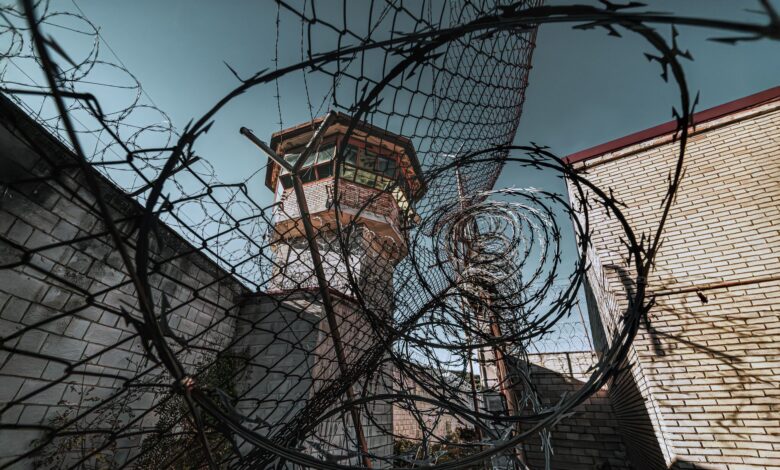
The move occurs at a critical juncture in a peace process that has entered a period of stagnation. Sancar described the past two months as a time when the political track was on “a pause,” with previously scheduled dates and commitments failing to materialize. For the Kurdish political establishment, the physical improvement of Öcalan’s living conditions is not merely an administrative adjustment but a prerequisite for momentum. Sancar emphasized that the relocation “necessitates an acceleration of the (peace) process,” arguing that the symbolic step of moving the PKK’s founder requires corresponding political steps from Ankara to prevent the dialogue from remaining at a standstill.
The background to this development is a protracted conflict that has persisted since 1984, resulting in the loss of tens of thousands of lives. The Kurdistan Workers’ Party (PKK), designated a terrorist organization by Turkey, the United States, and the European Union, has been locked in a struggle with the Turkish state for over four decades. A new phase of this political track began in October 2024, following a proposal by Devlet Bahçeli, chairman of the Nationalist Movement Party (MHP), that Öcalan should address the Turkish parliament to announce the dissolution of the PKK. Following this proposal, and after Öcalan called for the PKK to disband and disarm in February 2025, the militant group announced its intention to cease hostilities. In August, the Turkish parliament approved legislation offering conditional pardons to thousands of PKK fighters, a move subsequently signed into law by President Recep Tayyip Erdoğan.
Despite these legislative and symbolic milestones, the implementation of the peace framework has faced significant friction. Sancar noted that while the PKK took several symbolic steps toward disarmament, including members of its guerrilla wing burning weapons, the state’s responses have not matched the pace of these actions. He highlighted that visits to İmrali should have followed the steps taken by the PKK, but instead, the process has slowed. The DEM Party argues that the current impasse is driven by what Sancar terms a “unilateral” approach, where expectations and demands are placed solely on the opposition without reciprocal concessions from the government.
Central to the next phase of negotiations is the role of a parliamentary body designated as the Peace and Politicization Commission. Sancar stated that this commission must visit İmrali and work directly with Öcalan, who he describes as pivotal for coordinating the resolution process. For the Kurdish political force, the objective is not only the cessation of hostilities but also the strengthening of Kurdish unity and the expansion of political participation. Sancar warned that the process cannot advance if the state maintains a “hardline” or “rigid” stance, arguing that overcoming obstacles requires all parties to move away from positions that prioritize outmaneuvering opponents over achieving a durable settlement.
The economic and social implications of this protracted conflict are deeply embedded in the region, with the peace process seen as a necessary condition for stability. The relocation of Öcalan is viewed by observers as a signal that Turkey is preparing for a more active role for its jailed leader in the final stages of the resolution. However, the uncertainty remains high. The sources indicate that while the infrastructure for dialogue has been physically updated on İmrali, the political infrastructure on the mainland remains strained. Sancar’s comments suggest that the next move rests with the government to revisit its hardline positions, while the Kurdish side maintains that any assumption of deception or lack of reciprocity will lead nowhere.
As the peace process navigates this two-month pause, the focus shifts to whether the physical change on İmrali will translate into political movement. The availability of a new residence for Öcalan is a documented fact, but its efficacy depends on the willingness of the Turkish state to engage in the reciprocal steps demanded by the DEM Party. The next test of this dynamic will be the willingness of the Peace and Politicization Commission to engage in substantive talks, a step that Sancar argues is essential to moving the process from a state of stagnation to one of active resolution.