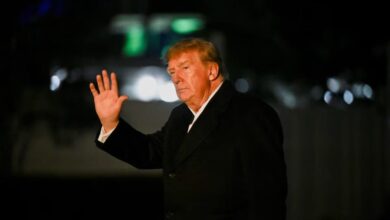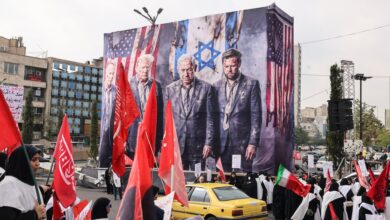
The declaration introduces immediate uncertainty regarding the specific financial instruments involved. A memorandum of understanding that currently provides Israel with $3.8 billion annually in military assistance is scheduled to expire at the end of 2028, not immediately. It is unclear whether the president was referring to a new, separate tranche of aid or a renegotiation of the existing long-term agreement. The White House has been contacted for clarification on the specific funds and the legal basis for the cessation, while the Israeli Prime Minister’s office has not yet commented on the president’s remarks. The contours of any new procurement arrangement that might replace direct subsidies remain undefined.
Trump’s statement aligns with a position previously articulated by his Israeli counterpart. In a May interview with CBS, Prime Minister Netanyahu expressed a desire to “draw down” US financial support to Israel “to zero” from the current annual level of $3.8 billion. “Let’s start now and do it over the next decade, over the next ten years, but I want to start now,” Netanyahu said at the time, emphasizing that he did not want to wait for the next Congress. The current administration’s announcement appears to accelerate this stated goal, framing the end of direct payments as a mutual agreement rather than a unilateral cut.
The shift in policy arrives at a time when the US-Israel relationship, while still enjoying substantial bipartisan backing, faces increasing domestic pressure. Since the end of the Second World War, Israel has been the largest recipient of US foreign assistance, with a Congressional report published last year estimating the total cost at $174 billion, unadjusted for inflation. However, support among Democrats has softened, particularly following the start of the war in Gaza in October 2023. This political volatility is evident in recent legislative actions; in July, Republican lawmaker Thomas Massie forced a vote on a bill to cut $3.3 billion in security aid to Israel. Although the measure was defeated by a vote of 314 to 104, it received support from 103 Democrats, with Massie being the only Republican to back the amendment.
Public opinion polls reflect this shift in the political landscape. A survey conducted by Quinnipiac University in September found that 48% of US voters believe the country is too supportive of Israel, a figure that has risen sharply from 16% in 2017. The divide is stark along partisan lines: 67% of Democrats hold this view, compared to 17% of Republicans. Trump accused Democratic opponents of weaponizing US aid to Israel as a “talking point” to attack Republicans, suggesting that the political cost of maintaining the aid package has become a central feature of domestic electoral strategy.
The proposed transition from direct annual grants to a model where Israel purchases weapons from the US, if implemented, would alter the diplomatic and economic dynamics of the alliance. Such a shift could reduce the US budgetary commitment but might introduce new complexities regarding the conditions of sale and the integration of Israeli forces with American-supplied systems. For Israel, the loss of guaranteed, unrestricted military funding represents a significant strategic change, though the scale of the impact will depend on the volume of future procurement deals.
As the year draws to a close, the ambiguity surrounding the specific mechanics of this “deal” leaves both Washington and Jerusalem in a state of waiting. The White House and the Israeli government have not detailed the terms of the agreement, leaving analysts and policymakers to reconcile the president’s public statements with the existing legal framework of the 2028 memorandum of understanding. The coming months will determine whether this marks the definitive end of the traditional aid model or a temporary pause in negotiations over a new economic arrangement for the region’s most significant US partner.