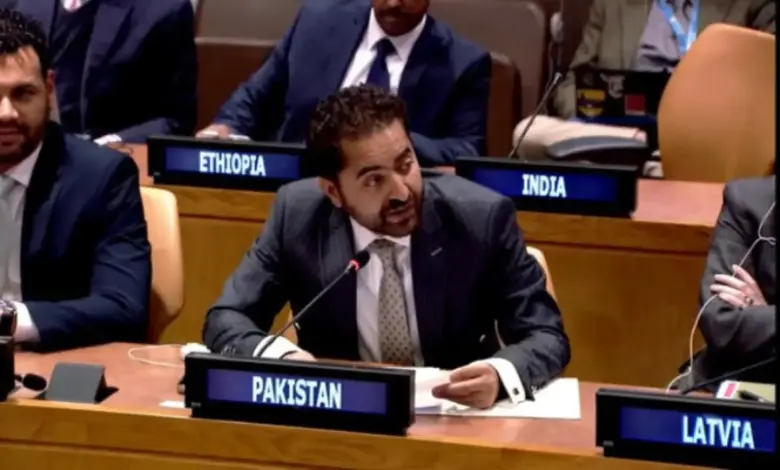
Shah’s remarks were made in Pakistan’s right of reply to the Indian representative at an Arria-formula meeting convened by Liberia on November 18. The meeting, titled “Natural Resources and Conflict: Strengthening Cooperation for Prevention and Peace,” provided the stage for Pakistan to outline its position on shared water resources. Ambassador Usman Jadoon, Deputy Permanent Representative of Pakistan, initially presented the national position, arguing that natural resources should serve sustainable development and peace rather than become sources of exploitation. He warned that external interference and historical grievances could combine to turn resource wealth into a source of instability, citing the Democratic Republic of Congo as an example where mineral wealth sustained conflict.
The diplomatic tension follows a legal impasse regarding the treaty. In April 2025, India placed the IWT in abeyance following a deadly militant attack in Pahalgam, Indian-administered Kashmir. On August 31, 2026, the Court of Arbitration, with the Permanent Court of Arbitration serving as its secretariat, unanimously ruled that India’s stated grounds did not justify suspending or terminating the treaty under applicable international law. The court affirmed that the IWT remains fully in force. India rejected the award, disputed the tribunal’s jurisdiction, and reaffirmed that its decision to keep the treaty in abeyance remains in effect. This legal stalemate has heightened concerns over regional stability, with Pakistan’s permanent representative, Ambassador Asim Iftikhar Ahmad, previously characterizing India’s position as a violation of humanitarian and security obligations at a January 2026 UN meeting.

Amid this backdrop, Pakistan is preparing to send Climate Minister Musadik Malik to Delhi to represent the country at the SCO Civilisational Dialogue Forum, scheduled for November 20 and 22. This will be the first trip by a Pakistani federal minister to India since Deputy Prime Minister Bilawal Bhutto Zardari attended the SCO meeting in Goa in 2023, and the first high-level visit since Operation Sindoor, India’s military response to the Pahalgam attack. Malik, who has previously made aggressive comments regarding water security, including a warning that “whoever touches our water, their hands would be cut off,” has reportedly stated that his visit is “not a bilateral negotiation.”
The SCO forum, hosted at the historic Purana Qila in Delhi, aims to promote cultural understanding among the organization’s ten member states. While India’s Culture Minister Gajendra Singh Shekhawat emphasized the shared civilisational past of the two nations, observers note that previous India-Pakistan interactions at SCO summits have often been marred by verbal sparring aimed at domestic audiences. The upcoming event is expected to be closely watched for any signs of de-escalation or further diplomatic friction regarding the status of the Indus Waters Treaty.
The next expected development is the commencement of the SCO Civilisational Dialogue Forum in Delhi, where Pakistan’s participation will be assessed for its potential to ease or exacerbate the ongoing diplomatic standoff over water rights.