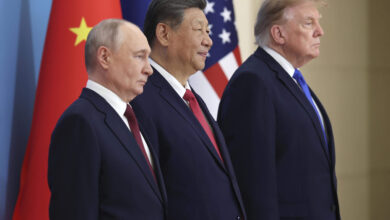
The primary focus of President Trump’s remarks following the meeting was on nuclear disarmament. He spoke about the necessity of reducing the number of nuclear weapons worldwide, framing the discussion in terms of global security. Yet, this rhetorical emphasis did not translate into a documented agreement or a specific policy framework that would alter the current strategic balance among the three powers. For economists and trade analysts, the absence of a concrete deal is significant. In an environment where geopolitical stability often underpins trade confidence, the lack of a formalized outcome leaves the broader economic landscape in a state of ambiguity.
The significance of this “non-event” lies in what it does not change. Had the summit produced a joint statement on trade normalization, sanctions relief, or resource partnerships, markets would likely have reacted with measurable shifts in currency values, commodity prices, or equity indices. Instead, the status quo persists. The meeting took place in Shenzhen, a city synonymous with China’s manufacturing and export capabilities, adding a layer of symbolic weight to the gathering. Yet, no specific announcements regarding trade barriers, export controls, or supply chain adjustments were reported. This silence suggests that the deep structural tensions between the United States, China, and Russia remain unresolved.
Jim Walsh, the MIT security analyst who discussed the event on WBUR’s Here & Now, highlighted the uncertainty surrounding the summit’s results. His assessment underscores a critical point for international economic policy: without verifiable agreements, businesses and governments cannot plan accordingly. For industries reliant on cross-border trade, such as technology, energy, and agriculture, this uncertainty acts as a drag on investment. Companies cannot commit to long-term capital expenditure or supply chain diversification strategies if the regulatory and diplomatic environment remains fluid and undefined.

The impact on affected households and workers is indirect but pervasive. Inflationary pressures and cost-of-living adjustments are often influenced by the stability of global trade routes and energy prices. When major powers fail to reach consensus on security or trade issues, the risk premium embedded in global markets tends to rise. This can translate into higher borrowing costs for businesses, which may be passed on to consumers in the form of higher prices or slower wage growth. However, without specific data on immediate price changes or policy shifts resulting from the Shenzhen meeting, it is premature to assign direct blame to the summit for any specific economic hardship. The connection remains one of potential risk rather than observed outcome.
Markets, which react swiftly to geopolitical news, appeared to treat the summit with caution. The lack of a “breakthrough” means that the existing tariff structures, sanctions regimes, and trade agreements remain in force. For importers and exporters, this means continuing to navigate the current complex web of customs rules and compliance requirements. There is no evidence to suggest that the meeting led to the easing of export controls on critical minerals or the relaxation of financial sanctions. Consequently, the trading environment remains characterized by the same fragmentation and protectionist tendencies that have defined recent years.
Credible disagreements remain among analysts regarding the long-term implications of such summits when they yield no formal documents. Some argue that the mere act of convening reduces the risk of miscalculation, thereby providing a floor for economic stability. Others contend that without enforceable agreements, the diplomatic gestures do little to alter the material conditions of trade and investment. Walsh’s commentary suggests the latter, pointing to the unclear nature of any breakthroughs as a sign that the fundamental issues have not been addressed. This distinction between diplomatic rhetoric and economic reality is crucial for understanding the current state of the global economy.
In the near term, the economic impact of the Shenzhen summit is likely to be minimal, defined primarily by the continuation of existing policies. Businesses will continue to hedge against geopolitical risk, and consumers will face the same cost structures that were in place prior to the meeting. The lack of new data or policy announcements means that forecasts for global growth, trade volumes, and inflation cannot be adjusted based on this event. The focus will now shift to other indicators of economic health, such as upcoming central bank decisions, labor market data, and trade statistics from the three nations.
Returning to the setting in Shenzhen, the city’s role as a hub for global manufacturing underscores the stakes of these diplomatic interactions. The factories and logistics networks that define the region’s economy operate under the shadow of the policies set by Washington, Beijing, and Moscow. Without a clear direction from the summit, these operators must continue to adapt to a fragmented global system. The next key data release to watch will be the trade balance figures and investment flows from the third quarter, which will provide a concrete measure of whether the diplomatic silence in Shenzhen has had any measurable effect on the ground, or if the economic machinery continues to turn under the weight of existing tensions.