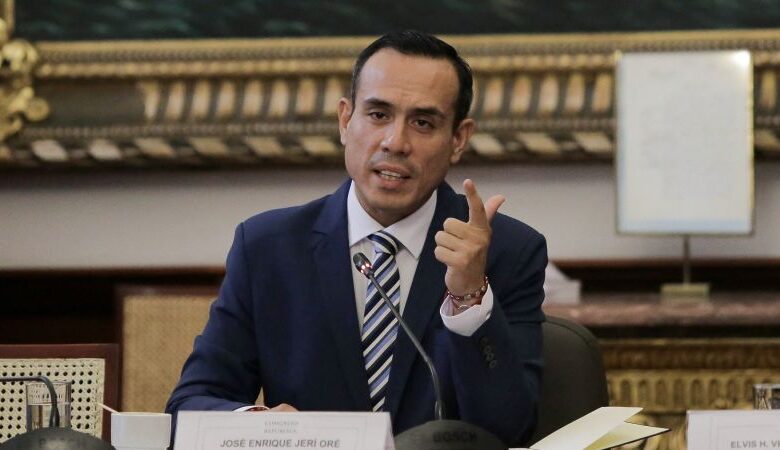
The censure motion passed with 75 votes in favor and 24 against, a threshold significantly lower than the supermajority required for impeachment. The vote came just two months before the scheduled general election, leaving the nation without an elected leader during a critical period of democratic transition. Jerí’s removal follows accusations that he failed to disclose personal meetings with Zhihua Yang, a Chinese businessman holding state-granted concessions for energy projects. The scandal, dubbed “Chifa-gate” after the Peruvian-Chinese culinary fusion, has intensified scrutiny over Lima’s economic and diplomatic balancing act between its two largest trade partners, China and the United States.
Jerí assumed the presidency in October 2025 after the impeachment of his predecessor, Dina Boluarte. He was not elected by popular vote but sworn in as Speaker of Congress, a constitutional provision that has repeatedly placed unelected lawmakers into the executive role. The controversy surrounding his departure began when videos emerged showing Jerí meeting with Yang outside his official schedule. In one instance, Jerí arrived at Yang’s restaurant wearing a hood; in another, he met the businessman at a Chinese goods store while wearing sunglasses. Neither meeting was recorded in the presidential log, violating Peruvian law which requires the head of state to document all official activities.
Beyond the procedural failures, the meetings raised questions about the influence of foreign business interests in Peruvian politics. Yang, who was under government scrutiny, was accompanied during one of the gatherings by another Chinese citizen under house arrest for alleged links to an illegal timber network. Jerí denied any wrongdoing, characterizing the encounters as “circumstantial” and accusing political rivals of orchestrating a smear campaign. He apologized for the manner of his entry into the restaurants, stating that his hooded appearance had generated “unreal stories,” but maintained that no favors were requested or granted.
“In politics, as in love and war, you shouldn’t inspire pity. May he never again in his life wear a hood,” said Ernesto Álvarez, Jerí’s outgoing prime minister, commenting on the former leader’s exit.
The political fallout extended beyond the immediate scandal. Lawmakers also criticized Jerí for awarding state contracts to several women following late-night meetings at the presidential palace. These allegations compounded the narrative of a presidency lacking transparency. The censure motion was backed by lawmakers seeking a leader who would prioritize public security and institutional integrity. Ruth Luque, one of the supporters of the measure, emphasized the need for a head of state focused on the national interest rather than personal associations.
With Jerí expelled from the presidential palace, Congress faced the urgent task of appointing a successor. On Wednesday, the chamber selected José María Balcázar, an 83-year-old former Supreme Court judge and lawmaker from the left-wing party Perú Libre, the political vehicle of former president Pedro Castillo, who was convicted in 2022 for attempting a self-coup. Balcázar, a lawyer from Cajamarca, secured a majority in the extraordinary session to become the new interim president. His appointment is not without controversy; his past public statements defending child marriage and critiquing the developmental impacts of early sexual relations have drawn sharp condemnation from the Ministry of Women and civil society groups.
Balcázar will serve for the remaining five months of the current term, handing over power on July 28 to the winner of the April 12 election. The transition was not without risk. Following the censure vote, Peru was technically leaderless for 24 hours. During this vacuum, Jerí’s cabinet remained in place but was restricted to administrative tasks, creating a potential gap in emergency decision-making. The rapid turnover of leadership has left social scientists struggling to categorize the current era, which has been characterized by a series of short-lived, often unelected executives. Manuel Merino, for instance, served for only five days in 2020, while others have not completed a single year in office.
The “Chifa-gate” scandal has also highlighted the diplomatic complexities facing Peru. The United States Bureau of Western Hemisphere Affairs recently expressed concern over what it described as the lack of oversight regarding the Chancay port, a major infrastructure project managed by Chinese entities. Washington has warned Lima against allowing “predatory” foreign influence to undermine its sovereignty. For the incoming interim president, the challenge is to navigate these international pressures while managing a domestic political landscape fractured by a decade of consecutive leadership crises. The next critical test for Balcázar will be ensuring a smooth electoral process in April, a task that requires stability in a country where the presidency has become a revolving door.