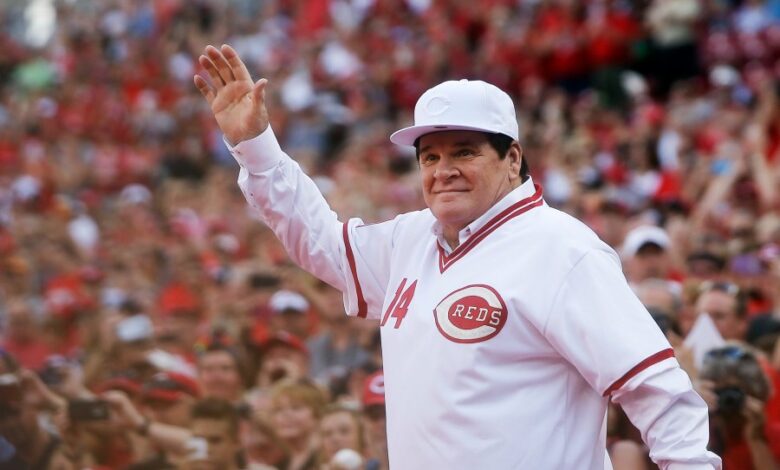
“I have just given a Complete and Total Pardon to the Late, Great Pete Rose, a true Baseball SUPERSTAR & LEGEND,” Trump wrote. The pardon specifically addresses the criminal judgment entered on April 20, 1990, when Rose pleaded guilty to two counts of filing false income tax returns. At the time, Rose admitted to failing to report $354,968 in income over a four-year period. He served five months in a federal correctional institution in 1990.
The presidential pardon does not retroactively alter Rose’s status regarding sports betting, which led to his permanent ban from baseball in 1989. However, it removes the criminal conviction that complicated his legacy and eligibility discussions. Rose was reinstated by MLB Commissioner Rob Manfred in May 2025, a decision that restored the status of 17 individuals on the league’s permanently ineligible list upon their death. Manfred’s ruling allowed deceased players, including Rose and Shoeless Joe Jackson, to become eligible for Hall of Fame consideration.
Trump’s statement criticized Major League Baseball and the Hall of Fame for what he described as unfair treatment. “(Rose) was treated terribly by Major League Baseball in not allowing him to go into the Baseball Hall of Fame,” Trump said. “Politics, I guess!” The president highlighted Rose’s career achievements, noting his record 4,256 career hits, 3,562 games played, and status as a 17-time All-Star and three-time World Series champion.
Under current Hall of Fame rules, players who were on the permanently ineligible list are not eligible for the standard Modern Era Committee. The Hall’s board of directors adopted a rule in 1991 barring such players from consideration. Following Manfred’s 2025 reinstatement of Rose, the earliest window for his potential induction is the Classic Baseball Era Committee in 2028. The pardon ensures that no federal criminal record remains on file, aligning his legal status with his restored standing in the sport.
Rose’s ban from baseball was implemented in 1989 after a hearing found he bet on games while playing for the Cincinnati Reds and managing the Philadelphia Phillies. Although gambling was illegal in many jurisdictions at the time, the specific violation was betting on games involving his own team. Trump noted during a recent press briefing that while Rose “went through 40 years of hell,” the pardon was a long-overdue correction. The president had previously lobbied for Rose’s reinstatement, stating he spoke with Commissioner Manfred, who agreed to the move prior to Rose’s death.
No further legal proceedings are anticipated regarding the tax charges, as the pardon is a complete and unconditional executive clemency. The next significant procedural step for Rose’s legacy will be the evaluation by the Hall of Fame’s Classic Baseball Era Committee, with the earliest possible induction in 2028.